Tuesday, August 17, 2010

St. Cloud office of Lutheran Social Service to resettle 300 refugees in 3 years


He'd gotten a slip of paper that said "MSP."

Muktar Sagal knew little else about his new home until he landed at Minneapolis-St. Paul International Airport.

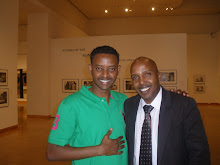
Sagal, 27, spent most of his life in a refugee camp in Kenya before he resettled in March in St. Cloud. Since then, Sagal has gotten help from a new local office that helps refugees adapt to a new country and culture.
Lutheran Social Service of Minnesota has worked with refugees in St. Cloud since 2002, when it opened a refugee employment office. This year, the agency ratcheted up its efforts by establishing a refugee resettlement office in St. Cloud.

The office has contracted to resettle 100 refugees — mostly Somalis and a few Iraqis — in the St. Cloud area this year and in each of the next two years.

Jennifer Jimenez-Wheatley heads the new office, helping refugees find places to live, work, shop and worship. She helps them learn to speak and write English. She coordinates the resettlement process with local school, government and nonprofit agencies.

Since Jimenez-Wheatley started her job in February, she's found many people in St. Cloud willing to aid her quest to help refugees.

"The success of this program depends on how our agency builds community," Jimenez-Wheatley said. "So far, I've found people who are just willing to help."

The refugees Jimenez-Wheatley helps are arriving here differently than most refugees who came to St. Cloud in the past decade, Jimenez-Wheatley said. These refugees are coming directly from another country, instead of making this their second or third stop in the U.S.

Somalis have established a presence in St. Cloud, but the handful of Iraqis she's helping settle here won't be joining such a large community from their home country. Jimenez-Wheatley says St. Cloud's refugee advisory committee — composed of city, school district and nonprofit officials — decided resettling Iraqis here made sense in part because they share the Muslim faith with the Somali community.

The Lutheran Social Service contract to resettle refugees in St. Cloud is with a national agency, Lutheran Immigration and Resettlement Services. That agency contracts with the U.S. government to resettle refugees who flee war or genocide, or who are persecuted for their beliefs in their country of origin.

Sagal was only 9 when he arrived in a Kenyan refugee camp with his father in 1992, fleeing civil war in southern Somalia. His father died four years later, and he eventually applied through the United Nations to resettle abroad.

Sagal learned in December 2009 that he'd be coming to the U.S., but his exact destination remained a mystery. Sagal remembers debating with fellow refugees in Kenya over what the slip of paper that said "MSP" meant — some said Minnesota, others suggested Missouri or Mississippi.

Now that Sagal is in the U.S., there's something to learn everywhere he goes. He says Lutheran Social Service has taught him things that a lifelong U.S. resident wouldn't think of, like how to use certain household appliances or observe a traffic light.

Sagal says he would have been "lost" without Lutheran Social Service, and the help of Jimenez-Wheatley.

"She does a lot for the refugees," Sagal said.

Thursday, August 12, 2010

Friday, June 4, 2010

2 primaries needed to narrow St. Cloud school board field

Two primaries will be needed to narrow the fields in a general and special election for four St. Cloud school board seats.Eight people are running for three seats with four-year terms and three people are seeking one two-year term. The special election would be for the final two years of Deb Lalley’s term. She is resigning Dec. 31.
The Aug. 10 primary would trim the race for the four-year term to six candidates and the two-year term to two. Candidates have until 5 p.m. today to drop out and not have their name on the ballot.
The three incumbents, who were elected in 2003 and re-elected without opposition in 2006, are all running again. Jerry Von Korff and Bruce Mohs are running for four-year terms, and Sigrid Hedman-Dennis, who is chairwoman, is running for the two-year term.
They are joined by an assortment of opponents including two Somali immigrants.
Von Korff, a lawyer who turns 65 in June, Mohs, a retired teacher who has been active in the Technical High School alumni association, and Hedman-Dennis, who is on the nursing faculty at the College of St. Benedict and St. John’s University, have been on the board for seven years.
Whoever is on the board in January when members are sworn in will start the district’s third superintendent search in seven years. Steve Jordahl is resigning after two years in the district. Former Superintendent Bruce Watkins will serve as interim superintendent through June 30, 2011.
The district also will be confronting a difficult budget situation that will depend on decisions made at the state level, will continue its work on improving academic success for black students and could still be dealing with a federal investigation into alleged discrimination against Somali students at the two high schools.
Mohs and Von Korff will meet six challengers in the primary. The top six with the most votes will survive the primary.
Among the challengers are:
Al Dahlgren, a 51-year-old regional manager for Winmark who lives in St. Joseph. He ran unsuccessfully in 2008 and says the board needs a conservative voice. Dahlgren has been a critic of the board and regularly attends board meetings. He has two children who attend Apollo High School.
Vic Schulz of Waite Park is making his first run. He is a school health and safety consultant who once did work for St. Cloud school district. The district discontinued his contract because it was dissatisfied with the work, director of business services Kevin Januszewski said. Schulz said the district still owes him money
chulz, who is 67, said his campaign has nothing to do with his dispute with the district. He regularly attends school board meetings.
Peter Hamerlinck of St. Joseph was active in the effort to get voters to approve a tax increase that paid for the construction of Kennedy Community School in St. Joseph. The 44-year-old also worked on two other property tax increase campaigns. He is the president of the Kennedy Parents Teacher Association and has two children in the district.
Lydia White of St. Cloud has been regularly attending meetings and challenging the board’s policy on public input. White has been a regular speaker at board meetings. She is 49 and is trained as a lawyer. She is the co-chairwoman of the CreateCommunity education committee.
Frances Ann Kayona is a 47-year-old associate professor in education administration at St. Cloud State University. She is running to be more involved in the community and schools.
Hassan Abdullahi Yussuf, a 29-year-old tax professional and interpreter, says there are tensions in the schools, and he can bridge the differences. He is an immigrant from Somalia who moved to the U.S. in 2001.
Adrece Thighman-Nabe withdrew her candidacy Wednesday.
The special election to replace Lalley will have Hedman-Dennis against Steve Sorensen, a 59-year-old federal employee and National Guard member and Mohamed Yusuf, a 36-year-old program manager at Lutheran Social Service.
He is a Somali immigrant who came to the United States in 2001. He said it is important to have Somalis on the school board because they are becoming a part of the growing community. Somali-speaking students make up about 9 percent of the students in the school district.
Hedman-Dennis, who turns 56 in August, said the two-year term just seemed like the right place to land. She said there are still things to be worked on in the school district.

Wednesday, June 2, 2010

Pastor's newspaper ad fans religious tensions in St. Cloud


Pastor's newspaper ad fans religious tensions in St. Cloud
by Ambar Espinoza, Minnesota Public Radio
June 2, 2010


LISTEN


Embed Help
Copy and paste the HTML below to embed this audio onto your web page.

Audio player code:


sponsor:St. Cloud, Minn. — A pastor has upset Muslims and Christians with a paid newspaper advertisement that questions whether Islam threatens the United States.

Other religious leaders have criticized the advertisement as fearmongering. They say it has contributed to a tense climate in St. Cloud, which in recent months has struggled with racial and cultural tension.

Some Somali high school students complained white students harassed them, a white man posted anti-Muslim cartoons on telephone poles around town, and another man threatened on Craigslist to hurt Somalis at a local dance.

The Rev. Dennis Campbell, pastor of Granite City Baptist Church, runs the ad in the St. Cloud Times twice a month called, "Pastor, I have a question." A similar program airs on a local radio station every Sunday morning. He discusses a variety of issues from the Bible, such as salvation.

One of Campell's most recent -- and controversial -- ads tackled this question: "Does the Islamic religion represent a threat to America?"

Campbell's answer was that Muslims "seek to influence a nation by immigration, reproduction, education, the government, illegal drugs, and by supporting the gay agenda."

The pastor wrote that, when Muslims take over a nation, they "will destroy the constitution," force Islam on society, take freedom of religion away, and persecute all other religions.

"I think it's important for people to realize, I am not a racist. I think some people misjudged the article because it's a short article."
- Rev. Dennis CampbellAlikhadar Yusuf, an imam and operation coordinator for the Somali Elders Council in St. Cloud, was shocked when he read it.

"Honestly, Muslims and the Islamic teachings [are] nothing but peace and helping one another," Yusuf said. "And what I see here is totally ... factually untrue."

Others upset by the ad called Campbell a racist. Some who strongly disagreed sent him emails --- as did people who said they were encouraged by his message.

Campbell said he didn't intend to instill fear, offend anyone, or encourage hostility toward Muslims. He noted that his ad ends by asking people if they have put their faith in Jesus Christ, repented and accepted Him as their savior.

"I think it's important for people to realize, I am not a racist," Campbell said. "I think some people misjudged the article because it's a short article. We did not have time to go into detail on everything and so they did not read the last paragraph."

That's not what some people in the community took away from his ad.

Yusuf said the content of Campbell's ad perpetuates stereotypes of Muslims and Islam and adds fuel to recent incidents that have spurred racial and religious tensions in the community. Yusuf also worries that the pastor's message will damage the relationship between Muslims and Christians in St. Cloud.

While St. Cloud has traditionally been dominated by Catholics, the relatively recent influx of Somali residents led to the city's first mosque in 2001.

"If the whole aim of this article was to convert people, there are other ways that the pastor can convert people to his religion," Yusuf said. "But this type of language when you use it in an article -- and a lot of people will read this article -- it will create a lot of fear."

Another local pastor agrees. The Rev. Randy Johnson of First United Methodist Church is concerned that people will think Campbell is speaking for all Christians. That's not the case, he said.

Recent tensions have prompted Christians and Muslims of all ages to get to know one another and better understand each other's religion, he said.

"Dialogue is about listening," Johnson said. "It's not about trying to persuade or convince or convert, it's about growing understanding so that we can have some trust in this community and learn how by listening to one another we discover really mostly what we have in common in human beings, that we have the same hopes and dreams for our children and this community."


Rev. Randy JohnsonJohnson's church has already hosted a couple of conversations on this topic. Yusuf and other Islamic leaders plan similar projects in the near future.

The Minnesota chapter of the Council on American-Islamic Relations published a counter advertisement called, "We are American, We are Muslim," in the St. Cloud Times.

The ad's descriptions of Muslims included neighbors, natives, immigrants, doctors, lawyers, and teachers to ease any fears about Muslims and show the diverse roles Muslims play in American society.

Thursday, May 27, 2010

90 take oaths, become citizens at local event


90 take oaths, become citizens at local event

By Mark Sommerhauser • msommerhauser@stcloudtimes.com • May 26, 2010

Comments(64)Recommend(6)Print this page E-mail this article Share
After crossing oceans, passing tests and waiting years, Central Minnesota's newest U.S. citizens got certificates for their achievement.

But before claiming his certificate, John Mientone had to do something else first.
Mientone bolted from his seat to give a bear hug to U.S. District Judge Donovan Frank after his name was called at a citizenship ceremony Tuesday in St. Cloud.
Mientone was one of 90 immigrants from 34 countries who took oaths of U.S. citizenship at St. Cloud Public Library. The new citizens took distinct paths from throughout the world to the U.S., but shared exhilaration at becoming U.S. citizens.
"I'm so proud," Irma L'Escala beamed after the ceremony. "It's a privilege to be able to do this."
L'Escala, of St. Cloud, came to the U.S. from Mexico 27 years ago. Since then, she has married and had two sons here.
Mexico and Somalia produced a big share of new citizens at Tuesday's ceremony, but others came from Moldova, Brazil, the Philippines and Canada. Most of the new citizens now live in St. Cloud or Central Minnesota, though a handful live in northern Twin Cities suburbs, said Laura Tripiciano, one of the organizers of the event.
Such citizenship ceremonies rarely were held outside the Twin Cities until 2008, when the St. Cloud chapter of Daughters of the American Revolution urged U.S. Citizenship and Immigration Services to hold some here, Tripiciano said.
Tuesday's ceremony featured a parade of patriotic standards: Everyone recited the Pledge of Allegiance and sang the national anthem.
Before administering the citizenship oaths, Frank advised the new citizens of the rights and responsibilities the oath confers. Frank told them they are free to think, act and worship as they choose, and urged them to practice the same tolerance they deserve from others.
"Some people have forgot that the strength of this country is the diversity of the people who live here," Frank said.
As a local immigration attorney, Tripiciano helps new citizens navigate the bureaucratic maze of the USCIS, and study for citizenship tests on U.S. civics and history.
One of Tripiciano's clients, Aguibou Barry of St. Cloud, took a citizenship oath Tuesday.
Barry originally emigrated from the African nation of Guinea to attend school in the U.S. Barry said he knew he wanted to become a U.S. citizen after his twin daughters, now 9 years old, were born here.
Barry's only regret was that his daughters couldn't leave school to attend Tuesday's ceremony.
"I wish they could be here," Barry said, "because I did this for them."

CAIR case could take 6 months

CAIR case could take 6 months
By Dave Aeikens • May 27, 2010

Comments(36)RecommendPrint this page E-mail this article Share
Del.icio.us Facebook Digg Reddit Newsvine Buzz up!
Twitter FarkIt Type Size A A A Next Page1| 2Previous Pagedaeikens@stcloudtimes.com


The federal investigation into discrimination claims at St. Cloud’s two public high schools could take six months or longer unless they reach an agreement called early complaint resolution.
The U.S. Department of Education’s Office of Civil Rights said this week it plans to investigate allegations of racial and ethnic discrimination against Somali students in St. Cloud and Owatonna. The complaint comes from the Minnesota Chapter of the Council on American Islamic Relations, which wrote the Office of Civil Rights in March saying the district had failed to adequately respond to harassment, taunting and name-calling at Apollo and Technical high schools.
CAIR Minnesota’s President Lori Saroya said her group would be open to the mediated settlement discussions that the Office of Civil Rights offers.
“Our concern has always been the students. We just want to see the change in environment. In the end, it affects not only their academics, it affects them emotionally,” she said. “We are seeing it in students not doing well in school. We need to create an environment where they do well.”
Superintendent Steve Jordahl said he’s not certain about a settlement because he is unsure what it entails.
“I’d like to work together with anyone who wants to work together with us to help kids,” said Jordahl, who is leaving the district June 30 to pursue other opportunities.
Board Chairwoman Sigrid Hedman-Dennis said the district might be interested in resolving the case before the investigation is completed. She said the district has a provided safe and welcoming environment for students and has responded properly when incidents happened. The district has more than 700 students who list their native language as Somali.
“Certainly we want to sit down and be sure we are meeting the letter of the law. But we are also claiming something we have not done,” Hedman-Dennis said.
The district this month released a report detailing the results of an investigation of alleged harassment of Somali students at Apollo High School. The report showed that some harassment did occur against Somalis and the district responded to the complaints. Some incidents detailed harassment of non-Somalis by Somalis.
CAIR case could take 6 months
By Dave Aeikens • May 27, 2010

Comments(36)RecommendPrint this page E-mail this article Share
Del.icio.us Facebook Digg Reddit Newsvine Buzz up!
Twitter FarkIt Type Size A A A Next Page1| 2Previous Pagedaeikens@stcloudtimes.com


The federal investigation into discrimination claims at St. Cloud’s two public high schools could take six months or longer unless they reach an agreement called early complaint resolution.
The U.S. Department of Education’s Office of Civil Rights said this week it plans to investigate allegations of racial and ethnic discrimination against Somali students in St. Cloud and Owatonna. The complaint comes from the Minnesota Chapter of the Council on American Islamic Relations, which wrote the Office of Civil Rights in March saying the district had failed to adequately respond to harassment, taunting and name-calling at Apollo and Technical high schools.
CAIR Minnesota’s President Lori Saroya said her group would be open to the mediated settlement discussions that the Office of Civil Rights offers.
“Our concern has always been the students. We just want to see the change in environment. In the end, it affects not only their academics, it affects them emotionally,” she said. “We are seeing it in students not doing well in school. We need to create an environment where they do well.”
Superintendent Steve Jordahl said he’s not certain about a settlement because he is unsure what it entails.
“I’d like to work together with anyone who wants to work together with us to help kids,” said Jordahl, who is leaving the district June 30 to pursue other opportunities.
Board Chairwoman Sigrid Hedman-Dennis said the district might be interested in resolving the case before the investigation is completed. She said the district has a provided safe and welcoming environment for students and has responded properly when incidents happened. The district has more than 700 students who list their native language as Somali.
“Certainly we want to sit down and be sure we are meeting the letter of the law. But we are also claiming something we have not done,” Hedman-Dennis said.
The district this month released a report detailing the results of an investigation of alleged harassment of Somali students at Apollo High School. The report showed that some harassment did occur against Somalis and the district responded to the complaints. Some incidents detailed harassment of non-Somalis by Somalis.

Office of Civil Rights officials say the goal is to complete the investigation in six months, but that timeline is not legally binding and investigations often take longer. The agency already has asked the school district in a letter for nine items that include reports, policies, student records, and detailed accounts of how each harassment case was handled. It gave the district a deadline of Friday. The district has turned the matter over to its lawyers and could ask for more time.
The investigation could create pressure on the district’s budget. The district has a $60,000 annual budget for legal fees, director of business services Kevin Januszewski said. It is not covered by insurance for this situation.
Jordahl said he worked at Willmar school district as a teacher when it went through a similar discrimination investigation. He said it can consume a lot of time digging up records and printing documents.
“I know when we run discipline data, you can run what looks like a whole book,” Jordahl said. “Obviously, you have to comply. You have to do what is right, be completely transparent.”
Sauk Rapids-Rice went through an Office of Civil Rights investigation in 2007 when parents accused it of gender discrimination in its sports programs.
Superintendent Greg Vandal said the district lawyers worked with the investigators and district staff compiled loads of paperwork.
“We had to produce quite a number of activities records that went back many, many years,” Vandal said.
He said the district was asked to produce team rosters going back 30 years, and when staff could not find the rosters they had to create them from yearbooks.
He said in addition to legal fees, it takes up staff time.
“The cost of legal help is only one cost to the system. It is an intangible but it is a very real drain on the system,” Vandal said.

Wednesday, May 26, 2010

Feds to investigate complaints from St. Cloud Somali students

Feds to investigate complaints from St. Cloud Somali students
By Dave Aeikens • daeikens@stcloudtimes.com • May 26, 2010

Comments(124)Recommend(4)Print this page E-mail this article Share
Del.icio.us Facebook Digg Reddit Newsvine Buzz up!
Twitter FarkIt Type Size A A A The U.S. Department of Education will investigate claims of discrimination against Somali students in St. Cloud and Owatonna high schools, federal officials said Tuesday.

The investigation is in response to a complaint from the Council on American-Islamic Relations asking the department's Office of Civil Rights to investigate claims in the two school districts. Minnesota CAIR detailed a number of incidents in St. Cloud's high schools that they say show Somali students confront a hostile and harassing environment.

"I'm sure (the investigation) will start fairly soon. Resolution can take anywhere from a month to several months," said Justin Hamilton, a spokesman for the U.S. Department of Education.

The letter the department sent to the school district asks for information related to harassment complaints involving Somalis at Technical High School and Apollo High School. It asks for a written response to the allegations and school policies on discrimination. The district has 15 days to return the information.
Tracy Flynn Bowe, the district human resources director and civil rights officer, said the matter has been turned over to the district's lawyers.

The district and CAIR Minnesota have waited several weeks to find out if the federal government would investigate.

Most of the incidents reported are at Apollo, but Tech was included as well. St. Cloud school district completed an internal investigation this month of incidents at Apollo that showed that taunting did occur, leading to discipline. The investigation was unable to confirm incidents involving pork bacon, staff conduct and bus drivers.

Reactions
Superintendent Steve Jordahl said he is disappointed in the decision because the district has many things going on to make the district a welcoming place for all students.

"It is not a surprise. The investigation is going ahead because of a complaint, not because of the positives that are happening," Jordahl said.

In a statement, CAIR Minnesota, which is in St. Paul, said it welcomed the investigation.

"Our goal is to ensure a safe and healthy environment for all students," said CAIR Minnesota Civil Rights Director Taneeza Islam. "Decades after the beginning of the civil rights movement, no student should be constantly subjected to racial slurs or harassment at school."

Hamilton said the department cannot investigate for religious discrimination. But it can investigate possible discrimination based on national origin, race or color.

Authority
In its letter to CAIR Minnesota, the U.S. Department of Education office of civil rights said it has the jurisdiction to investigate the complaint, and the complaints were filed in a timely manner. The investigation does not mean the allegations have merit.

"They will be on the ground. They will talk to the group that filed the complaint, those that are allegedly impacted and anyone else who they need to get to the bottom of it," Hamilton said.

The district's report studied 14 incidents and confirmed many of them. One Somali student made 10 different complaints. The report determined Somali students were taunted and teased and that district staff dealt with the problems and students were punished. The report also showed Somali students were involved in harassing behavior toward non-Somali students.

CAIR also reported incidents that said Somali students had pork bacon shoved in their faces and that teachers were taking part in harassment or condoning it. Those incidents were not proven, the district's report said. The district could not confirm a claim in which Somali students said a bus driver deliberately drove away from them while they waited for a bus.

Thursday, May 20, 2010

Dare to Dream aims to draw Somali students to SCSU

Dare to Dream aims to draw Somali students to SCSU
By David Unze • dunze@stcloudtimes.com • May 20, 2010

Comments(56) Cabdicasiis (Abdi) Cilmi graduated from Technical High School, he relied primarily on word-of-mouth from those who graduated before him to learn about St. Cloud State University.
Now Cilmi is helping other Somalis learn about St. Cloud State and develop and strengthen connections between the university and the area's Somali population. The Dare to Dream events that Cilmi and other St. Cloud State admissions employees have been facilitating are an important part of the university's mission to attract and retain students of color, said Mahmoud Saffari, associate vice president for enrollment management.
The university has had similar events in St. Cloud and around the state for Hispanic, Hmong, American Indian, African American and multicultural communities. An event from 11:30 a.m.-3:30 p.m. Saturday at St. Cloud Public Library will focus on what St. Cloud State can offer Somalis who are pondering their college choices.
Cilmi, who graduated from St. Cloud State, has promoted the event in St. Cloud schools, in the local mosque and by handing out fliers.
"There wasn't the availability for me to hear these sources of information," he said, talking about his post-high school, pre-college preparation.
And many local Somalis he speaks to have been steered toward two-year vocational institutions and don't consider four-year colleges and universities, he said.
"They didn't have the thinking that they are able to go to four year's college," he said. "But now the last two years when I speak to students in St. Cloud school district I'm hearing, 'I want to go to St. Cloud State University.'"
He speaks from experience when he tells parents and high school students that they don't have to limit themselves to a two-year vocational college.
"You can go to St. Cloud State University," he said he tells them. "I did."
St. Cloud State has seen its population of students of color increase by 154 percent since fall 2002, with almost 1,600 students of color attending St. Cloud State.
Projected changes in the number of white students graduating Minnesota high schools from 2004-05 to 2014-15 show a decrease of 17 percent, Saffari said. And projections show that, during the same time period, high school graduates of color will increase by 40 percent, he said.


"We have come to realize that when it comes to students of color, we need to transport the university to where they are because sometimes they don't come to us," Saffari said.


Last year's Somali event, the first Dare to Dream event targeting the Somali population, had more than 100 people attend.
A Somali elder will speak at this year's event, which will be attended by St. Cloud State President Earl H. Potter III. And there will be a representative from Robert Johnson's summer math and science classes that he has run that bring younger students to campus for a taste of college life and learning. That program has been hailed as a pipeline for sending students of color to St. Cloud State.
There also will be a panel of four Somali graduates who will answer questions.
The Dare to Dream events are similar to College Days that St. Cloud State holds, events in which admissions works with campus student groups to bring potential students to campus.
Dare to Dream is a little less formal, with food and family members invited to an event off campus.
"The Dare to Dream is the same kind of thinking as (College Days) except you add in the family piece, the parents. And we hold them in the community and we try to have familiar type foods and cater from places they are familiar with. It's a lot less formal," said Adrece Thighman-Nabe, associate director in the admissions office.
"We'll go and we'll see some very young children there. And that's OK, because what we want to do is be conveying the message to all ages that college is a possibility and, certainly, specifically St. Cloud State," said Richard Shearer, director of admissions at St. Cloud State.
Many of the materials that are used at the Dare to Dream sessions are translated into the language used primarily by the group attending.
Those students and family members see the diversity of the admissions department staff, which in 2002 had one employee of color out of 11 and now has six employees of color out of 16, Saffari said.
That diversity of staff and the translation of publications and videotapes into their language show parents and children that the university cares because it has put resources into efforts to reach those target groups, Saffari said.

Somali Lyrics - Song - Xamar - By Abdi Diini

Saturday, May 15, 2010

Somali population counted on

Somali population counted on
By Dave Aeikens • daeikens@stcloudtimes.com • May 15, 2010

Comments(73)Recommend(1)Print this page E-mail this article Share
Del.icio.us Facebook Digg Reddit Newsvine Buzz up!
Twitter FarkIt Type Size A A A Next Page1| 2| 3Previous PagePinpointing the number of Somali immigrants who have moved to the St. Cloud area has been an elusive goal.


It has city and Somali leaders eagerly awaiting the results of the 2010 census for a better answer.
Government officials and those who work to assist the people who have continued to move to St. Cloud and the surrounding area in the past decade have been relying on estimates that most agree are unreliable.
Estimates of the local Somali population range from 6,000 to 10,000. No one really has a solid number and government officials and support organizations say that makes it difficult to plan for jobs, housing, parks and recreation, English instruction and social services. The city also has a growing population of Sudanese and Ethiopian immigrants.
“There is no concrete number for my community. Nobody can estimate how many are living in St. Cloud or Central Minnesota,” said Ali Yusuf, who is the operation coordinator for the Somali Elder Council, which has an office near downtown.
The census short form does not ask about the resident’s country of origin, but many believe the 2010 count, along with the American Community Survey that asks more
specific questions over time, will provide a better handle on who is here. Among the questions the longer survey asks are when someone entered the United States, what country they came from and what languages are spoken at home.
St. Cloud school district has been able to get a handle on how many Somali students it has by tracking the primary languages spoken by its students.
The lack of solid demographic data has been a challenge for the city of St. Cloud. Matt Glaesman, planning director for the city of St. Cloud, said it is important to know who is living in the community and where because it helps planning.
“The 2010 census will be the first real look at the total for our community. I think the others are projections that I don’t have great confidence in,” Glaesman said.
To that end, a local census committee put effort into significant outreach to make sure Somalis filled out their census forms. Leaders from the Somali community and support organizations were included in the “Complete Count” committee that had discussions about engaging difficult-to-reach residents.

Somali population counted on
By Dave Aeikens • daeikens@stcloudtimes.com • May 15, 2010

Comments(73)
| 2| 3Previous PagePinpointing the number of Somali immigrants who have moved to the St. Cloud area has been an elusive goal.


It has city and Somali leaders eagerly awaiting the results of the 2010 census for a better answer.
Government officials and those who work to assist the people who have continued to move to St. Cloud and the surrounding area in the past decade have been relying on estimates that most agree are unreliable.
Estimates of the local Somali population range from 6,000 to 10,000. No one really has a solid number and government officials and support organizations say that makes it difficult to plan for jobs, housing, parks and recreation, English instruction and social services. The city also has a growing population of Sudanese and Ethiopian immigrants.
“There is no concrete number for my community. Nobody can estimate how many are living in St. Cloud or Central Minnesota,” said Ali Yusuf, who is the operation coordinator for the Somali Elder Council, which has an office near downtown.
The census short form does not ask about the resident’s country of origin, but many believe the 2010 count, along with the American Community Survey that asks more
specific questions over time, will provide a better handle on who is here. Among the questions the longer survey asks are when someone entered the United States, what country they came from and what languages are spoken at home.
St. Cloud school district has been able to get a handle on how many Somali students it has by tracking the primary languages spoken by its students.
The lack of solid demographic data has been a challenge for the city of St. Cloud. Matt Glaesman, planning director for the city of St. Cloud, said it is important to know who is living in the community and where because it helps planning.
“The 2010 census will be the first real look at the total for our community. I think the others are projections that I don’t have great confidence in,” Glaesman said.
To that end, a local census committee put effort into significant outreach to make sure Somalis filled out their census forms. Leaders from the Somali community and support organizations were included in the “Complete Count” committee that had discussions about engaging difficult-to-reach residents.
Yusuf has worked out of his office to spread the word, including helping people fill out the forms and going to doors with census counters to translate or help with whatever else is needed. Somali immigrants have the legal paperwork to be in the country and to work in the United States, Yusuf said. So there should be no fear of deportation that some immigrants might have.
Yusuf has a bag of trinkets in his office at the Elders Council on St. Germain Street that he hands out to bring attention to the census. The poster on the wall promoting the census is written in Arabic.
At the St. Cloud Area Somali Salvation Organization in east St. Cloud, staff and volunteers have worked to make sure Somalis fill out the 10-question census form that asks for the number of residents in the household.
Efforts have included talking to people about the importance of filling out the census to sitting down and filling out the forms for Somalis who don’t speak English, said Mohamoud I. Mohamed, executive director of SASSO, which provides support for Somali refugees.
“I want to help the area receive enough budget to support the population in here,” Mohamed said.
Gary Loch has developed a relationship with Somalis through his work with St. Cloud school district and St. Cloud Technical and Community College. He said the estimates for the St. Cloud Somali population create challenges in determining needs from housing to jobs.
He said the school district has the burden of dealing with some of the issues that confront the newcomers from Somalia. The district has more than 700 students who list Somali as their primary language. Programs for non-English speaking students continue to grow. The transition of the new residents is a community issue not just schools, he said.
“If we have a better handle on how many people are here, we will be able to get the resources to address some of these things,” said Loch, diversity coordinator for SCTCC who used to have the same position at St. Cloud school district. Loch is also chairman of the board of directors for the St. Cloud Somali Elders Council. The board Loch chairs is helping the Elders Council seek nonprofit status.
The person who directs Lutheran Social Service employment and housing services for refugees said the face of St. Cloud has changed dramatically in the past 10 years.

Saturday, May 8, 2010

Apollo event shares Somali culture

Apollo event shares Somali culture
By Dave Aeikens • daeikens@stcloudtimes.com • May 8, 2010

Comments(97)RecommendPrint this page E-mail this article Share
Del.icio.us Facebook Digg Reddit Newsvine Buzz up!
Twitter FarkIt Type Size A A A Somali students at Apollo High School took an audience of family, friends and staff back to Somalia on Friday during a cultural celebration.


The evening including singing, dancing, lots of cheering and clapping and an awards ceremony for Apollo staff members. The three-hour event included a meal and a fashion show.
“I think it was great. It was awesome,” ninth-grader Hamse Abdule said. “It was fun to watch it.”
The evening started in the Apollo auditorium with the singing of the national anthem of Somalia. Seven students stood on the stage with their hands on their hearts. Some wore white shirts with the flag of Somalia on them. It’s a blue field with a white star.
The audience stood and recited the anthem in Somali.
A slide show showed the cities and famous leaders of Somalia.
The students, members of the Apollo Somali Student Association, have been planning the program for weeks. Many spent hours practicing routines and speeches.
“The kids, they worked hard and they worked their best. This is a great program,” said Mohamed Hassan, a staff member at Apollo who advises the Somali student group.
Robert Johnson, a St. Cloud State University professor who oversees a program for the Somali students, said many of the students have overcome challenges to be at Apollo.
“I know we have to be extremely proud of them because they have come from a community that has faced a great deal of adversity not only in their home country but in this country and in the community,” Johnson said.
Twelve staff members received awards from the students. One is Jill Schuldt-Martinez, an English Language Learner teacher at the school.
“I’m very proud of the students because they decided to put their event together,” Schuldt-Martinez said.
Student Liban Abdi, who was one of the organizers, spoke on behalf of the Somali students after the awards.
“We love our teachers. We love our community. We love our teachers so much. They make our dreams come true,” Abdi said.

Wednesday, May 5, 2010

Protesters seek changes to school board public comment policies


Protesters seek changes to school board public comment policies
By Dave Aeikens • daeikens@stcloudtimes.com • May 6, 2010

Comments(0)RecommendPrint this page E-mail this article Share
Del.icio.us Facebook Digg Reddit Newsvine Buzz up!
Twitter FarkIt Type Size A A A St. Cloud school board members are considering changes to their public comment policy.


The discussion comes as the board continues to take criticism and questions about the process by which people can convey concerns or share information with the board.
Board members discussed the public comment and board process at a workshop Wednesday.
"We have some good ideas out there. We are trying to figure out the best thing to have," said board Chairwoman Sigrid Hedman-Dennis.
One person with concerns is Lydia White of St. Cloud, who has attended board meetings since Feb. 10, questioning the board policy and its commitment to openness and willingness to listen to public opinion.
White also wants the board to keep better records of what is said at the meetings in the public comment. State law requires the board to record its votes. On Wednesday, White was among a group of about 12 people who attended the board workshop session who brought signs drawing attention to the issue.
Four people, three of them with White's group, spoke at a regular public input session Wednesday. The public comment and overall board meeting process, including how to connect with schools and whether the meetings should be televised, is being discussed by a board committee that board member Deb Lalley chairs.
The board's policy allows for people to speak for three minutes each before the board work session the first Wednesday of the month. The board is not supposed to respond but sometimes does.
One change under consideration would provide for 45 minutes of discussion with at least two board members before the meetings. The format was borrowed from Bloomington school district and is similar to what Sauk Rapids-Rice has in place.
"We'd like to have more dialogue before this meeting," Lalley said.
The issue will return to Lalley's committee.
"For me, it is about accountability, I want to know how many times people have said these things over and over again," White said after the meeting.

Apollo Somali students to share culture

Apollo Somali students to share culture
By Dave Aeikens • daeikens@stcloudtimes.com • May 5, 2010

Comments(39)Recommend(4)Print this page E-mail this article Share
Del.icio.us Facebook Digg Reddit Newsvine Buzz up!
Twitter FarkIt Type Size A A A Somali students at Apollo High School on Friday plan to honor some of their teachers and tell fellow students a little bit about their culture and background.


The event, which is being conducted for the first time, is from 5:30-8:30 p.m. at the Apollo auditorium and commons. It is free and open to the public and includes food, dance, a fashion show and information about the Somali culture. Students will also present awards to the top 10 teachers.
"What I am looking forward to is showing people how we care about the community and how we love our teachers; how we love school," senior Liban Abdi said. He is one of the organizers of the event.
The group selected its top 10 teachers and will hand out certificates and trophies Friday, senior Ali Gure said. Gore is vice president of the Somali Student Association. About 200 and 300 people are expected.
The student group got help from the school and raised some money to cover its costs.
The program will help create solidarity at Apollo, which has students who come from many different backgrounds, races, cultures and speak a number of languages, said Abdinor Sigat, an Apollo employee whose job is to work with the students. He is also adviser to the Somali student group.
"They need to share the culture. There is not cultural awareness," Sigat said.
The event has been in the works since January.
Apollo in March had attention brought to relations between its Somali students and white students. Somali students complained they were being harassed by students and staff.
The Minnesota chapter of the Council on American-Islamic Relations in St. Paul, on behalf of the students, has filed a complaint with the U.S. Department of Education's civil rights division asking for it to investigate a number of incidents at Apollo and Technical high schools.
No decision has been made on whether there will be a federal investigation.
The school district is still investigating several of the incidents that Minnesota CAIR brought to its attention

Sunday, May 2, 2010

Our View: School board should put all sessions back on TV

Our View: School board should put all sessions back on TV
Times Editorial Board • April 28, 2010

Less convenience does not equate to no transparency, but it also does not increase the sunshine.


That is our assessment of the Sunday Times news report "Some St. Cloud school board decisions made off-camera," which examined how in the past three years the school board has stepped away from a 2004 pledge to make sure its discussions and actions on high-profile measures were conducted during televised board meetings.
We see this news report as providing a reminder to district leaders — elected and professional — that they need to recommit the district to providing more transparency, even if it's largely for the sake of convenience.
Ideally, this should be in the form of live broadcasts — either on cable television or via the Web — of all board meetings and work sessions. At the least, though, such sessions could be recorded and made available promptly on the district website.
In regard to the specific pledge, it's important to note three factors in defense of the district.
First, only three of today's seven school board members held seats in 2004, and the district had a different superintendent. Second, the pledge was mostly rooted in budget cuts; it cut in half the number of televised board meetings. Third and most important, the district has done nothing illegal. All board meetings remain open to the public; you just can't watch all of them from the comfort of your home.
Of course, it's also worth pointing out that part of the 2004 pledge was to have meetings at various schools and thus build community. Since January, though, the board has held nontelevised meetings at the district administration offices in Apollo High School. Why the switch?
Similarly, in 2004 the move purported to save the district $3,500 annually. Well, even a cursory glance at the district's website and its cable television programming the past five years shows both have grown — some would say robustly. Where did those resources come from? And why can't $3,500 of those be applied to again televise all board meetings?
Honestly, when it comes to transparency, televising all school board sessions is far from the district's biggest immediate priority. (That would be releasing documentation showing how it handled several discrimination complaints from Somali and/or Muslim students the past two years, as we requested 14 days ago.)
But there is no denying that televising all board sessions would be a good strategic move — not just for residents' convenience or in response to this new report, but for building long-term trust by letting the sun shine in.

Tuesday, April 27, 2010

UMD Students Speak Against Racism

In UMD's Kirby Lounge on Monday night, it was standing room only. About 200 students, faculty and community members showed up to a public forum known as, 'Spat Out' forum. It's hosted by Students Promoting Awareness Through Teaching (SPAT)

Although Student Rep. Daniel Oyinloye said turnout at these events have always been strong-- he described turnout Monday as record-breaking. Several other students who spoke mentioned that the forum drew five times as many students as what is typical
An incident that happened a few weeks ago on Facebook took center stage during the forum. Two white students allegedly made racist comments on their Facebook walls about one of their black peers. At the time of the alleged incident, they were in the Oakland Apartments-- a University building.

"I want us to think about our friends who we allow to say stupid jokes that aren't funny," said one student. "That's what ultimately lead to the incident at the Oakland Apartments," she said. Many students challenged their peers to step in before hateful comments escalate.

"I feel heart broken and I feel upset," said one student.

Among students, the incident fueled anger, emotion, and an increased desire for change.

"I was hurt as a person, that another person would hurt someone like that. It hurt me and I was destroyed over it," said another student.

Many said that they see racism everyday on campus, and throughout the entire Duluth community. They questioned why it took so long for others to take a stand.

"I'm glad everybody's rallied up and mad about this and wants to make change on this campus," said one of the students. "But recognize you're just adding on to changes that have been trying to be made forever."

Chancellor Kathryn Martin was not at the forum. A spokesperson for UMD told Eyewitness News that Martin had a prior commitment.

Vice Chancellor Vincent Magnuson stood up and spoke to students. He acknowledged that racism exists on campus and pledged to everyone, that administration is listening and will take action

"It won't happen overnight, and not by graduation. But with your help, some things can change," Magnuson said. "We're trying to work toward some solutions."

Next Monday, Students Coalition Against Racism (SCAR) will host a silent march to show that they will not tolerate racism. The group has invited the public to join. It begins 10am at the Washington Center on 2nd Ave. W and 3rd St., and ends with a protest at UMD's Kirby Plaza (by the bus station).

Wednesday, April 21, 2010

Facebook | StCloud Somali TV

Facebook | StCloud Somali TV

Sauk Rapids-Rice Community Festival to highlight organizations

Sauk Rapids-Rice Community Festival to highlight organizations
By TaLeiza Calloway • tcalloway@stcloudtimes.com • April 18, 2010

Comments(0)Recommend(3)

Twitter FarkIt Type Size A A A SAUK RAPIDS — A celebration of school, community and culture is planned this week with the Celebrate Sauk Rapids-Rice Community Festival.

An effort celebrating the district’s program to build ties among community members, this is the first year for the celebration, said Shayne Kusler, the integration liaison for Sauk Rapids-Rice High School.
“Very few people are native to this area,” Kusler said. “What we wanted to do is find a way to get people together and appreciate everybody.”
Kusler said the event will feature music, entertainment and food from Cafe Renaissance, Somali Cafe, Asian House, Creative Catering and Mexican Village Too.
Free food samples will go to the first 300 attendees, and more food also will be available for purchase.
The first 250 families also will receive a free tote bag.
About 40 local organizations will be present to share information about community resources, said Denise Weekly, head of the planning committee.
Weekly said other activities include performances from the Stearns County Pachanga Society Quartet, student bands, Pacer Puppets, advocates for people with disabilities and a tae kwon do demonstration.
“Our event is to celebrate different cultures in our community and schools,” Weekly said. “We want it to be really inclusive of (what) the district and community have to offer.”
Sponsored by the Sauk Rapids-Rice school district, the free event will be 5:30-8:30 p.m. Friday at Mississippi Heights Elementary School, 1003 Fourth St. S, Sauk Rapids.

Letter: Enforce rules equally on all people living here

Letter: Enforce rules equally on all people living here
By Tom Zieglmeier • St. Cloud • April 18, 2010

Comments(36)

I respond to the April 11 letter “Fairness is not the same as special treatment.” It states “we do claim that the qualities of being American are fairness and justice.”

So shouldn’t the rules that make this a great country be fairly imposed and observed by all?
I attended St. Cloud Technical High School commencements in 2007 and 2009. I was very disappointed at all the shouting and noise after many of the Somali graduates’ names were announced. Yes, there were a few other rule breakers. However most infractions came from the Somalis.
As a father I wanted to hear my children’s names announced, but that was difficult. The school district sent rules for a quiet, dignified commencement ahead of time and announced several times in numerous languages to be quiet. It was obvious there were certain groups that felt those rules did not apply to them.
The rules of this country should be obeyed by all the people who choose to live here

Monday, April 19, 2010

St. Cloud restaurant inspectoins: Experience, education can make the difference

St. Cloud restaurant inspectoins: Experience, education can make the difference
By Kari Petrie • kpetrie@stcloudtimes.com • April 18, 2010

Comments(30)Recommend(4)Print this page E-mail this article Share
employees at her namesake restaurant know everything better be in tiptop shape.

Her daughter Julie Bichler, who now owns Brigitte’s Cafe with her two brothers, says Schneider is a tougher critic than the health inspector. Her high standard of cleanliness is ingrained in a staff that has worked at the restaurant for decades.

“When Mother comes home, they really get cleaning,” Bichler said.

The staff at Brigitte’s prepares most of the food from scratch, making soups and roasting beef in their kitchen. St. Cloud Environmental Health Specialist Jim Schloegl said the cafe is one of the best in the city for keeping its food safe and restaurant clean.

“Their staff has been there a long time and a large number of their staff is family, so they have a lot more invested,” he said.

Schloegl is in charge of restaurant inspections for St. Cloud. Each year the St. Cloud Health & Inspections Department checks out dozens of conditions and procedures at more than 500 establishments, including restaurants, pools and lodging businesses.


SEARCH
St. Cloud restaurant inspections
Inspection reports from 2009.


Restaurant name AllAce Bar and GrillApplebee's Grill & BarArby's Restaurant #5575Asian HouseBarnes & Noble BooksellersBo Diddley's DeliBo Diddley's DowntownBonanza Steak HouseBook-em's BarBrigitte's CafeBuffalo Wild Wings Grill & BarByerly's Inc.Cafe NazionaceChina RestaurantCoborn's Superstore #2035Coborns's Centennial PlazaCold Stone CreameryCookie AdvantageCopper LanternCub Foods EastD. B. SearlesDairy QueenDominos PizzaDucks Pub & BilliardsEnergy Blend of St. CloudFair Trade CafeFive Guys Burgers and FriesGranite Bowl - 12 X S INCGranite Bowl SouthGranite City Food & BreweryGreat Dragon BuffetGreat Wall BuffetGreen Mill RestaurantGrizzly's RestaurantGround Round RestaurantHemsing's Deli & BakeryHissho Sushi @ Byerly'sHong Kong RestaurantHormud Daily Food RestaurantHouse of PizzaHowie's Bar & GrillING DIRECT Cafe'JK Flyers CafeJules BistroKhanh ExpressKentucky Fried ChickenLincoln DepotM.C.'s DugoutM.T.'s on 8th Bar & GrillMcCanns Food and BrewMcDonald's #5787McDonald's #6060McDonald's at McStopMcRudy's PubMeeting Grounds Coffee ShopMexican Village RestaurantMexican Village TooMi Famigilia RestaurantMichael's Steak & SeafoodMike's Deli ExpressMilio's SandwichesMinnesota Halal Meat & GroceryMogadishu Grocery & MeatMr. TwistyMunicipal Athletic ComplexNajax CafeNoodles & CompanyNorth Village Ashland MarketNorthwoods Candy EmporiumOld ChicagoPacific Wok Teriyaki GrillPanchero's Mexican GrillPanda Chinese RestaurantPanera Bread #1317Papa John'sPerkins RestaurantPizza Hut #13784Pok's Sakura Japanese RestauraPress Bar & CafePretzelmakerQdoba Mexican RestaurantRed CarpetRed Lobster Restaurant #493Rox Bar/Tavern on GermainSam's Club #8183Sawatdee Thai RestaurantShooter's SaloonShort Stop WestSodexo - Pizza Hut - SCSUSodexo - Wow Wingery - SCSUSodexo Einstein Bagels - SCSUSodexo FS - Atwood CenterSodexo FS - Burger KingSodexo- Quick Zone & FreshensSomali CafeSt Cloud Civic CenterSt Cloud Eagles ClubSubway - Wal MartSubway CentralTaco Bell #016822Taco Bell #4907Taco JohnsTGI Friday'sThe Chinese Phoenix ExpressThe New Bravo BurritosThe White HorseVal's Rapid ServVeranda LoungeVFW Post 428VFW Post 4847Viet Tien RestaurantWendy's Old Fashion HamburgersWhitney Ball Park ConcessionWhitney Rec.Center ConcessionsWhitney Senior Center

Created with Caspio


Source: St. Cloud Health and Inspections Department
Click here to load this Caspio Bridge DataPage.

The St. Cloud Times reviewed records for St. Cloud restaurant inspections conducted in 2009. A majority of those inspections turned up one or no critical violations.

A violation is considered critical if it is poses a higher risk of leading to food contamination or illness. Such violations include improper hand washing or refrigerators that don’t keep food cold enough.

Six restaurants had four or more critical violations. Most critical violations dealt with keeping meat and vegetables separated while in storage, properly sanitizing cooking surfaces and equipment and making sure the business had a certified food manager.

Noncritical violations are generally less serious and often relate to the physical condition of the building.

State law dictates how often inspections are done based on the risk level a restaurant is assigned. Risk levels are based on what types of food are served, what cooking processes take place on site and how long foods are kept once prepared. High-risk restaurants are inspected once a year, medium-risk restaurants are inspected once every 18 months and low-risk restaurants are inspected once every two years.

Culture of clean

Schloegl said Red Lobster also does a good job of keeping its food fresh and preparing it well, especially since seafood is key to the menu.

“That puts them into whole other realm,” he said. “If someone doesn’t do it well, people will get ill.”

Red Lobster General Manager Troy Turney said the restaurant has a culture of keeping things clean. The business has developed a routine and staff follow the systems.

“They have a commitment to it,” he said.

Whether a customer comes in at 11 a.m. or 4 p.m., they should have the same experience, Turney said.

When inspections take place, a staff member walks around with Schloegl to see what the issues are, Red Lobster Total Quality Manager Mandy Sedlak said. Anything that can be fixed immediately is, she said.

The restaurant will follow up with a letter to Schloegl, outlining changes that were made.

“They have the same goals as we do,” Sedlak said.

Bichler of Brigitte’s said having staff who have been around for decades helps. In addition to contributing a homey atmosphere, they feel personally invested in the restaurant, she said.

“These people have been with us forever and know what has to be done,” she said.

Any time an inspection has uncovered an area of concern, Bichler said, the department has been good to work with in getting them resolved. Brigitte’s is presented with a tougher inspection challenge because it’s in an older building, which requires more upkeep and monitoring of older equipment.

“It’s keeping up with it every day,” Bichler said.

The economy has caused a slip in the upkeep at some restaurants, Schloegl said. Operators of some restaurants try to keep food longer or cut staff hours so less cleaning is being done, he said.

Health Director Lisa Schreifels said she expected to see more restaurants close because of the economy.

“We haven’t seen that,” she said.

Education

Education is an important part of the inspection process, Schreifels said. Inspectors spend time educating restaurant owners about expectations and good food-handling practices.

When an inspector goes into a business, he or she asks about how food is prepared or how the business deals with employee illnesses. The inspection is an interactive process, Schreifels said.

That helps develop trust between inspectors and owners so they are more likely to call the city with questions. Schloegl said he works to make sure restaurants are fixing problems found during inspections and issues don’t become ongoing problems.

“Follow-up is the name of the game,” he said.

The department works closely with people looking to open new restaurants. How smoothly that first inspection goes can depend on how much experience that owner has. New owners who have spent their careers working in food service have a better understanding of what needs to be done, Schreifels said.

“If they have that (experience), that’s extremely helpful,” she said.

Someone entering the business for the first time doesn’t always fully understand the amount of cleaning that has to take place in a kitchen.

“Someone new to food service operations, they’re going to struggle more,” she said.

The education piece becomes especially important when working with immigrant populations.

Several of the St. Cloud restaurants with the most critical violations last year are operated by people who don’t speak English as their first language.

Dave Siegel, executive vice president of the Minnesota Restaurant Association, said such owners learned different ways to operate in their country of origin.

“Now they’re coming here and they have to change the way they do business, and that’s sometimes difficult,” he said.

But Schloegl said he still does education along with the inspections. If there is a language barrier, he sometimes demonstrates how to do things like wash dishes in the three-compartment sink. Sometimes an owner will ask another employee who is more fluent in English, or a trusted customer, to help, he said.

Siegel’s association teaches food safety classes in English, Spanish and occasionally Asian languages. But the classes aren’t available in every language, he said.

Somali Cafe owner Abdi Abukar had six critical violations during an inspection in July. During a follow-up inspection in August, he had just one critical violation, for not timing how long prepared food was allowed to sit out before throwing it out.

Abukar said he has made several renovations to his restaurant that will make it easier to maintain cleanliness, such as new countertops. One section of the cafe is closed for additional renovations.

After the work is done, he said he wants to work to expand his business and get more people coming into his restaurant.

“I am careful and do more cleaning,” he said.

Times staff writer Kirsti Marohn contributed to this report.