Forum addresses religion in news
Times staff report • March 30, 2009
Read Comments(19)Recommend Print this page E-mail this article Share Del.icio.us
University of Washington Professor David Domke will speak about how religion has changed the news at the 37th annual First Amendment Forum Friday at St. Cloud State University.
Domke has written two books about religion in American politics. He will speak at 9 a.m. in Atwood Memorial Center Theatre on campus.
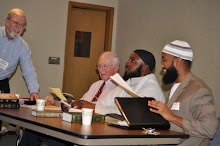
After Domke’s talk, a panel of reporters will discuss news and religious issues they have covered, and several religious leaders will offer their reactions.
Domke wrote “The God Strategy: How Religion Became a Weapon in American Politics” and “God Willing? Political Fundamentalism in the White House, the ‘War on Terror,’ and the Echoing Press.”
Media panelists will be Allie Shah, a reporter at the Star Tribune in Minneapolis who is Muslim and has won awards for her cultural sensitivity in reporting; Ambar Espinoza, a Minnesota Public Radio reporter based in Collegeville who covers Latino and Muslim communities; David Unze, St. Cloud Times reporter who covered both the pedophile priest scandal and the St. Cloud State Oratorio tour to Holocaust sites in France and Germany last summer.
Religious representatives will be Joseph A. Edelheit, St. Cloud State professor of religious and Jewish studies who has been a rabbi for 35 years and has organized a variety of interfaith conversations; and Hassan Mohamud, an imam, lawyer and professor of law and Islamic studies who has been critical of the Twin Cities media coverage of Muslim issues, including the disappearance of young Somali men in Minneapolis.
A second panel at 1:15 p.m. will involve people who specialize in coverage of communities of faith.
Panelists are Julia Opoti, editor of Msale — The African Community Newspaper of Minnesota; Mordecai Specktor, editor and publisher of the American Jewish World and Joe Towalski, editor of The Catholic Spirit of St. Paul and The Visitor of St. Cloud; and Diana and Dawn Madsen, twin sisters who host the Morning Show on Spirit 92.9.
Monday, March 30, 2009


Gym gives Somali girls own court time
Gym gives Somali girls own court time
The Associated Press • March 29, 2009
Read Comments(34)Recommend (2)Print this page E-mail this article Share Del.icio.us
MINNEAPOLIS — Nearly every day, Somali boys and young men gather at the Brian Coyle Center in the Cedar-Riverside neighborhood to shoot hoops in the gym.
But there are times when the boys are locked out — and the gym is set aside just for the girls.
In a single-sex environment, the high school students and young women can learn basketball, cut loose a little, and they don’t need to wear scarves and long skirts for religious modesty.
Fatimah Hussein, who works for the Confederation of Somali Community in Minnesota, said the boys were having fun playing basketball every day, and she wanted to start something for the girls.
Melpomene, a St. Paul nonprofit group devoted to women’s health, helped round up balls, scrimmage jerseys and two interns to teach the rules.
Hussein started Sunday afternoon sessions, and recently added Wednesday nights. She said it’s been an adjustment — for the boys.
“They usually have the gym every day and they’re like, ‘You guys have weekends, now you want the gym weekdays?’ ” Hussein said. She responded, “ ‘We have the same bodies as you guys. You guys have fun and we want to have the same.’ ”
There have been newcomers every week. And the young women say they are having fun. There’s lots of shooting and cheering, and while the door is propped open for latecomers, Hussein said it’s private enough that the women can relax.
“The thing that really got me was the fact there were no guys. And it’s really hard to find that,” said Sheenah Abdulle, a senior at Edison High School in Minneapolis. “You try to go places and there’s always guys there. And with our religion and our customs, you can’t; it doesn’t allow that.”
She said her co-ed gym class at her high school was uncomfortable. She couldn’t wear the required gym clothes of pants and a shirt.
“I couldn’t do that because of my religion, so I got docked points. And then I had to run around and I can’t run around with guys, so then I got docked points. I mean it’s a luck that I passed the class!” she said.
Other players said they reached compromises in school gym class, like wearing modest clothing on top of gym clothes. But ideally, they said, separate classes are better.
Hussein calls her group “a sister’s club,” where the girls can focus on the game.
Jo Ann Buysse, a Melpomene volunteer, is one cheerleader. She used to coach college women’s basketball and now directs the undergraduate Sports Management Program at the University of Minnesota. On a recent Sunday, she shouted encouragement from the sidelines, and worked with the women on zone defense.
“It’s really fun to see them have so much fun, even if they’re not playing according to all the rules,” Buysse said. “But they’re learning and they’re improving every week and they enjoy their time together, and it’s about getting girls physically active.”
Recently, Buysse showed Hussein an old pool at the Un iversity of Minnesota where women might be able to swim privately. She’s eager to help Hussein expand athletic opportunities for Muslim women.
For now, the women are coming from all over the city to play basketball.
Hussein said they have begun leaving their athletic shoes under Hussein’s desk — ready for the next time they come to play.
The Associated Press • March 29, 2009
Read Comments(34)Recommend (2)Print this page E-mail this article Share Del.icio.us
MINNEAPOLIS — Nearly every day, Somali boys and young men gather at the Brian Coyle Center in the Cedar-Riverside neighborhood to shoot hoops in the gym.
But there are times when the boys are locked out — and the gym is set aside just for the girls.
In a single-sex environment, the high school students and young women can learn basketball, cut loose a little, and they don’t need to wear scarves and long skirts for religious modesty.
Fatimah Hussein, who works for the Confederation of Somali Community in Minnesota, said the boys were having fun playing basketball every day, and she wanted to start something for the girls.
Melpomene, a St. Paul nonprofit group devoted to women’s health, helped round up balls, scrimmage jerseys and two interns to teach the rules.
Hussein started Sunday afternoon sessions, and recently added Wednesday nights. She said it’s been an adjustment — for the boys.
“They usually have the gym every day and they’re like, ‘You guys have weekends, now you want the gym weekdays?’ ” Hussein said. She responded, “ ‘We have the same bodies as you guys. You guys have fun and we want to have the same.’ ”
There have been newcomers every week. And the young women say they are having fun. There’s lots of shooting and cheering, and while the door is propped open for latecomers, Hussein said it’s private enough that the women can relax.
“The thing that really got me was the fact there were no guys. And it’s really hard to find that,” said Sheenah Abdulle, a senior at Edison High School in Minneapolis. “You try to go places and there’s always guys there. And with our religion and our customs, you can’t; it doesn’t allow that.”
She said her co-ed gym class at her high school was uncomfortable. She couldn’t wear the required gym clothes of pants and a shirt.
“I couldn’t do that because of my religion, so I got docked points. And then I had to run around and I can’t run around with guys, so then I got docked points. I mean it’s a luck that I passed the class!” she said.
Other players said they reached compromises in school gym class, like wearing modest clothing on top of gym clothes. But ideally, they said, separate classes are better.
Hussein calls her group “a sister’s club,” where the girls can focus on the game.
Jo Ann Buysse, a Melpomene volunteer, is one cheerleader. She used to coach college women’s basketball and now directs the undergraduate Sports Management Program at the University of Minnesota. On a recent Sunday, she shouted encouragement from the sidelines, and worked with the women on zone defense.
“It’s really fun to see them have so much fun, even if they’re not playing according to all the rules,” Buysse said. “But they’re learning and they’re improving every week and they enjoy their time together, and it’s about getting girls physically active.”
Recently, Buysse showed Hussein an old pool at the Un iversity of Minnesota where women might be able to swim privately. She’s eager to help Hussein expand athletic opportunities for Muslim women.
For now, the women are coming from all over the city to play basketball.
Hussein said they have begun leaving their athletic shoes under Hussein’s desk — ready for the next time they come to play.
Wednesday, March 4, 2009
Bill Would Ban Headwear On Driver's License Photos

WCCO.COM
Tuesday, March 03, 2009
Most people don't like their driver's license picture, but if a state lawmaker has his way, one group of Minnesotans said they are going to like theirs even less. State Rep. Steve Gottwalt of St. Cloud is trying to pass a bill that would ban any kind of headwear worn on a driver's license pictures.
Gottwalt said it is a matter of safety to help law enforcement identify people easier. However, people in the Muslim community said covering their heads is their religious right.
"We cover our hair for that reason. We follow our religion -- what God told us to do," said Suban Khalif.
Khalif and Hindia Ali are Muslim women. As part of their faith, they wear a head scarf nearly 24 hours a day. To take it off, for even a few minutes, is a big deal. That is why the women are so opposed to Gottwalt's bill. They think their faces are enough to identify them.
"Daily, I cover my hair. And I don't think I need to show my hair on a driver's license. It just doesn't make sense to me at all," said Khalif.
"My facial expressions, my face, my nose, my eyes should be clearly enough for any person to tell us apart," Ali agreed.
The Muslim community points out that Jews, Christians and other religions would also be affected if the bill passed.
"There's no logic behind the bill, so we want to know really what is the motivation behind the bill," said Aman Obsiye of the United Somali Movement.
"It's really not about religion at all. It's about public safety," said Gottwalt.
Gottwalt said the motivation for this bill came from law enforcement. He said it is not about singling anyone out, it is about keeping headwear off everyone's driver's license picture in order to make it fair, and to make it easier for police.
"We've heard law enforcement people tell us about gangbangers wearing their hats differently and those kinds of things that kind of get in the way of quickly identifying who this person is," said Gottwalt.
His supporters agree.
State Rep. Steve Gottwalt said ban any kind of headwear on a driver's license is a matter of safety to help law enforcement identify people easier. However, people in the Muslim community said covering their heads is their religious right. CBS
"People identify individuals more than just the eyes, and the nose, and the mouth and the front face. They look at the hair, and the ears, and the sideburns and other features of the head," said Sgt. Jason Burke of the St. Cloud Police Department.
Gottwalt's bill allows for some exceptions. If a person has a deformity or a medial condition that requires headwear, then they can wear it for their driver's license picture. Gottwalt said he is hoping to get a committee hearing for the bill soon. The state of Alabama is considering similar legislation.
Airline security entrances have seen changes regarding headwear. Just a couple of years ago the Transportation Security Administration changed its rules. It used to be anyone wearing a head covering had to go through security twice. Now, it is up to the screener if they think more than one pass is necessary.
Monday, March 2, 2009
Seventh annual Gather the Women event brings together all ages

ST. JOSEPH — Every woman has a story to tell.
At the seventh annual Gather the Women celebration at the College of St. Benedict in St. Joseph, they can share their stories to better understand themselves and one another.
“It is through the sharing of stories that barriers have a tendency of coming down, or at least lessen, and people can talk to each other more on a one-on-one basis,” Sue Smith-Grier said.
Smith-Grier, a Minneapolis storyteller, will be featured at the free event March 21 with her portrayal of Harriet Tubman’s role in the Underground Railroad, bringing slaves to the North.
“It’s a story of hardship, difficult times and slavery, and coming into freedom — a journey of gathering inner strength to overcome obstacles and helping people along the way,” she said.
Power
Gather the Women is a global organization honoring International Women’s Day that awakens and celebrates the collective power of women, according to organizers.
“When we get together, we are providing self-sufficiency to women, so in the future they can be new leaders in the community,” said Brianda Cediel, executive director and co-founder of Hands Across the World, a resource for immigrants and refugees in Central Minnesota.
Cediel is a co-organizer of the Gather the Women celebration in St. Joseph, which is the largest in the nation. Her mother hails from Colombia and her father is of Italian descent.
“For me, the most exciting thing about Gather the Women is it’s an opportunity for women from various cultures to get to know one another,” said Linda Hutchinson, a co-organizer of the event.
Omeka! program brings cultures together

This is a woman's world. At least it is during Omeka!
It is a world where guests greet each other with a hug and a smile. It is a world where the welcoming feeling is immediate when these African and African-American women walk into a hostess' home on a Sunday.
As Central Minnesota has become increasingly diverse, programs have risen to help newcomers adapt to the nuances of American culture. But fewer opportunities have existed for social interaction between cultures.
With monthly gatherings in local homes, Omeka!, launched in November, is making those connections for African and African-American women in Central Minnesota.
"Omeka!" is a Swahili word meaning to display; to speak out; to spread out.
In an atmosphere complete with food, music and storytelling, the women share their journeys, cultures and ideas, and they learn from one another.
Debra Leigh, an Omeka! organizer and professor at St. Cloud State University, recognized the division that was developing between African and African-American women in the St. Cloud area. Working with Sister Chrispina Lekule, a student at St. Cloud State University, she traveled to Zanzibar, Tanzania and began researching resources for African women in terms of survival skills, leadership skills and building community.
"We wanted to see what it takes for women to succeed," Leigh said.
Lekule said they also visited different women's groups to see what they were doing to empower themselves economically. Their findings, coupled with the observed cultural division in St. Cloud, led to Omeka!
Thursday, January 29, 2009
Store becomes gathering place

By Britt Johnsen • bljohnsen@stcloudtimes.com • January 28, 2009
Read Comments(54)Recommend (6)Print this page E-mail this article Share Del.icio.us
Buzz up! A new group of stores in St. Cloud isn't just a place to buy rice, lamb and spices. It's a community hub where people gather to talk with each other, eat lunch at a deli and watch television.
Mogadishu Meat & Grocery Store opened earlier this month at 1725 Seventh St. S. The former gas station is now a cluster of commerce. You can buy groceries such as Italian cookies, spices used for East African and Middle Eastern dishes, and rice. You can buy clothes, rugs, perfume and audio CDs with readings from the Quran. And you can eat lunch at a restaurant inside the store.
Stop by on any given day and you'll find cars in many of the parking lot's spaces. Chatter can be heard throughout the store, by the cash register, in the aisles by the cookies and juice, and over coffee and food in front of a television. The deli offers such meals as catfish with fries and pasta with goat meat.
Owner Tohow Siyad says the store has become a community gathering place. Students sometimes come by on Sundays to watch sports on TV, and some customers come just to eat meals at the deli.
It's a good place for people to come together, he says.
Siyad owns other grocery stores, including St. Cloud Meat & Grocery Store, as well as a store in Minneapolis called Macca Meat & Grocery. He recently moved to St. Cloud.
The economy is tough on many businesses — he said he is breaking even right now, not losing money but not making money, either. And the Somali population — one segment of its shoppers — has been hit with unemployment as manufacturers that employ Somali immigrants have laid off employees to cope with the recession.
But the demand for the products Siyad offers is still there.
This is the fifth East African grocery store to open in St. Cloud, said Mohamoud Mohamed, director of the St. Cloud Area Somali Salvation Organization. The fact that a fifth store can open and survive says something about the demand for their products and services. It also shows that the Somali community, despite the effects of layoffs, is still thriving in St. Cloud.
"The people are settling and have a sense of establishing themselves," Mohamed said.
Even though many of the store's customers are East African, it welcomes all shoppers. Siyad says his store sees every ethnicity, from Asian to Caucasian to African.
"They eat. They buy something. That's what they need," he said.
Sunday, January 25, 2009
‘I Am Somalia’ event to highlight culture
‘I Am Somalia’ event to highlight culture
Times staff report • January 22, 2009
Read Comments(10)Recommend (3)Print this page E-mail this article Share Del.icio.us
Buzz up! A celebration of Somali culture will begin at 6 p.m. Saturday in the Atwood Ballroom on the campus of St. Cloud State University.
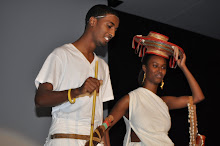
“I Am Somalia” will include performances, poetry, a fashion show, traditional cuisine and other activities showcasing Somali culture. It is sponsored by St. Cloud State University and the Somali Student Association.
The cost is $7 for students and $10 for faculty and community members.
For details, contact student association at somali@stcloudstate.edu.
Times staff report • January 22, 2009
Read Comments(10)Recommend (3)Print this page E-mail this article Share Del.icio.us
Buzz up! A celebration of Somali culture will begin at 6 p.m. Saturday in the Atwood Ballroom on the campus of St. Cloud State University.
“I Am Somalia” will include performances, poetry, a fashion show, traditional cuisine and other activities showcasing Somali culture. It is sponsored by St. Cloud State University and the Somali Student Association.
The cost is $7 for students and $10 for faculty and community members.
For details, contact student association at somali@stcloudstate.edu.
Saturday, January 17, 2009
Man arrested after assault, threats

e arrested a St. Cloud man Thursday morning in connection with a report of a domestic assault.
Police were called at 1:12 a.m. to the 600 block of 14th Street South. A man struck the mother of his child several times in the back and neck and choked her, police said.
He threatened to kill the woman and pulled the phone cord from the wall when she grabbed the phone, the report said. Hussein Hassan Farah, 23, was taken to Stearns County Jail. The 25-year-old victim sustained minor injuries.
Sunday, December 21, 2008
Voices on the economy: Worker holds on to faith, patience
By Britt Johnsen • bljohnsen@stcloudtimes.com • December 15, 2008
Mohamed Ismail was working close to 40 hours a week as a production worker in Clearwater. But the business cut its budget, reducing his work to about 25 hours per week.
He’s been looking for a job every day since that happened. He’s been praying and searching and waiting. And he has been talking with Mohamoud Mohamed, director of the St. Cloud Area Somali Salvation Organization.
People like Ismail may not be using advertisements or nonprofit groups as much as they are using Mohamed’s office in their job searches. His office on Wilson Avenue is a hub, a gathering place, for the Somali community. That’s where they find out about job openings and get support during hard times.
As a recession bleeds into the community, and more employers lay off workers or cut back hours, Mohamed sees how it is impacting the lives of many members of the Somali community.
It’s not that more people are coming in to Mohamed’s office. It’s what they’re talking about.
Before people even say hello to Mohamed in the morning, they ask him, “Do you have news for me?” They want to know if he knows about any jobs, Mohamed said.
But “we are not hearing good news,” he said.
Mohamed estimates that 1,500 Somali immigrants are unemployed.
He does what he can to help them. Some, though, have to move to other states. He’s helped find jobs for local Somali immigrants in places such as Lincoln, Neb. He’s also helped immigrants in St. Cloud find work in Hutchinson, Marshall and Little Falls.
Ismail is looking elsewhere for employment. Denver. California. Chicago.
But his family is here — his wife and his children, ages 9, 13 and 15. It would be tough to move them.
He is also thinking about becoming a taxi driver.
Few firms post hiring signs on the door. Still, he goes to companies and fills out applications. Visiting in person brings him a better chance at getting hired, so he can show he is interested and dedicated, he said. His best shot? When they say they’ll call if they have an opening, he said.
In the meantime, he’s done what his employer did: cut his budget.
And Ismail practices his Muslim faith. Mohamed explained that Muslims believe God, or Allah, writes people’s stories before they are born.
So Ismail, during his daily bread, is patient. He accepts the day ahead for what it brings. “You have to just adjust yourself to ... the situation,” he said, speaking through Mohamed as his interpreter.
“We appreciate it if we receive more. If we receive less, we thank God,” he said.
He expects this situation to continue for some time.
“It’s not going to change overnight,” Mohamed said. “I pray for our community.”
Mohamed Ismail was working close to 40 hours a week as a production worker in Clearwater. But the business cut its budget, reducing his work to about 25 hours per week.
He’s been looking for a job every day since that happened. He’s been praying and searching and waiting. And he has been talking with Mohamoud Mohamed, director of the St. Cloud Area Somali Salvation Organization.
People like Ismail may not be using advertisements or nonprofit groups as much as they are using Mohamed’s office in their job searches. His office on Wilson Avenue is a hub, a gathering place, for the Somali community. That’s where they find out about job openings and get support during hard times.
As a recession bleeds into the community, and more employers lay off workers or cut back hours, Mohamed sees how it is impacting the lives of many members of the Somali community.
It’s not that more people are coming in to Mohamed’s office. It’s what they’re talking about.
Before people even say hello to Mohamed in the morning, they ask him, “Do you have news for me?” They want to know if he knows about any jobs, Mohamed said.
But “we are not hearing good news,” he said.
Mohamed estimates that 1,500 Somali immigrants are unemployed.
He does what he can to help them. Some, though, have to move to other states. He’s helped find jobs for local Somali immigrants in places such as Lincoln, Neb. He’s also helped immigrants in St. Cloud find work in Hutchinson, Marshall and Little Falls.
Ismail is looking elsewhere for employment. Denver. California. Chicago.
But his family is here — his wife and his children, ages 9, 13 and 15. It would be tough to move them.
He is also thinking about becoming a taxi driver.
Few firms post hiring signs on the door. Still, he goes to companies and fills out applications. Visiting in person brings him a better chance at getting hired, so he can show he is interested and dedicated, he said. His best shot? When they say they’ll call if they have an opening, he said.
In the meantime, he’s done what his employer did: cut his budget.
And Ismail practices his Muslim faith. Mohamed explained that Muslims believe God, or Allah, writes people’s stories before they are born.
So Ismail, during his daily bread, is patient. He accepts the day ahead for what it brings. “You have to just adjust yourself to ... the situation,” he said, speaking through Mohamed as his interpreter.
“We appreciate it if we receive more. If we receive less, we thank God,” he said.
He expects this situation to continue for some time.
“It’s not going to change overnight,” Mohamed said. “I pray for our community.”
Hands Across the World: Helping for 5 years
By TaLeiza Calloway • tcalloway@stcloudtimes.com • December 19, 2008
Five years ago, Hands Across the World began with the intent to help immigrants learn English and adapt to American culture. Over the years, the nonprofit organization has blossomed into a program that offers much more.
“It has taken us five years to shape the curriculum and become an integral program,” co-founder Brianda Cediel said. “I believe that this is one of the most important programs in our community.”
The mission
Hands Across the World serves as the first contact for many immigrants and refugees when they arrive in St. Cloud. Through classes and training, the program helps families survive after arrival. It has helped 160 new families this year and more than 750 families total, she said.
It has taken a long time to build the program because they take the time to meet all participants and address their needs, Cediel said. From knocking on doors and visiting with families to monthly sessions on a variety of issues, the needs of participants are a priority.
“This is a community-based program. Each need is different,” Cediel said. “Each person is one world — one culture.”
The merging of cultures enriches the program, and that diversity is evident among the students and staff.
About eight volunteers help with Hands Across the World programs.
They come from countries such as Mexico, Venezuela, Somalia and Togo.
“The volunteers are very committed,” Cediel said.
Sister Antonia (Tonie) Rausch, co-founder of the program, remembers the first winter for her Somali students in the program. They wore sandals in the snow.
Now, they teach each other about dressing warm, she said.
Rausch has taught in the program since its inception. The feedback has been positive about the program, and it is continuing to grow, she said.
“From day to day, we have about 30 to 50 people,” Rausch said. “You get a real taste of the realities of their lives (by working with them).”
Program growth
The program offers many services that benefit entire families. They include English, math, computer skills, health, cooking, civics and citizenship classes.
Changes to the program include extended adult education courses, a monthly women’s breakfast, child care for parents, preschool preparation for Early Head Start and parenting training via the Early Childhood STEM-A or the Science, Technology Engineering, Math and Arts program.
Cediel said Hands Across the World also has teamed up with the University of Minnesota’s Youth Institute to tackle youth gangs in the community. They work with police officers, parents and children in this program.
“We are building leaders for life,” Cediel said about the initiative. When crises happen, it is important to be proactive, she said.
Volunteer Mary Lou Lenz has taught English as a Second Language in the program for the past three years and says the program has been helpful. She often sees students after class, huddle up and continue working on assignments.
“The lack of English is their main problem when it comes to finding jobs (and more),” Lenz said. “They are very motivated to learn.”
Five years ago, Hands Across the World began with the intent to help immigrants learn English and adapt to American culture. Over the years, the nonprofit organization has blossomed into a program that offers much more.
“It has taken us five years to shape the curriculum and become an integral program,” co-founder Brianda Cediel said. “I believe that this is one of the most important programs in our community.”
The mission
Hands Across the World serves as the first contact for many immigrants and refugees when they arrive in St. Cloud. Through classes and training, the program helps families survive after arrival. It has helped 160 new families this year and more than 750 families total, she said.
It has taken a long time to build the program because they take the time to meet all participants and address their needs, Cediel said. From knocking on doors and visiting with families to monthly sessions on a variety of issues, the needs of participants are a priority.
“This is a community-based program. Each need is different,” Cediel said. “Each person is one world — one culture.”
The merging of cultures enriches the program, and that diversity is evident among the students and staff.
About eight volunteers help with Hands Across the World programs.
They come from countries such as Mexico, Venezuela, Somalia and Togo.
“The volunteers are very committed,” Cediel said.
Sister Antonia (Tonie) Rausch, co-founder of the program, remembers the first winter for her Somali students in the program. They wore sandals in the snow.
Now, they teach each other about dressing warm, she said.
Rausch has taught in the program since its inception. The feedback has been positive about the program, and it is continuing to grow, she said.
“From day to day, we have about 30 to 50 people,” Rausch said. “You get a real taste of the realities of their lives (by working with them).”
Program growth
The program offers many services that benefit entire families. They include English, math, computer skills, health, cooking, civics and citizenship classes.
Changes to the program include extended adult education courses, a monthly women’s breakfast, child care for parents, preschool preparation for Early Head Start and parenting training via the Early Childhood STEM-A or the Science, Technology Engineering, Math and Arts program.
Cediel said Hands Across the World also has teamed up with the University of Minnesota’s Youth Institute to tackle youth gangs in the community. They work with police officers, parents and children in this program.
“We are building leaders for life,” Cediel said about the initiative. When crises happen, it is important to be proactive, she said.
Volunteer Mary Lou Lenz has taught English as a Second Language in the program for the past three years and says the program has been helpful. She often sees students after class, huddle up and continue working on assignments.
“The lack of English is their main problem when it comes to finding jobs (and more),” Lenz said. “They are very motivated to learn.”
Thursday, November 20, 2008
Judge to rule on workers’ benefits
By David Unze • dunze@stcloudtimes.com • November 20, 2008
Read Comments(16)Recommend Print this page E-mail this article Share Del.icio.us
Facebook
Digg
Reddit
Newsvine
Buzz up! An unemployment law judge held a hearing Wednesday in St. Cloud for nearly two dozen Somalis who used to work at Gold’n Plump but no longer do because of a dispute over prayer time in the workplace.
The former Gold’n Plump workers are appealing a decision by the state Department of Employment and Economic Development to deny them unemployment benefits. Unemployment Law Judge Frank Villaume III listened to testimony Wednesday and said he would issue a decision in the future.
Gold’n Plump made news earlier this month with the announcement it had settled lawsuits brought by Muslim workers and the Equal Employment Opportunity Commission about prayer breaks at the Cold Spring plant.
The group of workers involved in Wednesday’s hearing at the Lake George Municipal Complex worked for Gold’n Plump in Cold Spring until early September. At issue is whether they were fired or quit.
Villaume said that if the workers quit, he must decide whether it was for a reason that would be considered an exception to the ineligibility for benefits.
And if the workers were fired, he had to decide if it was because of conduct that would make them ineligible for benefits.
Gold’n Plump admitted no wrongdoing in its settlement of the class-action workers’ lawsuit and the EEOC suit, according to testimony Wednesday from Timothy Thornton, an attorney who represented the company in settlement negotiations.
The company settled the lawsuit to stabilize the workplace and stimulate morale, he said.
That settlement allows for two 10-minute breaks — one in the morning and one in the afternoon — instead of one 15-minute break. An unpaid, 30-minute lunch break remains.
The lawsuit settlement calls for Gold’n Plump to pay $215,000 to the EEOC, which will decide who gets that money and how much. The settlement is scheduled for final approval Feb. 17 in U.S. District Court
Read Comments(16)Recommend Print this page E-mail this article Share Del.icio.us
Digg
Newsvine
Buzz up! An unemployment law judge held a hearing Wednesday in St. Cloud for nearly two dozen Somalis who used to work at Gold’n Plump but no longer do because of a dispute over prayer time in the workplace.
The former Gold’n Plump workers are appealing a decision by the state Department of Employment and Economic Development to deny them unemployment benefits. Unemployment Law Judge Frank Villaume III listened to testimony Wednesday and said he would issue a decision in the future.
Gold’n Plump made news earlier this month with the announcement it had settled lawsuits brought by Muslim workers and the Equal Employment Opportunity Commission about prayer breaks at the Cold Spring plant.
The group of workers involved in Wednesday’s hearing at the Lake George Municipal Complex worked for Gold’n Plump in Cold Spring until early September. At issue is whether they were fired or quit.
Villaume said that if the workers quit, he must decide whether it was for a reason that would be considered an exception to the ineligibility for benefits.
And if the workers were fired, he had to decide if it was because of conduct that would make them ineligible for benefits.
Gold’n Plump admitted no wrongdoing in its settlement of the class-action workers’ lawsuit and the EEOC suit, according to testimony Wednesday from Timothy Thornton, an attorney who represented the company in settlement negotiations.
The company settled the lawsuit to stabilize the workplace and stimulate morale, he said.
That settlement allows for two 10-minute breaks — one in the morning and one in the afternoon — instead of one 15-minute break. An unpaid, 30-minute lunch break remains.
The lawsuit settlement calls for Gold’n Plump to pay $215,000 to the EEOC, which will decide who gets that money and how much. The settlement is scheduled for final approval Feb. 17 in U.S. District Court
Tuesday, November 11, 2008
Gold’n Plump awards workers in settlement
Gold’n Plump awards workers in settlement
By Britt Johnsen • bljohnsen@stcloudtimes.com • November 11, 2008
Read Comments(186)Recommend (6)
Buzz up! A group of up to 100 Muslim people will receive $365,000 after discrimination cases involving Gold’n Plump were settled earlier this fall.
Attorneys representing employees of Gold’n Plump Poultry Inc. released a statement late Monday explaining details in two cases involving Muslim employees who worked in plants in Cold Spring and Arcadia, Wis.
Gold’n Plump could not be reached for comment Monday evening.
When the federally mediated settlement was announced in September, the poultry processor had agreed to allow Muslim workers to take short prayer breaks and to refuse to handle pork. The agreement also requires employers to accommodate the Islamic prayer schedule and the belief that the Quran prohibits touching and eating pork products.
The plants will add a paid break during the second half of each shift to accommodate prayer. Timing of the added break can now fluctuate during the year so it can coordinate with Muslim prayer schedules. During Ramadan, for example, prayer times vary.
A group of 40-80 people who made religious discrimination claims against Gold’n Plump will share $215,000, said Nick Pladson, trial attorney for the U.S. Equal Employment Opportunity Commission.
The suit was brought in 2006 on behalf of nine people who worked at Gold’n Plump plants in Cold Spring and Arcadia, Wis.
The suit also alleged that a group called the Work Connection based in St. Paul required Muslim applicants to sign a form saying they could not refuse to handle pork — and that Muslim workers who didn’t sign the document weren’t hired. The group hired workers for Gold’n Plump plants.
A group of 26 employees will share $150,000 regarding those complaints, Pladson said. Those workers will be offered a job at Gold’n Plump if they were previously turned away because they didn’t sign the form. The agency also won’t use the form, according to the statement released Monday.
The Work Connection could not be reached for comment late Monday. But earlier this fall, Jeff Wold, vice president of the Work Connection, said his company “categorically denied all the allegations of discrimination” and was “happy to say that this case has been resolved.”
By Britt Johnsen • bljohnsen@stcloudtimes.com • November 11, 2008
Read Comments(186)Recommend (6)
Buzz up! A group of up to 100 Muslim people will receive $365,000 after discrimination cases involving Gold’n Plump were settled earlier this fall.
Attorneys representing employees of Gold’n Plump Poultry Inc. released a statement late Monday explaining details in two cases involving Muslim employees who worked in plants in Cold Spring and Arcadia, Wis.
Gold’n Plump could not be reached for comment Monday evening.
When the federally mediated settlement was announced in September, the poultry processor had agreed to allow Muslim workers to take short prayer breaks and to refuse to handle pork. The agreement also requires employers to accommodate the Islamic prayer schedule and the belief that the Quran prohibits touching and eating pork products.
The plants will add a paid break during the second half of each shift to accommodate prayer. Timing of the added break can now fluctuate during the year so it can coordinate with Muslim prayer schedules. During Ramadan, for example, prayer times vary.
A group of 40-80 people who made religious discrimination claims against Gold’n Plump will share $215,000, said Nick Pladson, trial attorney for the U.S. Equal Employment Opportunity Commission.
The suit was brought in 2006 on behalf of nine people who worked at Gold’n Plump plants in Cold Spring and Arcadia, Wis.
The suit also alleged that a group called the Work Connection based in St. Paul required Muslim applicants to sign a form saying they could not refuse to handle pork — and that Muslim workers who didn’t sign the document weren’t hired. The group hired workers for Gold’n Plump plants.
A group of 26 employees will share $150,000 regarding those complaints, Pladson said. Those workers will be offered a job at Gold’n Plump if they were previously turned away because they didn’t sign the form. The agency also won’t use the form, according to the statement released Monday.
The Work Connection could not be reached for comment late Monday. But earlier this fall, Jeff Wold, vice president of the Work Connection, said his company “categorically denied all the allegations of discrimination” and was “happy to say that this case has been resolved.”
Subscribe to:
Posts (Atom)