Sunday, July 5, 2009

New immigrants: Glad to be in the land of the free


New immigrants: Glad to be in the land of the free
By Jamie Hughes • jahughes@stcloudtimes.com • July 4, 2009

Read Comments(49)

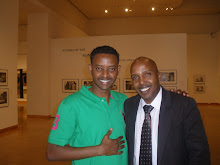
Ahmed Abdulle doesn’t need July 4 to celebrate living in the United States. He does it, on some level, 365 days a year.


“When I sleep at night, I think about the life I was in and the life those people are in and are having there,” he said.

Abdulle is originally from Somalia. He fled his home country in 1996 because of its violent unrest, spent a decade in a refugee camp in Kenya, then came to the United States in 2006.

Abdulle, a 27-year-old electrical engineering student at St. Cloud State University, said security is the best gift the states has given him and other refugees.

“First of all, if you don’t have security, you can’t work and if you can’t work you won’t be able to have a life,” he said. “As a human being you need security. Another thing is we see war every night. You don’t know when you will die. This problem will get you. Right now all we worry about is the people who stay there, who are in the refugee camps.”

He said security also offers the mind a rest.

“If you don’t have security you won’t be able to function in a peace of mind,” he said. “You won’t be able to be creative. You won’t be able to do anything.”

Although he’s grateful for what the United States has given him, Abdulle said he was a bit naïve about the land of opportunities that awaited him before he left Kenya.

Abdulle said the weather is what shocked him first and foremost.

“The first time I landed it was January, so it was snow all over the place,” he said. “We use ice over there to cool the water so we can drink so I thought ‘what’s going on here?’ There’s ice all over the place so the first that scared me was the ice, the snow, the cold weather.”

But aside from a large climate difference, Abdulle said he was too optimistic about finding a job.

“When I came here I didn’t have relatives here so what happens is you have to stand by your own,” he said. “You have to go out and find a job, you don’t know how to search (for) a job, you have to sustain your life ... you don’t have a penny. So life was also tough here in the first year.”

Local Somalis will mourn victims

Local Somalis will mourn victims
By Lawrence Schumacher • lschumacher@stcloudtimes.com • June 27, 2009

Read Comments(21)Recommend(3)

St. Cloud-area Somali residents today will publicly mourn victims of renewed violence in their homeland. Unrest has claimed hundreds of lives and made thousands flee the country in the last two months.


Hundreds of Somali refugees living in St. Cloud have lost friends and relatives in the latest wave of violence, said Mohamoud Mohamed, executive director of the St. Cloud Area Somali Salvation Organization.

“Almost everybody in the city has lost somebody he knows, and just in the last month or so,” he said. “They are doing barbaric things, mutilating body parts in the name of Islam.”
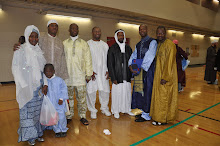
Somali families who have lost loved ones in the renewed fighting decided to show their grief publicly at an open gathering set for 1:30 p.m. today at Salem Lutheran Church, 90 Riverside Drive SE, Mohamed said.

“These are international terrorists that are behind this, and we are opposed to everything they stand for,” he said.

Since May 7, fighting between Islamist insurgent groups and government forces has killed at least 225 people, and displaced nearly 170,000 from their homes in the capital, Mogadishu.

Warlords and Islamic al-Shabab militants control the countryside, which has become a growing base for al-Qaida terrorists arriving from Yemen and South Asia, U.S. officials have said.

An estimated 300,000 Somalis have fled to neighboring countries in the last two months to escape the violence, which is another concern for St. Cloud-area Somalis, Mohamed said.

Somalia has not had an effective government since 1991.

The Obama administration has decided to bolster efforts to support Somalia’s embattled government by providing money for weapons and helping the military and neighboring Djibouti train Somali forces.

The Associated Press contributed to this report.

Thursday, June 25, 2009

Mayor reveals Rock-On Award winners for 2009

Mayor reveals Rock-On Award winners for 2009
June 24, 2009


Granite City Days will start Thursday as Mayor Dave Kleis presents the annual Rock-On Awards during the grand opening ceremony at St. Cloud State University.

The mayor will present five Rock-On Awards to individuals and organizations in St. Cloud that have demonstrated outstanding civic participation, leadership and achievements.

This year’s winners include:

Catholic Charities Emergency Services/Marine Corps League Valhalla Detachment, for work with Toys for Tots;

Fartun Hussein, for her multifaceted work with the Somali community;

The St. Cloud All-City Marching Band, in its 25th summer;

The Rakke family — Mark, Pam, Zack, Peter and Isaac — who will mow a park this summer as part of the Adopt-a-Park program;

The Whitney Senior Center, for serving older Central Minnesotans.

The opening ceremony is at 7 p.m. at St. Cloud State University during the Lemonade Concert and Art Fair day, which kicks off the festival.

Hazel Youngmann is Kleis’s appointee as the 2009 Granite City Days parade grand marshal.

Youngmann is involved in issues involving seniors and people with disabilities.

The parade is at 6:30 p.m. Saturday.

The parade route is different this year. It starts near 14th Street North along Northway Drive moving south in the two southbound lanes to 13th Street North.

Routes will continue west past North Junior High, then left onto 31st Avenue North and moving to 10th Street North.

Monday, June 22, 2009

10 organizations given grants by nonprofit group

10 organizations given grants by nonprofit group
Times staff report • June 21, 2009

Post a CommentRecommendPrint this page E-mail this article Share Del.icio.us

LITTLE FALLS — The Initiative Foundation of Little Falls has given out 10 grants for a total of $31,000 to some Central Minnesota communities.


The St. Cloud Area Somali Salvation Organization received a $2,000 grant for hosting five early childhood mental health focus group meetings with Somali parents.

The Stearns County Soil and Water conservation District in Waite Park got $2,000 for a project that compiles planning documents and water quality data. The purpose is for Mississippi River communities to “preserve this natural resource,” according to a news release.

Horizon Health Inc. in Pierz got $1,000 for helping preschool and early elementary school children in low-income housing find literacy programs.

The Onamia school district also received a $1,500 grant for a summer youth program teaching children about working in the labor force.

Other grants went to organizations in Minnesota cities Brainerd, Mora, Sandstone and Cass Lake. A grant also went to an organization based in Akron, Ohio, which has programs in North Branch, Brainerd, Princeton, Finlayson, Avon, St. Joseph and Rockford.

The Initiative Foundation also issued business financing for the following recipients as a way to promote local jobs and ownership:

Central Marble Products Inc. of Rice; Newmans Industries Inc. in Royalton; Tapper’s Inc. in Monticello; and Ever Cat Fuels LLC in Isanti.

Amounts and terms of the loans were not available

Tuesday, June 16, 2009

Death of Somali teen is mystery


Death of Somali teen is mystery
The Associated Press • June 10, 2009

Read Comments(18)RecommendPrint this page E-mail this article Share Del.icio.us

MINNEAPOLIS ) — He was an infant when he left his homeland of Somalia. He grew up an American, a bright student with dreams of becoming a doctor or lawyer. But those dreams ended when 18-year-old Burhan Hassan returned to Somalia months ago and eventually was killed under mysterious circumstances.


Hassan was one of about a dozen young Somali men who have gone missing from the Minneapolis area over the last couple years — recruited, their families say, by radical elements in Somalia. Relatives said they learned Friday that he had been killed and buried in Mogadishu, the Somali capital, but they had few details.

His death follows a suicide bombing carried out in that warring Horn of Africa country by a young Somali man from Minneapolis last October.

“We believe he was killed because he would have been a key person in the investigation into the recruitment (of young Somali men) here in Minneapolis,” said Hassan’s uncle, Abdirizak Bihi. Bihi said his nephew was found dead — shot in the head — in an open area of the city.

Hassan’s mother declined to comment Monday. But Bihi, her brother, said she’s “devastated, the whole family’s devastated.”

“We had a young kid, we put all the efforts in our life to bring him here,” Bihi said.

FBI Special Agent E.K. Wilson said he could not confirm whether Hassan had been killed. A State Department spokeswoman, Joanne Moore, had no firm information either.

The FBI has acknowledged an ongoing investigation into the disappearances, but won’t elaborate. Several local Somalis say they’ve been questioned by the FBI, Customs officials, or subpoenaed to appear before a federal grand jury over the last several months.

Hassan — who was raised by a single mother after his father died in an accident — was 8 months old when his family arrived at a refugee camp in Kenya. With two older brothers and a sister, he was not yet 4 when they came to the U.S. in 1996.

Hassan was a student at Roosevelt High School and taking college courses through the University of Minnesota, with dreams of attending Harvard University to study medicine or law.

“He never knew anything about Somalia. He grew up here. He was an American kid,” Bihi said. He said his nephew did not even speak the Somali language.

Like some of the other missing young people, Hassan had also attended the Abubakar As-Saddique Islamic Center in Minneapolis. Has san had gone to the mosque for more than 10 years and was involved in a youth group there, another uncle told a U.S. Senate committee in March.

Officials of the mosque — the largest in Minnesota — have repeatedly denied accusations by families of some of the missing men that the mosque played a role in their decision to leave.

Sunday, May 31, 2009

Math test no longer required for Minnesota seniors

Math test no longer required for Minnesota seniors
The Associated Press • May 31, 2009

Read Comments(47)


MINNEAPOLIS — A Minnesota math test that many educators think is too difficult will not be required for graduating high school students.


The class of 2010 was expected to be the first required to pass a series of state graduation tests before students received their diplomas

But the Legislature decided to abandon the 11th-grade math test because of its potential to keep many students from graduating.

Juniors have already taken their graduation math test this spring and the statewide results are expected soon.

The unique solution passed by the Legislature and signed by Gov. Tim Pawlenty says that students either have to pass the test once — or fail it three times — to graduate.

The previous law required that students who fail a test wait at least six weeks before taking it again, to allow for additional study.

That stipulation remains. If students failed this spring’s test, they would have to wait six weeks before the first retest and again six weeks for the next retest if they continue to fail.

At that point, the students will be allowed to graduate if they’ve met all other state and school district requirements.

“It’s inherently incoherent,” said Kent Pekel, executive director of the University of Minnesota’s College Readiness Consortium “If we can’t build a high school system where a teenager — and not just a brainiac teenager — can understand, ‘This is what I have to do and this is how it will be measured,’ we have failed.”

Pekel is in charge of a group that will be looking at how to rework the high school testing system.

The group will search for alternatives for Minnesota’s tests — such as giving exams at the end of separate courses, instead of comprehensive math or reading exams.

The graduation test questions are part of the state’s broader math exam designed to determine how well schools are educating students. Although the state hasn’t said what embedded questions students must answer to graduate, the early signs aren’t promising.

Last spring, only one-third of juniors were proficient on the state test. The numbers were significantly worse for many low-income students and students of color.

Don Pascoe, director of research, assessment and accountability for the Osseo schools, said Minnesota’s math test is asking for too much. His own research estimated a student who just barely is proficient on the state math test would score in the 75th percentile on the ACT.

Thursday, May 28, 2009

Times Writers Group: Pawlenty's pals reflect his policy

Read Comments(34)Recommend(2)

We tend to believe that the United States is the best place to live. And of all of these United States, Minnesota is the best of the best. Collectively, we want opportunity and education, quality health care and transportation systems, as well as readily available police and fire protection.


So why can’t we agree on how to pay for these things that we all use? Our Legislature last week presented the state with a two-year budget that is balanced and fair. It taxes those who can afford it the most and includes cuts to spending where possible. Our governor says he will veto this bill and cut spending according to his own whim.

This no tax policy favors the rich at the expense of the rest of the state.

Gov. Tim Pawlenty spends much of his time with the top 2.5 percent (by income) of the population of Minnesota. Is this why his tax policy favors them? Is it because his experience is different from the majority of Minnesotans?

A friend invited me to a fundraising breakfast recently put on by the Great River Interfaith Partnership. This ecumenical, faith-based group has been effecting change in the Central Minnesota for nearly a decade.

I use the word ecumenical purposefully. Much like the word Catholic, it has meaning beyond that attributed to it by Christians. Ecumenism is truly a coming together of the world, if you will, beyond our own narrow understanding of that world.

To be ecumenical is to find the universal within us, to come together in one house, under one roof.

Even though GRIP is an ecumenical group, I also was struck by an uncomfortable combination of inclusiveness, diversity and separation in the room. An ecumenical group shouldn’t be like this, should it? What gives?

The room held representatives from most of the modern religious world. There were Christians of all stripes, including Catholic, Lutheran, Methodist, Evangelicals and others. There were also those professing other beliefs. Among these were several St. Cloud-area citizens from Somalia. Most of this population is Muslim.

(2 of 2)


In too many instances, adherents to particular religious philosophies sat with those with similar beliefs. I admit surprise. This room full of people attempting to create a world of opportunity where all citizens are cared for, educated and safe doesn’t always mix it up.


Remembering that Pawlenty, for instance, spends much of his time with leaders of the business world — the top 2.5 percent (by income) of the population of Minnesota — put this in some perspective.

This puts him in the middle of a world that believes that taxes are evil. It creates the illusion for him that the majority of Minnesotans support his perspective on taxes. So even when he fishes in the same lake as those of more modest means, he doesn’t necessarily hear their concerns about health care, education, transportation and protection.

Even though the room I was in the other day was not a model of full inclusion and togetherness, it was a model of people trying to create a better community. These were people willing to dig deep to bring about the change needed to build that community.

The people at the GRIP breakfast purposefully put themselves in a situation that helps them to see life from different perspectives. And they intently listened to story after story of those attempting to live the American dream.

One such story was told by Lul Hersi, a Somali elder. She told of the troubles of having to decide which of her children she would live with and which would live elsewhere. Our laws and the prevailing economy would not allow them to live together in affordable housing.

Pawlenty’s signing of the spending bill before him will not bring Lul Hersi’s family under one roof. It will, however, reflect the values of more Minnesotans than just the top 2.5 percent. But first he must purposefully see life from other perspectives.

This is the opinion of Ben Ament, a St. Cloud resident who hopes to leave the world slightly better than he found it. His column is published the fourth Friday of the month.

Letter: No matter what faith, more prayer is needed

Read Comments(225)Recommend(4)

We read the May 12 letter "Suit hurts company, immigrants, freedoms" two times. It questioned whether Muslims should have paid time during work to pray. The letter offered some good ideas.


We, a Catholic and a Muslim, thank its author, who noted he came to this country and worked hard, enriching our culture with good German values.

We are glad he learned our language. We also speak a second language, Spanish and Somali, and know it helps us to understand other cultures.

We agree about the separation of church and state. We assume one would want the two institutions to help each other.

The letter questioned whether it is OK that Muslims pray during work on paid time. It is our experience that prayerful people seem to get more work done. Actually, we think we need more prayer, not only in the factory, but on the road, in the offices and in places of recreation, too.

The letter expressed displeasure about not putting up Christmas scenes by the post office. We support that view. Our culture is materialistic. We think we need more religious symbols — like Christmas scenes, the Ten Commandments, the cross, the crescent moon — in private and public places. We need all the help we can get!

Living in a culture that is pulling away from faith — and moving toward war, abortion and consumerism — we should not ask those who pray, "Why?" But rather those who don't, "Why not?"

Finally, that letter closed with "Immigrants must change and become proud Americans." We would state that immigrants and Americans must change and become faithful citizens.

Is that not what our country was founded on? Faith, hope and love — whether you are Christian, Jew, Muslim, etc.

Thursday, April 23, 2009

Somali women celebrate connections through association


By Lawrence Schumacher • lschumacher@stcloudtimes.com • April 23, 2009

Read Comments(5)Recommend (5)Print this page E-mail this article Share Del.icio.us

Somali women are finding their voice in the St. Cloud area, and Wednesday they shared it with the community.


About 75 people of different races, ethnicities and religions came to St. Cloud's Whitney Senior Center on Wednesday to celebrate the birth of the St. Cloud Area Somali Women's Association, a group organized by Somali women including Fartun Hussein, a community health care worker and the group's executive director.

"Many of us have been waiting for an opportunity to have an organization where we feel welcomed, understood and respected," Hussein told the group at the open house meeting. "Our mission is to bring Somali women and girls together in a positive way."

Somali women are seeking to build connections to other women's organizations in the St. Cloud area and strengthen their voice within the Somali community, Hussein said.

The group began organizing last month and will focus on building opportunities for education and employment, eliminating violence against women and children, and building relationships and promoting leadership among Somali women, she said.

Known as SASWA, the group already has lined up a long list of support from community organizations, and St. Cloud Mayor Dave Kleis was on hand to congratulate them on their efforts.

"Folks need to get to know their neighbors as a community," he said. "I think that is so very important, and I'm glad that groups like SASWA are working to build connections."

When he was organizing the St. Cloud Area Somali Salvation Organization almost a decade ago, Mohamoud Mohamed said he encouraged the creation of a support group for Somali women.

"It's something we've been missing in the last nine years we've been here," he said. "SASWA will connect refugee women to the greater women's community organizations in the area."

There are Somali women's support groups in the Twin Cities, but this is the first of its kind in Central Minnesota, Hussein said.

There have been some roadblocks along the way, but the group has received tremendous support both from Somali women and from the larger St. Cloud community, she said.

The group has the support and encouragement of Create CommUNITY, said Hedy Tripp, the group's coordinator.

"We will share with you all the tools we have," she said. "But it is your organization and your hard work that will make this group a success."

The group is raising money within the Somali community, securing organizational support and relying on a lot of volunteer efforts, Hussein said.

It is registered as a nonprofit with the state of Minnesota and is pursuing tax-exempt 501(c)3 status, she said.

Somali residents fight pirate stereotypes

By Kirsti Marohn • kmarohn@stcloudtimes.com • April 23, 2009

Read Comments(98)Recommend Print this page E-mail this article Share Del.icio.us

It happened half a world away, but a recent pirate attack on an American ship hit close to home for natives of Somalia living in St. Cloud.


Along with the rest of the country, they watched the drama unfold in the news as the Somali pirates held the captain hostage until U.S. Navy snipers shot and killed three pirates.

Like most Americans, they were horrified by the attack and pleased to hear of the rescue of Capt. Richard Phillips.

But they worry that not everyone understands the difference between law-abiding natives of Somalia living in the United States and outlaws causing terror on the high seas. They fear the incident might cause a backlash against all Somalis.

"Not all Somali people are bad people," Lul Hersi said. "We have bad people in every country ... They don't represent us at all. They're the minority."

Hersi and several other Somali elders gathered this week to discuss the event with the hope of educating other St. Cloud residents to recognize the distinction.

"We ran from those thugs. We ran from those pirates. We ran from that war," Hersi said.

"We want the American people to know we ran away from that. That's why we are here. We don't support anything that goes wrong in Somalia. That's not what we stand for. We stand for safety. We stand for peace."

No hope

It's been difficult for Somalis living in St. Cloud to watch the destruction of their native country of 8 million people, which disintegrated in 1991 when warlords toppled the president. Since then, Somalia has been ruled by heavily armed rival clans and has struggled with famine and violence.

Somalia's instability and poverty are the root causes of the piracy evidenced last week, St. Cloud Somali residents said.

"Until they have stability in that area, nothing will ever change," said Hani Jacobson, a student at St. Cloud Technical College. "Those people are hungry. They are tired of war. They are poor. The whole country's just pretty much to the ground. And until the world gets together and helps those people, these things are not going to change."

Monday, March 30, 2009

Forum addresses religion in news

Forum addresses religion in news
Times staff report • March 30, 2009

Read Comments(19)Recommend Print this page E-mail this article Share Del.icio.us

University of Washington Professor David Domke will speak about how religion has changed the news at the 37th annual First Amendment Forum Friday at St. Cloud State University.


Domke has written two books about religion in American politics. He will speak at 9 a.m. in Atwood Memorial Center Theatre on campus.

After Domke’s talk, a panel of reporters will discuss news and religious issues they have covered, and several religious leaders will offer their reactions.

Domke wrote “The God Strategy: How Religion Became a Weapon in American Politics” and “God Willing? Political Fundamentalism in the White House, the ‘War on Terror,’ and the Echoing Press.”

Media panelists will be Allie Shah, a reporter at the Star Tribune in Minneapolis who is Muslim and has won awards for her cultural sensitivity in reporting; Ambar Espinoza, a Minnesota Public Radio reporter based in Collegeville who covers Latino and Muslim communities; David Unze, St. Cloud Times reporter who covered both the pedophile priest scandal and the St. Cloud State Oratorio tour to Holocaust sites in France and Germany last summer.

Religious representatives will be Joseph A. Edelheit, St. Cloud State professor of religious and Jewish studies who has been a rabbi for 35 years and has organized a variety of interfaith conversations; and Hassan Mohamud, an imam, lawyer and professor of law and Islamic studies who has been critical of the Twin Cities media coverage of Muslim issues, including the disappearance of young Somali men in Minneapolis.

A second panel at 1:15 p.m. will involve people who specialize in coverage of communities of faith.

Panelists are Julia Opoti, editor of Msale — The African Community Newspaper of Minnesota; Mordecai Specktor, editor and publisher of the American Jewish World and Joe Towalski, editor of The Catholic Spirit of St. Paul and The Visitor of St. Cloud; and Diana and Dawn Madsen, twin sisters who host the Morning Show on Spirit 92.9.

Gym gives Somali girls own court time

Gym gives Somali girls own court time
The Associated Press • March 29, 2009

Read Comments(34)Recommend (2)Print this page E-mail this article Share Del.icio.us

MINNEAPOLIS — Nearly every day, Somali boys and young men gather at the Brian Coyle Center in the Cedar-Riverside neighborhood to shoot hoops in the gym.


But there are times when the boys are locked out — and the gym is set aside just for the girls.

In a single-sex environment, the high school students and young women can learn basketball, cut loose a little, and they don’t need to wear scarves and long skirts for religious modesty.

Fatimah Hussein, who works for the Confederation of Somali Community in Minnesota, said the boys were having fun playing basketball every day, and she wanted to start something for the girls.

Melpomene, a St. Paul nonprofit group devoted to women’s health, helped round up balls, scrimmage jerseys and two interns to teach the rules.

Hussein started Sunday afternoon sessions, and recently added Wednesday nights. She said it’s been an adjustment — for the boys.

“They usually have the gym every day and they’re like, ‘You guys have weekends, now you want the gym weekdays?’ ” Hussein said. She responded, “ ‘We have the same bodies as you guys. You guys have fun and we want to have the same.’ ”

There have been newcomers every week. And the young women say they are having fun. There’s lots of shooting and cheering, and while the door is propped open for latecomers, Hussein said it’s private enough that the women can relax.

“The thing that really got me was the fact there were no guys. And it’s really hard to find that,” said Sheenah Abdulle, a senior at Edison High School in Minneapolis. “You try to go places and there’s always guys there. And with our religion and our customs, you can’t; it doesn’t allow that.”

She said her co-ed gym class at her high school was uncomfortable. She couldn’t wear the required gym clothes of pants and a shirt.

“I couldn’t do that because of my religion, so I got docked points. And then I had to run around and I can’t run around with guys, so then I got docked points. I mean it’s a luck that I passed the class!” she said.

Other players said they reached compromises in school gym class, like wearing modest clothing on top of gym clothes. But ideally, they said, separate classes are better.
Hussein calls her group “a sister’s club,” where the girls can focus on the game.


Jo Ann Buysse, a Melpomene volunteer, is one cheerleader. She used to coach college women’s basketball and now directs the undergraduate Sports Management Program at the University of Minnesota. On a recent Sunday, she shouted encouragement from the sidelines, and worked with the women on zone defense.

“It’s really fun to see them have so much fun, even if they’re not playing according to all the rules,” Buysse said. “But they’re learning and they’re improving every week and they enjoy their time together, and it’s about getting girls physically active.”

Recently, Buysse showed Hussein an old pool at the Un iversity of Minnesota where women might be able to swim privately. She’s eager to help Hussein expand athletic opportunities for Muslim women.

For now, the women are coming from all over the city to play basketball.

Hussein said they have begun leaving their athletic shoes under Hussein’s desk — ready for the next time they come to play.