Monday, March 15, 2010

Somalis in Minnesota


Somalis in Minnesota
Somali population, cultural tension rising in St. Cloud
by Ambar Espinoza, Minnesota Public Radio

March 15, 2010


LISTEN


Embed | Help
Copy and paste the HTML below to embed this audio onto your web page.

Audio player code:
sponsor:St. Cloud, Minn. — The Facebook group, "I hate the Somalians at Tech High," didn't live online for a long time, but word traveled fast among high school students in the St. Cloud area.

While that page no longer exists, students of Somali descent say the attitudes expressed on that Facebook page have a strong presence on two of St. Cloud's public high schools.

Sahra Alin Ahmed, a Somali student and freshman at Apollo High School, wasn't surprised by the group's views as she regularly hears them on campus.

The atmosphere at the city's high schools is so hostile to Somali students that Alin Ahmed finds herself having to stand up for newly arrived immigrant students.

"They don't say anything to the people that know English, but the ones who just came from Africa, who don't really know English, you know, who don't really understand, those are the ones they get at most," she said.

Somali students now make up about 10 percent of the student population in the St. Cloud Area School District 742 and their numbers have been steadily growing. The entire district has about 10,000 students.

Alin Ahmed said white students make disparaging remarks about how they perceive their Muslim classmates to dress, speak, and smell.


I am a "Rasist"Apollo sophomore Fadumo Adan said she's been the target of those comments ever since she moved to Minnesota from Somalia two years ago.

"They always make fun of us and they say, 'Go back to your countries,' and, 'You guys stink,' and, 'This is our country, and we don't need black people,' so it's every single day," Adan said. "It's not several times, it's all the time."

Adan said some of her classmates spray perfume as Muslim students exit classrooms. Although she has complained about that to teachers and her counselor, sometimes they won't do anything, she said.

But Alin Ahmed said that in her experience, school administrators do try to address racial tensions when problems arise.

St. Cloud Area School District 742 Superintendent Steve Jordahl said school administrators do follow district discipline policies when students report any kind of inappropriate behavior. When district officials receive complaints of bullying, racial, sexual or religious harassment, he said, they take action.

"Detention can happen [and] legal authority, the police, in other words, can be called in," Jordahl said. "Kids can be suspended or dismissed from school. Sometimes expulsion things can happen. Of course, that doesn't happen very often, but it does happen."


Tech high school hate groupThat's what happened to 18-year-old Kyle Adams, a senior at Area Learning Center Wilson, an alternative school. Adams used to go to Technical High School, but officials expelled him when he was in the tenth grade.

"I was young and dumb and saying some stuff and then a Somalian came up at swung at me and I ducked out of the way and then I said, 'you stupid, f'ing n----- and all of this,'" Adams said. "And then I got in trouble and got kicked out and there was nothing followed up on them for swinging at me or yelling at me and that really made me kind of mad."

This wasn't Adams' first altercation with classmates of Somali descent.

Though Adams now says he shouldn't have said the things he said, he still harbors resentment. He was one of the people who joined the Facebook group, "I hate the Somalians at Tech High." He's also a member of another Facebook group called, "I am a 'Rasist' [sic].. ok,, So Deal With It."

Adams, who grew up in Kentucky, explains he called his classmate a racial epithet because his beliefs about race are deep-seated.


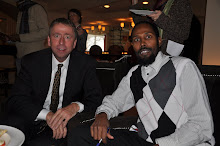
Mayavski and Adams"I was raised in believing that this country was founded upon a white Christian nation and the belief of racial separation," he said.

Adams said his family and friends think it's normal to use racial slurs. He said his attitude toward Muslim students is also common among many of his classmates.

His friend, 18-year-old Matt Mayavski, said a few people at the school call themselves "rednecks" on campus. Others make their views known by wearing Confederate flag belt buckles or belts or wearing certain brands of clothing, said Mayavski, a lifelong St. Cloud resident who also went to Technical High School.

Adams and Mayavski say they flash the Confederate battle flag -- an offensive symbol to many blacks -- because they believe in small government. They say it has nothing to do with race.

The resentment stems from feeling like Muslim students receive preferential treatment, Mayavski said.

"Towards the end of my junior year, I was in math class and the Somalians asked to go pray before lunch," he said. "Well, I went to ask my teacher for [a prayer break] and [she] sent me down to the office and I got written up for it. And I was like, 'Well, how can the school respect their religion, but they can't respect ours?'"

Nimco Ahmed, a policy aide to a Minneapolis City Council member, said it's understandable that white students in St. Cloud have such questions.

"Why can they go every Friday and step out of class and have a Friday prayer while I have to be in class is a good question," said Ahmed, who is from Somalia. "It is a legitimate question and somebody needs to answer these questions to them."

When Ahmed went to Roosevelt High School in Minneapolis ten years ago, the Somali population was growing rapidly, and cultural misunderstandings were common.

Ahmed said school administrators have to take extra steps to educate students about other cultures. That's how her school was able to overcome cultural tensions.

"They reached out to other people outside of our school. They had people come in and educate us and sit down with us and mediate us," she said. "That's exactly what is needed. And when we learned how to do it, we reached out to other schools that had the same problems. We didn't stop."

Ahmed said such challenges are typical of any area undergoing significant demographic changes. But the issues at St. Cloud schools need to be addressed quickly before they escalate, she said.

Superintendent Jordahl said he wants people to understand that his schools are doing what they can to address these problems.

"As adults in the system, we recognize that the issues exist and our job is to raise student achievement," Jordahl said. "We recognize that if kids don't feel good, feel safe, they are not going to do as well as if they did. So we want to make sure we are addressing this all the time."

But schools can't tackle them alone, he said.

"We really, really want our parents to understand that they have a huge role in this," Jordahl said. "In fact, I always say this, parents, you are the first and most important teacher your child has."

While Jordahl said St. Cloud schools are working hard to address racial tensions, critics in the wider St. Cloud community say the district isn't doing enough. They've called on the district to adopt a more aggressive anti-bias curriculum than what the district currently has.

Wednesday, March 10, 2010

Letter: Letter should not have been published

Letter: Letter should not have been published
By Bernard Evans • St. Joseph • March 6, 2010

Comments(61)Recommend(6)Print this page E-mail this article Share
Del.icio.us Facebook Digg Reddit Newsvine Buzz up!
Twitter FarkIt Type Size A A A The March 1 letter “Attacks with Muslim ties cannot be ignored” suggests that we in Central Minnesota have good reason to “suspect and fear Somali people.”


The letter is loaded with generalizations and stereotypes that present an inaccurate picture of our Somali and other Muslim neighbors. I am disappointed the Times judged this letter fit for publication.
It offers a list of attacks against U.S. interests by individuals and groups with Muslim connections. Indeed, these are horrific actions, but how are they connected to Muslims in Central Minnesota? They are not!
The letter does a disservice to imply otherwise and to suggest that we should keep a suspicious eye on our neighbors — as a chicken farmer does a fox — is despicable.
To the Times, please climb a little higher on the ladder of journalistic standards. Not every piece of dribble ... deserves to be published

Letter: Attacks with Muslim ties cannot be ignored

Letter: Attacks with Muslim ties cannot be ignored
By Gene Mills • St. Cloud • March 1, 2010

Comments(122)RecommendPrint this page E-mail this article Share
Del.icio.us Facebook Digg Reddit Newsvine
Buzz up!Twitter FarkIt Type Size A A A Once again the broad swipe of the liberal brush has condemned our fair city and attacked a very popular 6th District representative. ("St. Cloud area needs Human Rights Office," Jan. 30.)


Racism, bigotry and hate are familiar liberal terms describing our formerly Scandinavian, German community, which has welcomed, with open arms, immigrants from all parts of our wonderful world.
The most recent attack is by a public employee, who claims Somali people are under attack here.
Why would we suspect and fear Somali people?
Remember the Army Rangers killed in Somalia and the dead American soldiers dragged naked through the streets? Remember the Somali pirates attacking ships? Remember the young Somali men from Minneapolis returning to their native land to become terrorists? Remember the FBI investigating these events?
The Muslim religion is also mentioned in the Your Turn. Let's have a quick history lesson on why, just maybe, some folks fear and distrust Muslims.
1968 — Bobby Kennedy shot and killed.
1972 — the Olympics where Israeli athletes are massacred.
1979 — The U.S. Embassy in Iran taken over.
1983 — more than 200 Marines killed in Beirut.
1985 — the cruise ship Achille Lauro hijacked and an American executed.
1993 — World Trade Center bombed.
1998 — U.S. embassies in Kenya and Tanzania bombed.
2000 — USS Cole attacked with 17 sailors killed.
Sept. 11, 2001 — World Trade Center bombed.
And then there is Osama bin Laden and the war with Muslim extremist. Any wonder why there may be a little mistrust?
... Central Minnesota working folk know one thing: If you're raising chickens and they are being killed and you see fox tracks, your instincts kick in and you start looking for the fox.

Friday, February 19, 2010

St. Cloud-area lawmakers clash on welfare

St. Cloud-area lawmakers clash on welfare
By Mark Sommerhauser • msommerhauser@stcloudtimes.com • February 17, 2010

Comments(88)RecommendPrint this page E-mail this article Share
Del.icio.us Facebook Digg Reddit Newsvine Buzz up!
Twitter FarkIt Type Size A A A ST. PAUL — A proposal to allow more Minnesotans to get food stamps inserted two St. Cloud-area lawmakers into an emotional debate Tuesday about partisanship and people in need.


Rep. Larry Hosch, DFL-St. Joseph, and Rep. Steve Gottwalt, R-St. Cloud, clashed over the bill that would remove limits on the assets a person may own while receiving state food stamps.
Rhetoric escalated in a committee hearing after Rep. Jim Abeler, R-Anoka, said the measure would allow people to obtain food stamps even if they wear a Rolex watch or drive a Mercedes.
Several lawmakers hoped the resolution to Tuesday's exchange leads to a more bipartisan Legislature in the coming weeks, when lawmakers tackle the big issue of 2010: resolving the state's budget deficit.
Hosch is cosponsoring the food-stamp bill, which he said mimics a policy used by 27 other states and would not cost Minnesota anything, since a federal program supplies the funding.
Hosch said recipients still would have to meet income guidelines to qualify for food stamps.
But Abeler questioned if removing the $7,000 asset limit would allow those who do not need the program to exploit it.
That drew fire from Rep. Jeff Hayden, DFL-Minneapolis, and Hosch, who called Abeler's comments "a disservice" that perpetuate stereotypes about people who receive public assistance.
"God help us," Hosch said, "that none of you have to go through the situation that these families are: a lost job, an accident on the road."
Hosch's and Hayden's remarks then drew an equally indignant reaction from Gottwalt.
"How dare you imply in your comments that we don't care as much," Gottwalt said. "We have a legitimate right to ask questions ... without our intent being impugned."
Gottwalt said DFLers' reaction to Abeler's statement reflects a stereotype about Republicans: that they're "fat cats" who don't understand what it's like to be in need.
Almost two decades ago, Gottwalt said, he stood in an unemployment line after being laid off from his job at a radio station.
Gottwalt later told the Times he "probably would have supported" the food stamp bill if it had come to a committee vote.
He said DFLers' comments speak to the "root of the hard-core partisanship that we all hate ... the assumption that the other side has ill intent."
Abeler said at the end of the hearing that he spoke "badly," but added the subsequent discussion of his comments could be "really good practice" for the Legislature's impending budget debate.
"We have to get the governor to sign something at the end of the day that we all agree on," Abeler said, "or we will have nothing."
Hosch said he didn't intend to second-guess anyone's motives for questioning the bill.
"But when we perpetuate stereotypes," Hosch added, "I am gonna fight back every time."

Thursday, February 18, 2010

St. Cloud school district could use 1-time funds to cover $800,000 gap

St. Cloud school district could use 1-time funds to cover $800,000 gap
By Dave Aeikens • daeikens@stcloudtimes.com • February 18, 2010

Comments(70)RecommendPrint this page E-mail this article Share
Del.icio.us Facebook Digg Reddit Newsvine Buzz up!
Twitter FarkIt Type Size A A A St. Cloud school district is considering the use of one-time dollars to balance its 2010-2011 budget and pay for employee contract settlements.


The money would come from the district’s capital fund, which pays for building improvements, and a portion of a property tax increase board members approved in December that helps pay for health insurance costs of former employees. The moves would cover an anticipated $800,000 shortfall. About $500,000 would come from the capital fund and $300,000 from the tax increase.
The estimated $800,000 shortfall is based on contract settlements that increase costs about 3 percent for 2009-2011. That deficit would grow if settlements were higher than the 3 percent, director of business services Kevin Januszewski said.
Eight of the nine contracts are unsettled; the district is still negotiating with the teachers, its largest employee group. The school board’s most recent offer puts the district right at the 3 percent goal. If the school board raises its offer in an effort to settle, the shortfall would grow, Januszewski said.
School board members are expected to consider the budget recommendation Thursday. The 2010-2011 budget does not have to be approved until June 30, but staff needs to know how the board wants to deal with the expected shortfall before completing the budget.
Administrators considered layoffs, savings in health insurance and the elimination of a work day before settling on the use of the reserve and tax dollars, Superintendent Steve Jordahl said.
“We have said from the very beginning we would not cut staff. That is not an option for us. We said we wanted to protect, in this economy, our staff members,” Jordahl said,
The use of the one-time dollars pushes the budget shortfall to 2011-2012 because the capital dollars will not be available next year. The Legislature has frozen state aid for two years and delayed aid payments, forcing schools to borrow. It has allowed district through this year to transfer reserve dollars from capital accounts to bolster budgets.
The district is collecting more than $900,000 in taxes this year for other post employment benefits, or OPEB, and could have some of that money remaining for the 2011-2012 budget. Another concern is that the state is expecting a shortfall of its own and could decide to reduce the amount of money it gives to schools. That would create budget shortfalls for all school districts.
St. Cloud already has raised taxes and made reductions to balance an anticipated $2.6 million shortfall for 2010-2011. Those decisions were made in 2009 to give the district time to plan any changes. The Area Learning Center at Wilson is being moved to McKinley Education Center in Waite Park next school year. The move is expected to save $350,000.

St. Cloud schools look to improve adequate yearly progress

St. Cloud schools look to improve adequate yearly progress
By Dave Aeikens • daeikens@stcloudtimes.com • February 18, 2010

Comments(37)RecommendPrint this page E-mail this article Share
Del.icio.us Facebook Digg Reddit Newsvine Buzz up!
Twitter FarkIt Type Size A A A Next Page1| 2Previous PageStudents in St. Cloud schools are showing small gains in reading and math but are falling below district goals after one year of the equity plan, a district report shows.


Overall, students improved in eight of nine categories in reading and math. The students fell short of goals that would allow the district and schools to make adequate yearly progress, a measurement under No Child Left behind, in six of nine categories in reading and seven of nine categories in math.
The report measures student progress in categories that include all students, American Indians, Asians, Hispanic, blacks, white, limited English speaking students, low income and special education.
School board members conducted a forum Wednesday for people to discuss the equity plan that drew mostly staff members and some from the community.
“I think it shows we are moving in the right direction,” said Les Green, a school board member who is chairman of the equity and integration committee. “Anyone can argue about speed, and I would like to have more speed.”
St. Cloud school district is in its second year of receiving state dollars to provide programs for equity and integration. The district receives about $1.1 million a year and has a four-year plan for progress and improvement. About 25 percent of St. Cloud school district students are minorities.
The district receives money because it borders Holdingford, a district with almost no students of color.
Only limited-English-speaking students did not improve in reading and only American Indian students did not show improvement in math. The categories that showed improvement grew of between 1 and 3 percentage points.
White students are passing the reading tests at 80 percent and black students at almost 40 percent. Closing that gap has been a goal for the school district. The district goal is to get black students to 74 percent.
White students are passing math at a 74 percent rate and black students at a 35 percent rate. The goal is to get black students passing math at a 67 percent rate.


“What the goal ought to be, there ought to be no difference in the success and failure based on race,” Green said.


Green said the district needs to study the black children who are succeeding and share strategies with those who are not.
Julia Espe, the district’s director of curriculum, instruction and assessment, said she is pleased with the work that is being done.
“We have a long ways to go. We have work to do. We want that (achievement) gap to be smaller,” Espe said. “We have our work cut out for us.”
The report also shows other potential inequities in staffing and in student discipline.
The district teachers are 98 percent white and the support staff is 96 percent white.
Black students, who make up about 14 percent of the student body, account for 51 percent of the out-of-school suspensions.
Whites, who are 75 percent of the students, account for 40 percent of the suspensions.
The Advanced Placement honor level courses have 13 percent students of color. About 87 percent of white students are taking AP courses. Students of color make up about 15 percent of the students who take part in extracurricular activities, according to the report.

State court reprimands St. Cloud lawyer, former mayor

State court reprimands St. Cloud lawyer, former mayor
By Dave Aeikens • daeikens@stcloudtimes.com • February 18, 2010

Comments(37)Recommend(1)Print this page E-mail this article Share
Del.icio.us Facebook Digg Reddit Newsvine
Buzz up!Twitter FarkIt Type Size A A A Lawyer and former St. Cloud Mayor John Ellenbecker on Thursday received a public reprimand and was placed on two years probation by the Minnesota Supreme Court.


Ellenbecker, who has practiced law since 1981, will be required to have another lawyer monitor his work practices while he is on probation, the Court said. Public reprimands with probation are handed out to about 50 lawyers a year among the more than 15,000 who practice in Minnesota, said Martin Cole, director of the Office of Lawyers Professional Responsibility. The Office of Laywers Professional Responsibility filed the request for discipline with the court.
Ellenbecker was disciplined because he failed to return the property of at least three clients and then failed to cooperate with the investigation, Cole said.
“We negotiated a resolution,” Ellenbecker said. “They recognized, and I recognized, that my primary failing was not dealing with the complaint to the board of professional responsibility in a timely manner.”
The petition from the state Supreme Court was signed by Associate Justice Alan Page. If Ellenbecker does not meet the conditions of the probation, he can be suspended or have his license revoked, Cole said.
The office can recommend and the court can order discipline for a lawyer using four options: a reprimand, a reprimand with probation, suspension and disbarment.
“A public reprimand is a significant discipline,” Cole said. “Even to be publicly reprimanded is a serious step for a lawyer and not something anyone takes lightly, I am quite certain.”
The order requires Ellenbecker to:
* Cooperate with the Office of Lawyers Professional Responsibility.
* Abide by Minnesota rules of professional conduct.
* Be supervised by a licensed lawyer that Cole appoints.
* Meet with the monitor one day a quarter and provide a monthly inventory of all active case files.
* Initiate and maintain office procedures that ensure prompt correspondence to clients, courts and other parties.
* Have an assessment from a licensed psychologist or other mental health professional for issues related to depression.
* Pay $900 in costs and $50 in disbursements.
Ellenbecker served as mayor from 2001-2005 and served on the St. Cloud City Council from 1989 to 2001.

Stearns County launches new site

Stearns County launches new site
By Kirsti Marohn • kmarohn@stcloudtimes.com • February 17, 2010

Comments(28)Recommend(1)Print this page E-mail this article Share
Del.icio.us Facebook Digg Reddit Newsvine Buzz up!
Twitter FarkIt Type Size A A A Stearns County is launching a redesigned Web site today that encourages residents to stay up to date and share information through social media tools such as Twitter, Facebook and YouTube.


The new site was designed to look more modern and make it easier for users to find the information they are seeking, said George McClure, the county's information services director.
It's also intended to encourage citizen participation, he said. The site features a "Community" page, where users can follow county news on Facebook and Twitter. They can share their own photos of county scenery or events using the photo-sharing site Flickr, or post YouTube videos.
At Tuesday's county board meeting, McClure noted that a growing number of people — particularly younger residents — are relying on such online tools.
"There's just millions and millions of folks that prefer to get their information in this style versus going to a Web site and reading a news release," he said.
The site can be viewed in English, Spanish or Somali. Users can view a calendar of upcoming events and take a poll on a county-related topic. They also can rate the value of the Web site's content, as well as post comments on blogs written by county staff.
"The Web site's a lot more interactive, and it's one more way you maybe stay in touch with local government," McClure said.
Stearns County's Web site has received national recognition and has seen increased use. About 34,000 different people visited the site in January, McClure said.
About 3,000 people pay their taxes annually online, and 99 percent of applications for county jobs are completed online. The county's list of jail inmates attracts more than 20,000 visitors each month.
Redesigning the Web site took nearly two years, including focus group meetings and searching for a vendor, McClure said.
Michigan-based Artemis Solutions Group redesigned the site for a cost of about $95,000. The firm will host the site for an annual cost of $3,300.

Tuesday, February 9, 2010

Grant sought for regional human rights office

Grant sought for regional human rights office
By Kari Petrie • kpetrie@stcloudtimes.com • February 9, 2010

money to help create a regional human rights office.
The city is requesting $70,000 of the Community Development Block Grant funding. The money would be used to offset a regional office budget of $110,000. The grant would recur for four years.
Each participating city would pay a portion of the additional $40,000 of the budget based on population. Under the plan the Minnesota Department of Human Rights would provide services on a contractual basis.
A regional office was suggested in 2008, initially with the support of St. Cloud, Waite Park and St. Joseph. The plan was to create a regional human rights office and human rights commission to provide services to area cities that signed on to participate.
Such services include outreach, education, enforcement and mediation.
But when cities started facing tighter budgets with cuts to Local Government Aid, they withdrew support for the office. St. Cloud continued to operate its office despite a vacancy in the director position that resulted from a hiring freeze.
St. Joseph and Waite Park, original supporters of a regional office, have discussed this month at council meetings whether to renew the partnerships to create such an office.

Thursday, February 4, 2010

Attacks against Somali community show need for strong human rights office

By Dr. Luke Tripp
February 04, 2010


Attacks against Somali community show need for strong human rights office

A packet of hateful and derogatory depictions of the Prophet Muhammad engaged in bestiality was stapled to the telephone pole outside Deko Farah’s St. Cloud shop in January 2010. This was not an isolated hateful incident, but many have attempted to frame this incident as a case of an individual bigot who was exercising his freedom of speech.

In fact, County attorneys in Benton and Stearns counties said that they would not file criminal charges against him. This perverted framing is a deceptive maneuver to direct our attention away from systemic racism in St. Cloud.

The City of St. Cloud, historically a very conservative White town, has only recently become home to a significant population of about 6,000 Somalis who represented about 10 percent of St. Cloud’s population of 68,000 people in 2009. There has been a series of hateful attacks against the growing Somali community since they began arriving here in the 1990s.

We should keep in mind that the attacks began before the tragedy of September 11, 2001, when America’s anti-Islamic fervor reached hysterical levels. In November 2002 the Somali Center, a local headquarters for Somali culture, was vandalized. A racist message was spray-painted on the newly opened Somali market, mosque and community center in south St. Cloud.

In May 2004, students, parents, and members of the community gathered to discuss several incidents that were racially motivated at Technical High School in St. Cloud. The school’s principal, Roger Ziemann, said the fights were between Somali students and others at school and off campus.

District Diversity Coordinator Gary Loch said the fights brewed out of frustration. He further commented, “Somali kids are very tired of being told to go back where they came from,” and he asked rhetorically, “If you heard that every day, how would you feel?”

St. Cloud police were called to Tech or the area 69 times in 2002 as compared with 128 times for all of 2003. They had been called to Apollo High School or nearby 71 times in 2002 and 138 times in 2003.

I believe that Somalis are under attack in St. Cloud because of their race (they are Black), their religion (they are Muslims), and their immigration/refugee status (they are perceived to be untrustworthy aliens).

The animosity against Somalis reflects the sentiments of a significant segment of conservative White residents in the city of St. Cloud whose views are politically expressed by their right-wing extremist congresswoman, Michele Bachmann, who represents Minnesota’s Sixth Congressional District.

Bachmann is a staunch advocate of barriers against immigrants and their culture. Her voting record on anti-immigration legislation is graded A+.

One comment Bachmann has never explained came during a debate she had while running for Congress the first time in November 2005. Prompted by a question on the rioting in France and Europe at the time, Bachmann said, “Not all cultures are equal, not all values are equal,” letting it be known that she thought that people of the Muslim faith had an inferior culture to that of the United States and the West.

The point is that racism and religious intolerance are deeply rooted and still prevalent in St. Cloud. It follows that we need a strong human rights office in the city’s government to change the climate of bigotry in the city.

We need to make our demand for justice and human rights a top priority of city government. We can do that by lobbying and pushing city government officials to provide financial resources to support a full-time human rights director.

Dr. Luke Tripp is professor and chair of the Department of Community Studies at St. Cloud State University. He welcomes reader responses to lstripp@stcloudstate.edu.

Tuesday, February 2, 2010

Your turn: St. Cloud area needs Human Rights Office

Your turn: St. Cloud area needs Human Rights Office
By Luke Tripp • St. Cloud • January 30, 2010

Comments(142)Recommend(1)Print this page E-mail this article Share
Del.icio.us Facebook Digg Reddit Newsvine Buzz up!
Twitter FarkIt Type Size A A A Next Page1| 2Previous PageA packet of hateful and derogatory depictions of the Prophet Muhammad engaged in bestiality was stapled to the telephone pole outside Deko Farah shop in December.


This was not an isolated hateful incident. But many have attempted to frame this incident as a case of an individual bigot who was exercising his freedom of speech.
In fact, county attorneys in Benton and Stearns counties said they would not file criminal charges against him.
This perverted framing is a deceptive maneuver to direct our attention away from systemic racism in St. Cloud.
The city of St Cloud, historically a very conservative white town, has only recently become home to a significant population of about 6,000 Somalis who represented about 10 percent of St. Cloud’s population of 68,000 people in 2009.
There has been a series of hateful attacks against the growing Somali community since they began arriving here in the 1990s.
We should keep in mind that the attacks began before the tragedy of Sept. 11, 2001, when America’s anti-Islamic fervor reached hysterical levels.
In the mid-1990s, Stride Toward Unity, a black community organization, was formed to advocate for blacks and newly arrived Somalis.
Both groups were experiencing problems of racial discrimination.
In November 2002 the Somali Center, a local headquarters for Somali culture, was vandalized. A racist message was spray-painted on the newly opened Somali market, mosque and community center in south St. Cloud.
In May 2004 students, parents and members of the community gathered to discuss several incidents that were racially motivated at Technical High School. Principal Roger Ziemann said the fights were between Somali students and others at school and off campus. District Diversity Coordinator Gary Loch said the fights brewed out of frustration.
He further commented that, “Somali kids are very tired of being told to go back where they came from,” and he asked rhetorically, “If you heard that every day, how would you feel?”
St. Cloud police were called to Tech or the area 69 times in 2002 compared with 128 times for all of 2003
They had been called to Apollo High School or nearby 71 times in 2002 year and 138 times in 2003.


Somalis are under attack in St. Cloud because of their race (they are black), their religion (they are Muslims) and their immigration/refugee status (they are perceived to be untrustworthy aliens).
The animosity against Somalis reflects the sentiments of a significant segment (43 percent in the 2008 election) of conservative, mostly white residents in St. Cloud whose views are politically expressed by their right-wing extremist Congresswoman Michele Bachmann, who represents Minnesota’s 6th Congressional District.
She is a staunch advocate of barriers against immigrants and their culture. Her voting record on anti-immigration legislation is graded A+ by NumbersUSA, a group lobbying for reducing immigration levels.
Furthermore, as noted by The Uptake in 2008, “one comment she has never explained came during a debate she had while running for Congress in November 2005.
Prompted by a question on the rioting in France and Europe at the time, Bachmann said, ‘Not all cultures are equal, not all values are equal,’ letting it be known that she thought that people of the Muslim faith had an inferior culture to that of the United States and the West.”
My point is that racism and religious intolerance are deeply rooted and still prevalent in St. Cloud.
It follows that we need a strong Human Rights Office in city government to change the climate of bigotry in the city.
We need to make our demand for justice and human rights a top priority of city government. We can do that by lobbying and pushing city government officials to provide financial resources to support a full-time human rights director.
This is the opinion of Luke Tripp, professor and chairman of the Department of Community Studies at St. Cloud State University.

Wednesday, January 27, 2010

Forum focuses on posting of cartoons in St. Cloud

Forum focuses on posting of cartoons in St. Cloud
By Mark Sommerhauser • msommerhauser@stcloudtimes.com • January 27, 2010

Comments(50)Recommend(4)Print

Anywhere else is a different story, Lam told city leaders and a crowd of hundreds at City Hall on Tuesday night.
Lam was speaking about last month's posting of anti-Muslim cartoons in St. Cloud, at a forum hosted by the Council on American-Islamic Relations—Minnesota Chapter.
Many speakers questioned local authorities' response to the incident, and asked why the man who has admitted to posting the cartoons doesn't face criminal charges. Others criticized city leaders for not doing enough to combat long-standing discrimination against Muslims and people of color.
Lam told city leaders she's been to plenty of "kumbaya meetings" about discrimination. This time, Lam wanted to know what will happen next.
"I've been here for four years, and I'm scared of this city," Lam said. "What are you going to do to show that you are going to protect all citizens of St. Cloud?"
City leaders responded with little beyond what was announced Friday, when city attorneys cited a Waite Park man who's admitted to posting the cartoons. Sidney Allen Elyea is charged with two counts of violating an ordinance against posting materials on fixtures — civil charges that carry maximum fines of $250 each.
That wasn't enough for many at Tuesday's forum, who suggested the man could be charged with disorderly conduct or other, more serious offenses. City Attorney Jan Petersen told the crowd that his office considered pressing criminal charges against Elyea but decided it wouldn't hold up in court.
City leaders also urged residents to report instances of discrimination or harassment. St. Cloud Police Chief Dennis Ballantine said that entails a "two-way street" of cooperation between city leaders and community members.
"You've got to work with us," Ballantine said. "You can't sit back and wait for us to find all the solutions."
For Lam — who moved here from Rochester to attend St. Cloud State University — the cartoon incident sparked her own ugly memories of facing discrimination in St. Cloud. Lam was born in Sudan and is Christian, but says she's been heckled in public for being a Muslim. The issue is especially meaningful to Lam because she says her family fled Sudan to escape religious persecution.
Others told similar stories, like Fathiya Mohamed. She said many Somalis graduate from local universities but flee St. Cloud, believing there are no opportunities for them here.
Mohamed, a Somali who lives in St. Cloud, said Tuesday's forum was a start toward reversing that problem.
"It was a great learning opportunity for everyone," Mohamed said.