CAIR says investigation request is unusual
By Dave Aeikens • daeikens@stcloudtimes.com • March 25, 2010
Comments(11)Recommend(2)Print this page E-mail this article Share
Del.icio.us Facebook Digg Reddit Newsvine Buzz up!
Twitter FarkIt Type Size A A A Next Page1| 2| 3Previous PageThe request from the Minnesota chapter of Council on American-Islamic Relations that the federal government investigate discrimination against students is the chapter’s first complaint of that sort.
CAIR’s Minnesota chapter, which is based in St. Paul and started three years ago, prefers to work through allegations of discrimination using mediation and education rather than lawsuits and bias complaints to federal agencies.
“We don’t like it when we have to take it this far and get outside people involved,” said Lori Saroya, who is founder and president of the Minnesota chapter of CAIR. “We have been working on this issue since June of 2009. There really haven’t been any changes. Those kids are still going through it.”
On Wednesday, CAIR Minnesota announced it had asked the U.S. Department of Education to look into allegations that Muslims confront a hostile learning environment at Technical and Apollo high dchools. It also asked for an investigation at Owatonna High School.
In a letter to the U.S. Department of Education’s office of civil rights, CAIR said there were several incidents at Tech and Apollo that show discrimination against Muslim students.
A department spokesman said Thursday that the decision about whether to start an investigation could take up to 30 days. The department’s office of civil rights has to determine whether the complaint alleges violations of laws the agency is charged with enforcing, and whether the complaint was filed within six months of the alleged acts of discrimination.
Surprised district
Superintendent Steve Jordahl said Thursday he was surprised that CAIR filed the complaint. He said the group has never asked the district for information about how it deals with some of the issues. St. Cloud school district has been working with Minnesota CAIR and local Somali groups to create harmony in the schools between Muslim students, who began arriving about 2000, and the rest of the student body.
“One of the things I would like to ask them, what is the motive?” Jordahl said.
Jordahl said he wants to continue to work with CAIR to deal with cultural relations within the schools.
The federal complaint is the first since Saroya started CAIR Minnesota in 2007. That year, the group handled five claims of discrimination. In 2009, it handled 120. Many involved employers who don’t understand the rituals and customs of Islam. Most of the issues are settled with a letter from one of CAIR’s lawyers, Saroya said.
St. Cloud school district has about 9,700 students. It has 710 students who speak Somali, and there are students from other countries who are Muslim. The district estimates about 9 percent of the student body is Muslim.
Jordahl said the district was unaware of all but one of the allegations raised in CAIR’s letter. The incident the district acknowledges took place in February. Two boys who are white approached a group of Muslim girls and asked if they would like pork bacon. When the girls said that their religion prohibited it, the students made disparaging remarks. The boys were suspended. Several days later, CAIR officials came to talk to the girls involved, Saroya said. She said the district was worried the girls might retaliate.
“We try to tell (the girls) you are just going to get into trouble too. There is a better process you don’t need to take it into your own hands,” Saroya said.
Jordahl said the district plans to investigate the remaining accusations in the complaint. Among them are allegations that two students brought pork bacon to school and shoved it into the faces of Muslim students, that a bus driver purposely left Somali Muslim students at a bus stop and that some teachers misunderstand Islam and make disparaging remarks about Somalia. Another claim is that a teacher gave a student air freshener and instructed students to spray around the class while the teacher and class laughed.
Jordahl said he has asked the principals and assistant principals to look into each claim and determine whether it happened and if so, how it was handled
Jordahl said he wants to continue to work with CAIR to deal with cultural relations within the schools.
The federal complaint is the first since Saroya started CAIR Minnesota in 2007. That year, the group handled five claims of discrimination. In 2009, it handled 120. Many involved employers who don’t understand the rituals and customs of Islam. Most of the issues are settled with a letter from one of CAIR’s lawyers, Saroya said.
St. Cloud school district has about 9,700 students. It has 710 students who speak Somali, and there are students from other countries who are Muslim. The district estimates about 9 percent of the student body is Muslim.
Jordahl said the district was unaware of all but one of the allegations raised in CAIR’s letter. The incident the district acknowledges took place in February. Two boys who are white approached a group of Muslim girls and asked if they would like pork bacon. When the girls said that their religion prohibited it, the students made disparaging remarks. The boys were suspended. Several days later, CAIR officials came to talk to the girls involved, Saroya said. She said the district was worried the girls might retaliate.
“We try to tell (the girls) you are just going to get into trouble too. There is a better process you don’t need to take it into your own hands,” Saroya said.
Jordahl said the district plans to investigate the remaining accusations in the complaint. Among them are allegations that two students brought pork bacon to school and shoved it into the faces of Muslim students, that a bus driver purposely left Somali Muslim students at a bus stop and that some teachers misunderstand Islam and make disparaging remarks about Somalia. Another claim is that a teacher gave a student air freshener and instructed students to spray around the class while the teacher and class laughed.
Jordahl said he has asked the principals and assistant principals to look into each claim and determine whether it happened and if so, how it was handled.
Thursday, March 25, 2010


Islamic rights group wants feds to investigate St. Cloud schools
Islamic rights group wants feds to investigate St. Cloud schools
By Dave Aeikens • daeikens@stcloudtimes.com • March 25, 2010
Comments(246)Recommend(6)Print this page E-mail this article Share
Del.icio.us Facebook Digg Reddit Newsvine
Buzz up!Twitter FarkIt Type Size A A A An Islamic civil rights group in Minnesota has asked the U.S. Department of Education to investigate what it calls a hostile learning environment for Muslims in St. Cloud and other Minnesota schools.
The request comes from the Council on American-Islamic Relations. The group says there is a growing number of instances in Minnesota schools in which Somali and Muslim students are being harassed and discriminated against. Some of the incidents took place at Apollo and Technical high schools, the group said.
“We just want them to investigate these incidents,” said Lori Saroya, president of the Minnesota chapter of CAIR. “We think there needs to be something statewide, something larger to take place.”
Saroya said many of the incidents have taken place in St. Cloud and Owatonna, in southern Minnesota. The group has sent a letter to the U.S. Department of Education detailing several incidents in Minnesota schools and has specifically asked the department to investigate Tech, Apollo and Owatonna high
The number of Muslim students in St. Cloud has continued to grow since 2000. Most of the Muslim students are Somali. The district has 710 students who speak Somali, in addition to students from other countries who are also Muslim. The district estimates about 9 percent of its student body is Muslim.
Zahra Aljabri, assistant director of civil rights for CAIR of Minnesota, said schools in Minnesota already have policies against religious and racial discrimination. They need help doing a better job of enforcing them.
“We have been supporting the school as much as we can. We are really not equipped to determine what the best course of action is. Hopefully, the Department of Education has dealt with these things before,” Aljabri said.
CAIR lists several incidents at Apollo. One involved a history teacher who disparaged Somalia, the organization said.
Another incident CAIR cites involved two white boys who approached a group of Muslim girls and asked if they would like some pork. When the girls said their religion prohibited eating pork, the students made disparaging remarks, CAIR said.
A week later, CAIR said, two students brought pork bacon to school and shoved it in the faces of Muslim students and chased them when they tried to get away.
CAIR’s letter says Somali students were left behind at a bus stop and made to try and catch the bus. Aljabri said this took place at Apollo.
Superintendent Steve Jordahl said the district is going to investigate the allegations because no administrator in the district or at the schools was aware of them.
He said he has spoken to Somali elders in St. Cloud who want the district to look into the allegations and then try to work through the district’s equity services department to solve them.
“We want to avoid these incidents in the future realizing we can’t avoid them all. I still want us to address any incident. Sometimes that just means our staff and administration need to have the courage to do that,” Jordahl said.
Local Somali refugees have seen their treatment in St. Cloud schools get worse after years of building relationships, said Mohamoud Mohamed, executive director of the St. Cloud Area Somali Salvation Organization. He said district staff are not responding appropriately to acts of discrimination against Muslim children. He said CAIR Minnesota’s letter to the U.S. Department of Education is helpful.
“This CAIR action is reminding them they will have involvement from higher authorities,” Mohamed said.
Mohamed said the incident with the bacon took place in February and was reported to Apollo’s cultural navigator, the staff member who is the liaison to the students.
An incident at Owatonna High School is also cited, as are as incidents of racial and religious epithets directed at students at Technical High School.
The letter was sent to the U.S. Department of Education’s civil rights division in Chicago on Friday, Aljabri said. The group announced its action Wednesday. The Minnesota Department of Education does not investigate racial discrimination, she said.
The school district and Apollo have worked with Minnesota CAIR to address issues of racial and religious intolerance, Jordahl said.
St. Cloud community leaders have had to respond to a number of incidents of discrimination against Somalis in the past decade. Most recently, a New Hope man was arrested after police said he posted on Craigslist threats to Somalis attending a cultural event at St. Cloud State University.
In December, a Waite Park man was cited in connection with violations of the St. Cloud ordinances against posting materials in public places. The man admitted posting ethnically insensitive posters in front of Somali businesses. CAIR Minnesota helped the city conduct a town-hall meeting in January to address concerns.
CAIR is the largest Muslim civil liberties and advocacy organization in the United States. It works to enhance the understanding of Islam, encourage dialogue, protect civil liberties, empower American Muslims and build coalitions that promote justice and mutual understanding.
By Dave Aeikens • daeikens@stcloudtimes.com • March 25, 2010
Comments(246)Recommend(6)Print this page E-mail this article Share
Del.icio.us Facebook Digg Reddit Newsvine
Buzz up!Twitter FarkIt Type Size A A A An Islamic civil rights group in Minnesota has asked the U.S. Department of Education to investigate what it calls a hostile learning environment for Muslims in St. Cloud and other Minnesota schools.
The request comes from the Council on American-Islamic Relations. The group says there is a growing number of instances in Minnesota schools in which Somali and Muslim students are being harassed and discriminated against. Some of the incidents took place at Apollo and Technical high schools, the group said.
“We just want them to investigate these incidents,” said Lori Saroya, president of the Minnesota chapter of CAIR. “We think there needs to be something statewide, something larger to take place.”
Saroya said many of the incidents have taken place in St. Cloud and Owatonna, in southern Minnesota. The group has sent a letter to the U.S. Department of Education detailing several incidents in Minnesota schools and has specifically asked the department to investigate Tech, Apollo and Owatonna high
The number of Muslim students in St. Cloud has continued to grow since 2000. Most of the Muslim students are Somali. The district has 710 students who speak Somali, in addition to students from other countries who are also Muslim. The district estimates about 9 percent of its student body is Muslim.
Zahra Aljabri, assistant director of civil rights for CAIR of Minnesota, said schools in Minnesota already have policies against religious and racial discrimination. They need help doing a better job of enforcing them.
“We have been supporting the school as much as we can. We are really not equipped to determine what the best course of action is. Hopefully, the Department of Education has dealt with these things before,” Aljabri said.
CAIR lists several incidents at Apollo. One involved a history teacher who disparaged Somalia, the organization said.
Another incident CAIR cites involved two white boys who approached a group of Muslim girls and asked if they would like some pork. When the girls said their religion prohibited eating pork, the students made disparaging remarks, CAIR said.
A week later, CAIR said, two students brought pork bacon to school and shoved it in the faces of Muslim students and chased them when they tried to get away.
CAIR’s letter says Somali students were left behind at a bus stop and made to try and catch the bus. Aljabri said this took place at Apollo.
Superintendent Steve Jordahl said the district is going to investigate the allegations because no administrator in the district or at the schools was aware of them.
He said he has spoken to Somali elders in St. Cloud who want the district to look into the allegations and then try to work through the district’s equity services department to solve them.
“We want to avoid these incidents in the future realizing we can’t avoid them all. I still want us to address any incident. Sometimes that just means our staff and administration need to have the courage to do that,” Jordahl said.
Local Somali refugees have seen their treatment in St. Cloud schools get worse after years of building relationships, said Mohamoud Mohamed, executive director of the St. Cloud Area Somali Salvation Organization. He said district staff are not responding appropriately to acts of discrimination against Muslim children. He said CAIR Minnesota’s letter to the U.S. Department of Education is helpful.
“This CAIR action is reminding them they will have involvement from higher authorities,” Mohamed said.
Mohamed said the incident with the bacon took place in February and was reported to Apollo’s cultural navigator, the staff member who is the liaison to the students.
An incident at Owatonna High School is also cited, as are as incidents of racial and religious epithets directed at students at Technical High School.
The letter was sent to the U.S. Department of Education’s civil rights division in Chicago on Friday, Aljabri said. The group announced its action Wednesday. The Minnesota Department of Education does not investigate racial discrimination, she said.
The school district and Apollo have worked with Minnesota CAIR to address issues of racial and religious intolerance, Jordahl said.
St. Cloud community leaders have had to respond to a number of incidents of discrimination against Somalis in the past decade. Most recently, a New Hope man was arrested after police said he posted on Craigslist threats to Somalis attending a cultural event at St. Cloud State University.
In December, a Waite Park man was cited in connection with violations of the St. Cloud ordinances against posting materials in public places. The man admitted posting ethnically insensitive posters in front of Somali businesses. CAIR Minnesota helped the city conduct a town-hall meeting in January to address concerns.
CAIR is the largest Muslim civil liberties and advocacy organization in the United States. It works to enhance the understanding of Islam, encourage dialogue, protect civil liberties, empower American Muslims and build coalitions that promote justice and mutual understanding.
Monday, March 22, 2010
Man charged for Somali event threat
Man charged for Somali event threat
By David Unze • dunze@stcloudtimes.com • March 22, 2010
Comments(9)Recommend(1)Print this page E-mail this article Share
Del.icio.us Facebook Digg Reddit Newsvine Buzz up!
Twitter FarkIt Type Size A A A A New Hope man has been charged with making terroristic threats after a post on Craigslist threatened harm to Somalis attending a cultural event at St. Cloud State University.
James Scott Miller, 49, was ordered held in lieu of $50,000 bail without conditions or $5,000 with several conditions, including that he not possess firearms and that he stay away from St. Cloud State.
A court complaint charging Miller accuses him of threatening to come to a Somali cultural night Saturday and harm attendees of the event. The event had been advertised on Craigslist and listed the admissions price as $10 per person.
Shortly after the event invitation was posted, someone posted a response that read: “I’ll bring my rifle. I’ll gladly pay $10 for target practice.”
A Cold Spring resident saw the post and called St. Cloud State, and university officials contacted St. Cloud police.
Investigators were able to identify Miller as the person who posted the comment, and Miller admitted to them that he posted the comment, according to the court complaint.
Officers spoke to Miller, who told them that he made the post because he lives in an apartment building with a large Somali population and that he’s mad at them because “they have no respect for anyone else in this building,” according to the complaint.
By David Unze • dunze@stcloudtimes.com • March 22, 2010
Comments(9)Recommend(1)Print this page E-mail this article Share
Del.icio.us Facebook Digg Reddit Newsvine Buzz up!
Twitter FarkIt Type Size A A A A New Hope man has been charged with making terroristic threats after a post on Craigslist threatened harm to Somalis attending a cultural event at St. Cloud State University.
James Scott Miller, 49, was ordered held in lieu of $50,000 bail without conditions or $5,000 with several conditions, including that he not possess firearms and that he stay away from St. Cloud State.
A court complaint charging Miller accuses him of threatening to come to a Somali cultural night Saturday and harm attendees of the event. The event had been advertised on Craigslist and listed the admissions price as $10 per person.
Shortly after the event invitation was posted, someone posted a response that read: “I’ll bring my rifle. I’ll gladly pay $10 for target practice.”
A Cold Spring resident saw the post and called St. Cloud State, and university officials contacted St. Cloud police.
Investigators were able to identify Miller as the person who posted the comment, and Miller admitted to them that he posted the comment, according to the court complaint.
Officers spoke to Miller, who told them that he made the post because he lives in an apartment building with a large Somali population and that he’s mad at them because “they have no respect for anyone else in this building,” according to the complaint.
St. Cloud looks at race disparity suspension gap in schools
St. Cloud looks at race disparity suspension gap in schools
By Dave Aeikens • daeikens@stcloudtimes.com • March 21, 2010
Comments(160)Recommend(1)Print this page E-mail this article Share
Del.icio.us Facebook Digg Reddit Newsvine Buzz up!
Twitter FarkIt Type Size A A A Next Page1| 2| 3| 4Previous PageIn a report about equity efforts in St. Cloud schools, the number sticks out.
Black students, which make up 15 percent of the student body, account for 51 percent of the out-of-school suspensions in 2008-09.
That number has St. Cloud school officials asking why so many black students are being suspended. They are setting out to try to determine the answer and come up with a solution that reduces suspensions for all students.
It’s a big issue for students, families and the schools, said Julia Espe, director of curriculum, instruction and assessment.
Finding a solution is key to the goal of improving student achievement.
“We need to study all behavior and help students learn how to behave but also look to be very intentional about our response,” Espe said.
In the 2008-09 school year, there were 880 suspensions involving 537 students in St. Cloud school district schools. Of those, 453 were black and 356 were white. White students make up 40 percent of those suspended and are 76 percent of the student body of about 9,400 students. The numbers include students who have been suspended more than once. Unduplicated, white students make up 46 percent of the suspensions and blacks 44 percent.
St. Cloud is not the only district in Minnesota with a disparity. Statewide, blacks make up 9 percent of the student body and 40 percent of the discipline cases in 2007-08, the most recent numbers available from the Minnesota Department of Education.
“It is a very complicated issue, very multipronged issue the district is trying to take a look at,” said George Nolan, education equity services coordinator for the district.
Key issue
The suspension issue is key because it stands in the way of another major district goal. School leaders want to close an achievement gap between students of color and white students. The disparity is biggest between whites and blacks, with whites scoring in some cases at a 40 percentage point difference from blacks on state reading exams.
If students are suspended and not in school or are having discipline problems, they cannot be taught, they cannot learn and they cannot improve in reading, math and other areas.
The district already has programs intended to teach students appropriate behavior in schools with the hope that students’ actions never reach the level that they need to be suspended.Discipline
Most of the discipline is handled by the assistant principals, who have the authority to suspend a student or discipline a student for violations of the student handbook without approval from the principal or a senior district administrator.
Expulsions are rare. Eight students have been expelled from the five secondary schools in the past five years. Suspensions typically happen when there is a safety issue, such as a physical altercation, which can be bullying or one person striking another.
Technical High School Assistant Principal Chris Blauer said assistant principals work together to hand out consistent and fair discipline.
Most of the discipline is handled by the assistant principals, who have the authority to suspend a student or discipline a student for violations of the student handbook without approval from the principal or a senior district administrator.
Expulsions are rare. Eight students have been expelled from the five secondary schools in the past five years. Suspensions typically happen when there is a safety issue, such as a physical altercation, which can be bullying or one person striking another.
Technical High School Assistant Principal Chris Blauer said assistant principals work together to hand out consistent and fair discipline.
“We work to keep kids in school. It is something we are very aware of. We work try to work proactively with all students to be successful,” Blauer said.
Solutions
District staff are trying to find a way to reduce the disparity in suspensions between blacks and whites. Espe said it could take up to five years to even out the suspension numbers. One program the district is considering for next year would offer an alternative to suspensions, keeping students in school rather than at home. It would move students to a location outside of the school they attend with a teacher and counselor.
“We know they need an intervention. We just didn’t have anything to support that,” Espe said.
St. Cloud had a similar program for four years paid through a federal grant that showed some success, Espe said. That program ended when the grant expired. Among the things the program accomplished was most students completing homework and a reduction in the average number of repeat offenses after being in the program, according to a program report.
The district has programs in place that try to stem the need for suspensions. One is Positive Behavioral Intervention and Supports, or PBIS. The effort teaches children proper behavior and expectations before problems arise. It turns the school into a proactive force rather than reacting to every situation, said Charlie Eisenreich, principal at Apollo High School.
“You are recognizing or potentially rewarding students for appropriate behaviors and teaching students what appropriate behaviors are,” Eisenreich said.
Katrina Scott, who is the president of the St. Cloud Chapter of the National Association of the Advancement of Colored People, said she is satisfied with the efforts the schools are making to address the disparity in suspensions. She said the issue will take more than just school action to resolve.
“It is not just the superintendent coming up with a solution. What can we do as a community to help him to make sure kids feel safe in school?” Scott said.
Behaviors
Behaviors
The school district needs to be careful about what conclusions it draws from the suspension disparity, or it might not solve the problem, board member Les Green said.
Green chairs the board’s equity and integration committee. He also is director of cultural diversity for the education department at St. Cloud State University. He has spent his career studying education and race.
Green said it is important to examine the student’s behaviors before drawing any conclusions about why the disparity exists between the number of whites and blacks who are suspended.
“The danger in this thing is trying to argue the kids of color didn’t deserve suspension when we don’t know if they did. Sometimes when you argue that point you miss the broader picture. Did similar people who did similar things get similar consequences?” Green said. “If we jump to racial differences right away, we may miss the ability to help the kids of color stop being suspended.”
Green said the district also needs to look at what is being done to change the behavior.
“Teaching kids to operate properly, it is not a cultural issue. If people want to suggest to me that black children have a different cultural behavior ... To me, that is idiosyncratic behavior,” Green said.
Luis Saenz, director of equity services for the school district, said having more information about the suspension disparity will help solve the problem. The district needs to take a deeper look.
“It is something we need to really be intentional about, developing strategies to curtail this. In general, we need to look at this very closely and continue to monitor it so we are responding accordingly to make sure we are taking steps to decrease the number of out-of-school suspensions,” Saenz said.
Green said one way to improve the disparity is to find students doing well, figure out what they are doing and try those strategies on students who are not succeeding.
Positive examples
School leaders want the values and work ethic of students such as Agwa Ojulu, a senior at Technical High School, to rub off on others who might not be as eager to keep within the rules and stay in school.
School leaders want the values and work ethic of students such as Agwa Ojulu, a senior at Technical High School, to rub off on others who might not be as eager to keep within the rules and stay in school.
Ojulu is the daughter of Sudanese immigrants. She plans to attend the University of Minnesota next year. She takes advanced placement courses and is active in theater. She said her parents have instilled in her the need to work hard to get what she wants and to set a positive example for her younger siblings.
“It would be easy for me to go off the fast track and go in the wrong direction. With everything in life, it is a choice,” Ojulu said. “It takes a lot for me to keep going. It takes a lot to see my goal to go to the U of M (realized).”
Ayoolamide Gazal, a junior at Tech, said she has lots in her life to keep her motivated to succeed in school.
She plays soccer, is on student council and in National Honor Society. Her father is a professor at St. Cloud State University and instills the importance of education in her.
She said she likes coming to school.
“I never really thought about getting suspended,” Ojulu said. “My schedule is busy. There is no time for me to do things that would get me suspended.”
By Dave Aeikens • daeikens@stcloudtimes.com • March 21, 2010
Comments(160)Recommend(1)Print this page E-mail this article Share
Del.icio.us Facebook Digg Reddit Newsvine Buzz up!
Twitter FarkIt Type Size A A A Next Page1| 2| 3| 4Previous PageIn a report about equity efforts in St. Cloud schools, the number sticks out.
Black students, which make up 15 percent of the student body, account for 51 percent of the out-of-school suspensions in 2008-09.
That number has St. Cloud school officials asking why so many black students are being suspended. They are setting out to try to determine the answer and come up with a solution that reduces suspensions for all students.
It’s a big issue for students, families and the schools, said Julia Espe, director of curriculum, instruction and assessment.
Finding a solution is key to the goal of improving student achievement.
“We need to study all behavior and help students learn how to behave but also look to be very intentional about our response,” Espe said.
In the 2008-09 school year, there were 880 suspensions involving 537 students in St. Cloud school district schools. Of those, 453 were black and 356 were white. White students make up 40 percent of those suspended and are 76 percent of the student body of about 9,400 students. The numbers include students who have been suspended more than once. Unduplicated, white students make up 46 percent of the suspensions and blacks 44 percent.
St. Cloud is not the only district in Minnesota with a disparity. Statewide, blacks make up 9 percent of the student body and 40 percent of the discipline cases in 2007-08, the most recent numbers available from the Minnesota Department of Education.
“It is a very complicated issue, very multipronged issue the district is trying to take a look at,” said George Nolan, education equity services coordinator for the district.
Key issue
The suspension issue is key because it stands in the way of another major district goal. School leaders want to close an achievement gap between students of color and white students. The disparity is biggest between whites and blacks, with whites scoring in some cases at a 40 percentage point difference from blacks on state reading exams.
If students are suspended and not in school or are having discipline problems, they cannot be taught, they cannot learn and they cannot improve in reading, math and other areas.
The district already has programs intended to teach students appropriate behavior in schools with the hope that students’ actions never reach the level that they need to be suspended.Discipline
Most of the discipline is handled by the assistant principals, who have the authority to suspend a student or discipline a student for violations of the student handbook without approval from the principal or a senior district administrator.
Expulsions are rare. Eight students have been expelled from the five secondary schools in the past five years. Suspensions typically happen when there is a safety issue, such as a physical altercation, which can be bullying or one person striking another.
Technical High School Assistant Principal Chris Blauer said assistant principals work together to hand out consistent and fair discipline.
Most of the discipline is handled by the assistant principals, who have the authority to suspend a student or discipline a student for violations of the student handbook without approval from the principal or a senior district administrator.
Expulsions are rare. Eight students have been expelled from the five secondary schools in the past five years. Suspensions typically happen when there is a safety issue, such as a physical altercation, which can be bullying or one person striking another.
Technical High School Assistant Principal Chris Blauer said assistant principals work together to hand out consistent and fair discipline.
“We work to keep kids in school. It is something we are very aware of. We work try to work proactively with all students to be successful,” Blauer said.
Solutions
District staff are trying to find a way to reduce the disparity in suspensions between blacks and whites. Espe said it could take up to five years to even out the suspension numbers. One program the district is considering for next year would offer an alternative to suspensions, keeping students in school rather than at home. It would move students to a location outside of the school they attend with a teacher and counselor.
“We know they need an intervention. We just didn’t have anything to support that,” Espe said.
St. Cloud had a similar program for four years paid through a federal grant that showed some success, Espe said. That program ended when the grant expired. Among the things the program accomplished was most students completing homework and a reduction in the average number of repeat offenses after being in the program, according to a program report.
The district has programs in place that try to stem the need for suspensions. One is Positive Behavioral Intervention and Supports, or PBIS. The effort teaches children proper behavior and expectations before problems arise. It turns the school into a proactive force rather than reacting to every situation, said Charlie Eisenreich, principal at Apollo High School.
“You are recognizing or potentially rewarding students for appropriate behaviors and teaching students what appropriate behaviors are,” Eisenreich said.
Katrina Scott, who is the president of the St. Cloud Chapter of the National Association of the Advancement of Colored People, said she is satisfied with the efforts the schools are making to address the disparity in suspensions. She said the issue will take more than just school action to resolve.
“It is not just the superintendent coming up with a solution. What can we do as a community to help him to make sure kids feel safe in school?” Scott said.
Behaviors
Behaviors
The school district needs to be careful about what conclusions it draws from the suspension disparity, or it might not solve the problem, board member Les Green said.
Green chairs the board’s equity and integration committee. He also is director of cultural diversity for the education department at St. Cloud State University. He has spent his career studying education and race.
Green said it is important to examine the student’s behaviors before drawing any conclusions about why the disparity exists between the number of whites and blacks who are suspended.
“The danger in this thing is trying to argue the kids of color didn’t deserve suspension when we don’t know if they did. Sometimes when you argue that point you miss the broader picture. Did similar people who did similar things get similar consequences?” Green said. “If we jump to racial differences right away, we may miss the ability to help the kids of color stop being suspended.”
Green said the district also needs to look at what is being done to change the behavior.
“Teaching kids to operate properly, it is not a cultural issue. If people want to suggest to me that black children have a different cultural behavior ... To me, that is idiosyncratic behavior,” Green said.
Luis Saenz, director of equity services for the school district, said having more information about the suspension disparity will help solve the problem. The district needs to take a deeper look.
“It is something we need to really be intentional about, developing strategies to curtail this. In general, we need to look at this very closely and continue to monitor it so we are responding accordingly to make sure we are taking steps to decrease the number of out-of-school suspensions,” Saenz said.
Green said one way to improve the disparity is to find students doing well, figure out what they are doing and try those strategies on students who are not succeeding.
Positive examples
School leaders want the values and work ethic of students such as Agwa Ojulu, a senior at Technical High School, to rub off on others who might not be as eager to keep within the rules and stay in school.
School leaders want the values and work ethic of students such as Agwa Ojulu, a senior at Technical High School, to rub off on others who might not be as eager to keep within the rules and stay in school.
Ojulu is the daughter of Sudanese immigrants. She plans to attend the University of Minnesota next year. She takes advanced placement courses and is active in theater. She said her parents have instilled in her the need to work hard to get what she wants and to set a positive example for her younger siblings.
“It would be easy for me to go off the fast track and go in the wrong direction. With everything in life, it is a choice,” Ojulu said. “It takes a lot for me to keep going. It takes a lot to see my goal to go to the U of M (realized).”
Ayoolamide Gazal, a junior at Tech, said she has lots in her life to keep her motivated to succeed in school.
She plays soccer, is on student council and in National Honor Society. Her father is a professor at St. Cloud State University and instills the importance of education in her.
She said she likes coming to school.
“I never really thought about getting suspended,” Ojulu said. “My schedule is busy. There is no time for me to do things that would get me suspended.”
Sunday, March 21, 2010
Online threat prompts arrest

Online threat prompts arrest
By Kari Petrie and David Unze • kpetrie@stcloudtimes.com, dunze@stcloudtimes.com • March 20, 2010
Comments(181)
Twitter FarkIt Type Size A A A A New Hope man was arrested Friday after police say he made threatening comments about a cultural event at St. Cloud State University on the Internet.
James Scott Miller, 49, posted comments on Craigslist about an upcoming Somali event at St. Cloud State, Sgt. Jeff Oxton said. The comments were posted at 5:35 p.m. Wednesday.
Police were able to identify Miller as the lone author, Oxton said.
New Hope Police Department arrested Miller, and St. Cloud police brought him to Stearns County Jail. He could be charged with making terroristic threats, authorities said.
Oxton said the investigation has revealed this as a singular incident and there are no further suspects.
Miller had no known affiliation to the university, said Steve Ludwig, vice president for administrative affairs at St. Cloud State. New Hope is a suburb on the west side of the Twin Cities. It is about 60 miles from St. Cloud.
The Somali cultural event, which is one of the best-attended cultural events on campus, is planned for today, and campus public safety officers will be monitoring the event, Ludwig said.
“We expect a wonderful event with good speakers and wonderful food and about 500 people in attendance,” Ludwig said.
The Somali cultural event was advertised on Craigslist, and St. Cloud State received a call Wednesday about a post in response to the advertisement, Ludwig said. St. Cloud State officials called St. Cloud police immediately, Ludwig said. The poster made a general statement threatening violence and about coming to the event, Ludwig said.
“Police took it very seriously and worked immediately to identify the person, get the post removed and investigate the individual who made the post,” Ludwig said.
Friday, March 19, 2010
New Hope man arrested in alleged Somali threat
New Hope man arrested in alleged Somali threat
Associated Press
Last update: March 19, 2010 - 2:55 PM
ST. CLOUD, Minn. - A Twin Cities man is in jail after police say a threatening message was posted on Craigslist about an upcoming Somali cultural event at St. Cloud State University.
St. Cloud police say the 49-year-old New Hope man was arrested Friday morning.
Police spokesman Sgt. Martin Sayre says St. Cloud police were made aware of the alleged threat Wednesday evening by someone not connected with the event who saw it on Craigslist.
Sayre says authorities are not disclosing the nature of the threat. He says there are no other suspects.
The man was arrested by New Hope police and taken to the Stearns County jail, where he's being held pending charges.
Associated Press
Last update: March 19, 2010 - 2:55 PM
ST. CLOUD, Minn. - A Twin Cities man is in jail after police say a threatening message was posted on Craigslist about an upcoming Somali cultural event at St. Cloud State University.
St. Cloud police say the 49-year-old New Hope man was arrested Friday morning.
Police spokesman Sgt. Martin Sayre says St. Cloud police were made aware of the alleged threat Wednesday evening by someone not connected with the event who saw it on Craigslist.
Sayre says authorities are not disclosing the nature of the threat. He says there are no other suspects.
The man was arrested by New Hope police and taken to the Stearns County jail, where he's being held pending charges.
Wednesday, March 17, 2010
Taste of Africa event celebrates diversity, local, organic foods
Taste of Africa event celebrates diversity, local, organic foods
By TaLeiza Calloway • tcalloway@stcloudtimes.com • March 17, 2010
Comments(11)RecommendPrint this page E-mail this article Share
Del.icio.us Facebook Digg Reddit Newsvine Buzz up!
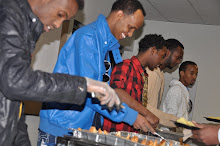
Twitter FarkIt Type Size A A A A hint of rosemary, basil and garlic just might be the first step to healthier eating, some learned at the Taste of Africa event Tuesday at First United Methodist Church.
Organized by the Multicultural Center of Central Minnesota and the Central Minnesota Sustainability Project, the event served as an introduction to locally grown, sustainable and organic food and its benefits.
The fundraising event benefits the Multicultural Center, the Sustainability Project and the African Women's Alliance, organizer Rick Miller said. Miller is the Development Consultant for the Central Minnesota Sustainability Project.
"We're promoting local, sustainable and organic food," Miller said. "It's about community. Food serves the community."
Diversity of food is also important and helps in the cause for not only healthy growing but living, he said.
Lanice Palmer-Cole, VISTA project coordinator for the African Women's Alliance, said the event is a good way to interact with different people in the community, especially those new to the St. Cloud area.
"The essence of the event is inclusiveness," Palmer-Cole said. "It's all about building bridges."
The cozy atmosphere of the lower level of the church made it hard to ignore anyone as more than 150 packed the event, enjoying fellowship and learning about sustainability. The setting was intentional, she said.
As those in attendance feasted on organic foods from Ghana and Somalia, they heard drumming from Buddy King and the Beats on the Block drumming group and presentations from sustainability advocates.
Isaac Owens, food service manager of Hennepin County Medical Center (Organic Rooftop Garden) was one of speakers and one of several who prepared the meal for Tuesday.
"Do you take the time to think about what you put in your stomach?" the Ghana native asked after citing that many take the time to think about what car they will drive or what job they will take.
"Sustainability is something I believe we can all do," Owens said.
While other dinners have been held previously, Tuesday was the first joint dinner, said Susan Roberts, board chair for the Multicultural Center. She said the mission of the center is building bridges of multicultural understanding among all people throughout Central Minnesota.
"It's to expose the community to these cultures," Roberts said of the event. "People grow to mistrust things they don't know. If we can eliminate their fear, then we're building a bridge of understanding."
By TaLeiza Calloway • tcalloway@stcloudtimes.com • March 17, 2010
Comments(11)RecommendPrint this page E-mail this article Share
Del.icio.us Facebook Digg Reddit Newsvine Buzz up!
Twitter FarkIt Type Size A A A A hint of rosemary, basil and garlic just might be the first step to healthier eating, some learned at the Taste of Africa event Tuesday at First United Methodist Church.
Organized by the Multicultural Center of Central Minnesota and the Central Minnesota Sustainability Project, the event served as an introduction to locally grown, sustainable and organic food and its benefits.
The fundraising event benefits the Multicultural Center, the Sustainability Project and the African Women's Alliance, organizer Rick Miller said. Miller is the Development Consultant for the Central Minnesota Sustainability Project.
"We're promoting local, sustainable and organic food," Miller said. "It's about community. Food serves the community."
Diversity of food is also important and helps in the cause for not only healthy growing but living, he said.
Lanice Palmer-Cole, VISTA project coordinator for the African Women's Alliance, said the event is a good way to interact with different people in the community, especially those new to the St. Cloud area.
"The essence of the event is inclusiveness," Palmer-Cole said. "It's all about building bridges."
The cozy atmosphere of the lower level of the church made it hard to ignore anyone as more than 150 packed the event, enjoying fellowship and learning about sustainability. The setting was intentional, she said.
As those in attendance feasted on organic foods from Ghana and Somalia, they heard drumming from Buddy King and the Beats on the Block drumming group and presentations from sustainability advocates.
Isaac Owens, food service manager of Hennepin County Medical Center (Organic Rooftop Garden) was one of speakers and one of several who prepared the meal for Tuesday.
"Do you take the time to think about what you put in your stomach?" the Ghana native asked after citing that many take the time to think about what car they will drive or what job they will take.
"Sustainability is something I believe we can all do," Owens said.
While other dinners have been held previously, Tuesday was the first joint dinner, said Susan Roberts, board chair for the Multicultural Center. She said the mission of the center is building bridges of multicultural understanding among all people throughout Central Minnesota.
"It's to expose the community to these cultures," Roberts said of the event. "People grow to mistrust things they don't know. If we can eliminate their fear, then we're building a bridge of understanding."
Monday, March 15, 2010
Somalis in Minnesota


Somalis in Minnesota
Somali population, cultural tension rising in St. Cloud
by Ambar Espinoza, Minnesota Public Radio
March 15, 2010
LISTEN
Embed | Help
Copy and paste the HTML below to embed this audio onto your web page.
Audio player code:
sponsor:St. Cloud, Minn. — The Facebook group, "I hate the Somalians at Tech High," didn't live online for a long time, but word traveled fast among high school students in the St. Cloud area.
While that page no longer exists, students of Somali descent say the attitudes expressed on that Facebook page have a strong presence on two of St. Cloud's public high schools.
Sahra Alin Ahmed, a Somali student and freshman at Apollo High School, wasn't surprised by the group's views as she regularly hears them on campus.
The atmosphere at the city's high schools is so hostile to Somali students that Alin Ahmed finds herself having to stand up for newly arrived immigrant students.
"They don't say anything to the people that know English, but the ones who just came from Africa, who don't really know English, you know, who don't really understand, those are the ones they get at most," she said.
Somali students now make up about 10 percent of the student population in the St. Cloud Area School District 742 and their numbers have been steadily growing. The entire district has about 10,000 students.
Alin Ahmed said white students make disparaging remarks about how they perceive their Muslim classmates to dress, speak, and smell.
I am a "Rasist"Apollo sophomore Fadumo Adan said she's been the target of those comments ever since she moved to Minnesota from Somalia two years ago.
"They always make fun of us and they say, 'Go back to your countries,' and, 'You guys stink,' and, 'This is our country, and we don't need black people,' so it's every single day," Adan said. "It's not several times, it's all the time."
Adan said some of her classmates spray perfume as Muslim students exit classrooms. Although she has complained about that to teachers and her counselor, sometimes they won't do anything, she said.
But Alin Ahmed said that in her experience, school administrators do try to address racial tensions when problems arise.
St. Cloud Area School District 742 Superintendent Steve Jordahl said school administrators do follow district discipline policies when students report any kind of inappropriate behavior. When district officials receive complaints of bullying, racial, sexual or religious harassment, he said, they take action.
"Detention can happen [and] legal authority, the police, in other words, can be called in," Jordahl said. "Kids can be suspended or dismissed from school. Sometimes expulsion things can happen. Of course, that doesn't happen very often, but it does happen."
Tech high school hate groupThat's what happened to 18-year-old Kyle Adams, a senior at Area Learning Center Wilson, an alternative school. Adams used to go to Technical High School, but officials expelled him when he was in the tenth grade.
"I was young and dumb and saying some stuff and then a Somalian came up at swung at me and I ducked out of the way and then I said, 'you stupid, f'ing n----- and all of this,'" Adams said. "And then I got in trouble and got kicked out and there was nothing followed up on them for swinging at me or yelling at me and that really made me kind of mad."
This wasn't Adams' first altercation with classmates of Somali descent.
Though Adams now says he shouldn't have said the things he said, he still harbors resentment. He was one of the people who joined the Facebook group, "I hate the Somalians at Tech High." He's also a member of another Facebook group called, "I am a 'Rasist' [sic].. ok,, So Deal With It."
Adams, who grew up in Kentucky, explains he called his classmate a racial epithet because his beliefs about race are deep-seated.
Mayavski and Adams"I was raised in believing that this country was founded upon a white Christian nation and the belief of racial separation," he said.
Adams said his family and friends think it's normal to use racial slurs. He said his attitude toward Muslim students is also common among many of his classmates.
His friend, 18-year-old Matt Mayavski, said a few people at the school call themselves "rednecks" on campus. Others make their views known by wearing Confederate flag belt buckles or belts or wearing certain brands of clothing, said Mayavski, a lifelong St. Cloud resident who also went to Technical High School.
Adams and Mayavski say they flash the Confederate battle flag -- an offensive symbol to many blacks -- because they believe in small government. They say it has nothing to do with race.
The resentment stems from feeling like Muslim students receive preferential treatment, Mayavski said.
"Towards the end of my junior year, I was in math class and the Somalians asked to go pray before lunch," he said. "Well, I went to ask my teacher for [a prayer break] and [she] sent me down to the office and I got written up for it. And I was like, 'Well, how can the school respect their religion, but they can't respect ours?'"
Nimco Ahmed, a policy aide to a Minneapolis City Council member, said it's understandable that white students in St. Cloud have such questions.
"Why can they go every Friday and step out of class and have a Friday prayer while I have to be in class is a good question," said Ahmed, who is from Somalia. "It is a legitimate question and somebody needs to answer these questions to them."
When Ahmed went to Roosevelt High School in Minneapolis ten years ago, the Somali population was growing rapidly, and cultural misunderstandings were common.
Ahmed said school administrators have to take extra steps to educate students about other cultures. That's how her school was able to overcome cultural tensions.
"They reached out to other people outside of our school. They had people come in and educate us and sit down with us and mediate us," she said. "That's exactly what is needed. And when we learned how to do it, we reached out to other schools that had the same problems. We didn't stop."
Ahmed said such challenges are typical of any area undergoing significant demographic changes. But the issues at St. Cloud schools need to be addressed quickly before they escalate, she said.
Superintendent Jordahl said he wants people to understand that his schools are doing what they can to address these problems.
"As adults in the system, we recognize that the issues exist and our job is to raise student achievement," Jordahl said. "We recognize that if kids don't feel good, feel safe, they are not going to do as well as if they did. So we want to make sure we are addressing this all the time."
But schools can't tackle them alone, he said.
"We really, really want our parents to understand that they have a huge role in this," Jordahl said. "In fact, I always say this, parents, you are the first and most important teacher your child has."
While Jordahl said St. Cloud schools are working hard to address racial tensions, critics in the wider St. Cloud community say the district isn't doing enough. They've called on the district to adopt a more aggressive anti-bias curriculum than what the district currently has.
Wednesday, March 10, 2010
Letter: Letter should not have been published
Letter: Letter should not have been published
By Bernard Evans • St. Joseph • March 6, 2010
Comments(61)Recommend(6)Print this page E-mail this article Share
Del.icio.us Facebook Digg Reddit Newsvine Buzz up!
Twitter FarkIt Type Size A A A The March 1 letter “Attacks with Muslim ties cannot be ignored” suggests that we in Central Minnesota have good reason to “suspect and fear Somali people.”
The letter is loaded with generalizations and stereotypes that present an inaccurate picture of our Somali and other Muslim neighbors. I am disappointed the Times judged this letter fit for publication.
It offers a list of attacks against U.S. interests by individuals and groups with Muslim connections. Indeed, these are horrific actions, but how are they connected to Muslims in Central Minnesota? They are not!
The letter does a disservice to imply otherwise and to suggest that we should keep a suspicious eye on our neighbors — as a chicken farmer does a fox — is despicable.
To the Times, please climb a little higher on the ladder of journalistic standards. Not every piece of dribble ... deserves to be published
By Bernard Evans • St. Joseph • March 6, 2010
Comments(61)Recommend(6)Print this page E-mail this article Share
Del.icio.us Facebook Digg Reddit Newsvine Buzz up!
Twitter FarkIt Type Size A A A The March 1 letter “Attacks with Muslim ties cannot be ignored” suggests that we in Central Minnesota have good reason to “suspect and fear Somali people.”
The letter is loaded with generalizations and stereotypes that present an inaccurate picture of our Somali and other Muslim neighbors. I am disappointed the Times judged this letter fit for publication.
It offers a list of attacks against U.S. interests by individuals and groups with Muslim connections. Indeed, these are horrific actions, but how are they connected to Muslims in Central Minnesota? They are not!
The letter does a disservice to imply otherwise and to suggest that we should keep a suspicious eye on our neighbors — as a chicken farmer does a fox — is despicable.
To the Times, please climb a little higher on the ladder of journalistic standards. Not every piece of dribble ... deserves to be published
Letter: Attacks with Muslim ties cannot be ignored
Letter: Attacks with Muslim ties cannot be ignored
By Gene Mills • St. Cloud • March 1, 2010
Comments(122)RecommendPrint this page E-mail this article Share
Del.icio.us Facebook Digg Reddit Newsvine
Buzz up!Twitter FarkIt Type Size A A A Once again the broad swipe of the liberal brush has condemned our fair city and attacked a very popular 6th District representative. ("St. Cloud area needs Human Rights Office," Jan. 30.)
Racism, bigotry and hate are familiar liberal terms describing our formerly Scandinavian, German community, which has welcomed, with open arms, immigrants from all parts of our wonderful world.
The most recent attack is by a public employee, who claims Somali people are under attack here.
Why would we suspect and fear Somali people?
Remember the Army Rangers killed in Somalia and the dead American soldiers dragged naked through the streets? Remember the Somali pirates attacking ships? Remember the young Somali men from Minneapolis returning to their native land to become terrorists? Remember the FBI investigating these events?
The Muslim religion is also mentioned in the Your Turn. Let's have a quick history lesson on why, just maybe, some folks fear and distrust Muslims.
1968 — Bobby Kennedy shot and killed.
1972 — the Olympics where Israeli athletes are massacred.
1979 — The U.S. Embassy in Iran taken over.
1983 — more than 200 Marines killed in Beirut.
1985 — the cruise ship Achille Lauro hijacked and an American executed.
1993 — World Trade Center bombed.
1998 — U.S. embassies in Kenya and Tanzania bombed.
2000 — USS Cole attacked with 17 sailors killed.
Sept. 11, 2001 — World Trade Center bombed.
And then there is Osama bin Laden and the war with Muslim extremist. Any wonder why there may be a little mistrust?
... Central Minnesota working folk know one thing: If you're raising chickens and they are being killed and you see fox tracks, your instincts kick in and you start looking for the fox.
By Gene Mills • St. Cloud • March 1, 2010
Comments(122)RecommendPrint this page E-mail this article Share
Del.icio.us Facebook Digg Reddit Newsvine
Buzz up!Twitter FarkIt Type Size A A A Once again the broad swipe of the liberal brush has condemned our fair city and attacked a very popular 6th District representative. ("St. Cloud area needs Human Rights Office," Jan. 30.)
Racism, bigotry and hate are familiar liberal terms describing our formerly Scandinavian, German community, which has welcomed, with open arms, immigrants from all parts of our wonderful world.
The most recent attack is by a public employee, who claims Somali people are under attack here.
Why would we suspect and fear Somali people?
Remember the Army Rangers killed in Somalia and the dead American soldiers dragged naked through the streets? Remember the Somali pirates attacking ships? Remember the young Somali men from Minneapolis returning to their native land to become terrorists? Remember the FBI investigating these events?
The Muslim religion is also mentioned in the Your Turn. Let's have a quick history lesson on why, just maybe, some folks fear and distrust Muslims.
1968 — Bobby Kennedy shot and killed.
1972 — the Olympics where Israeli athletes are massacred.
1979 — The U.S. Embassy in Iran taken over.
1983 — more than 200 Marines killed in Beirut.
1985 — the cruise ship Achille Lauro hijacked and an American executed.
1993 — World Trade Center bombed.
1998 — U.S. embassies in Kenya and Tanzania bombed.
2000 — USS Cole attacked with 17 sailors killed.
Sept. 11, 2001 — World Trade Center bombed.
And then there is Osama bin Laden and the war with Muslim extremist. Any wonder why there may be a little mistrust?
... Central Minnesota working folk know one thing: If you're raising chickens and they are being killed and you see fox tracks, your instincts kick in and you start looking for the fox.
Friday, February 19, 2010
St. Cloud-area lawmakers clash on welfare
St. Cloud-area lawmakers clash on welfare
By Mark Sommerhauser • msommerhauser@stcloudtimes.com • February 17, 2010
Comments(88)RecommendPrint this page E-mail this article Share
Del.icio.us Facebook Digg Reddit Newsvine Buzz up!
Twitter FarkIt Type Size A A A ST. PAUL — A proposal to allow more Minnesotans to get food stamps inserted two St. Cloud-area lawmakers into an emotional debate Tuesday about partisanship and people in need.
Rep. Larry Hosch, DFL-St. Joseph, and Rep. Steve Gottwalt, R-St. Cloud, clashed over the bill that would remove limits on the assets a person may own while receiving state food stamps.
Rhetoric escalated in a committee hearing after Rep. Jim Abeler, R-Anoka, said the measure would allow people to obtain food stamps even if they wear a Rolex watch or drive a Mercedes.
Several lawmakers hoped the resolution to Tuesday's exchange leads to a more bipartisan Legislature in the coming weeks, when lawmakers tackle the big issue of 2010: resolving the state's budget deficit.
Hosch is cosponsoring the food-stamp bill, which he said mimics a policy used by 27 other states and would not cost Minnesota anything, since a federal program supplies the funding.
Hosch said recipients still would have to meet income guidelines to qualify for food stamps.
But Abeler questioned if removing the $7,000 asset limit would allow those who do not need the program to exploit it.
That drew fire from Rep. Jeff Hayden, DFL-Minneapolis, and Hosch, who called Abeler's comments "a disservice" that perpetuate stereotypes about people who receive public assistance.
"God help us," Hosch said, "that none of you have to go through the situation that these families are: a lost job, an accident on the road."
Hosch's and Hayden's remarks then drew an equally indignant reaction from Gottwalt.
"How dare you imply in your comments that we don't care as much," Gottwalt said. "We have a legitimate right to ask questions ... without our intent being impugned."
Gottwalt said DFLers' reaction to Abeler's statement reflects a stereotype about Republicans: that they're "fat cats" who don't understand what it's like to be in need.
Almost two decades ago, Gottwalt said, he stood in an unemployment line after being laid off from his job at a radio station.
Gottwalt later told the Times he "probably would have supported" the food stamp bill if it had come to a committee vote.
He said DFLers' comments speak to the "root of the hard-core partisanship that we all hate ... the assumption that the other side has ill intent."
Abeler said at the end of the hearing that he spoke "badly," but added the subsequent discussion of his comments could be "really good practice" for the Legislature's impending budget debate.
"We have to get the governor to sign something at the end of the day that we all agree on," Abeler said, "or we will have nothing."
Hosch said he didn't intend to second-guess anyone's motives for questioning the bill.
"But when we perpetuate stereotypes," Hosch added, "I am gonna fight back every time."
By Mark Sommerhauser • msommerhauser@stcloudtimes.com • February 17, 2010
Comments(88)RecommendPrint this page E-mail this article Share
Del.icio.us Facebook Digg Reddit Newsvine Buzz up!
Twitter FarkIt Type Size A A A ST. PAUL — A proposal to allow more Minnesotans to get food stamps inserted two St. Cloud-area lawmakers into an emotional debate Tuesday about partisanship and people in need.
Rep. Larry Hosch, DFL-St. Joseph, and Rep. Steve Gottwalt, R-St. Cloud, clashed over the bill that would remove limits on the assets a person may own while receiving state food stamps.
Rhetoric escalated in a committee hearing after Rep. Jim Abeler, R-Anoka, said the measure would allow people to obtain food stamps even if they wear a Rolex watch or drive a Mercedes.
Several lawmakers hoped the resolution to Tuesday's exchange leads to a more bipartisan Legislature in the coming weeks, when lawmakers tackle the big issue of 2010: resolving the state's budget deficit.
Hosch is cosponsoring the food-stamp bill, which he said mimics a policy used by 27 other states and would not cost Minnesota anything, since a federal program supplies the funding.
Hosch said recipients still would have to meet income guidelines to qualify for food stamps.
But Abeler questioned if removing the $7,000 asset limit would allow those who do not need the program to exploit it.
That drew fire from Rep. Jeff Hayden, DFL-Minneapolis, and Hosch, who called Abeler's comments "a disservice" that perpetuate stereotypes about people who receive public assistance.
"God help us," Hosch said, "that none of you have to go through the situation that these families are: a lost job, an accident on the road."
Hosch's and Hayden's remarks then drew an equally indignant reaction from Gottwalt.
"How dare you imply in your comments that we don't care as much," Gottwalt said. "We have a legitimate right to ask questions ... without our intent being impugned."
Gottwalt said DFLers' reaction to Abeler's statement reflects a stereotype about Republicans: that they're "fat cats" who don't understand what it's like to be in need.
Almost two decades ago, Gottwalt said, he stood in an unemployment line after being laid off from his job at a radio station.
Gottwalt later told the Times he "probably would have supported" the food stamp bill if it had come to a committee vote.
He said DFLers' comments speak to the "root of the hard-core partisanship that we all hate ... the assumption that the other side has ill intent."
Abeler said at the end of the hearing that he spoke "badly," but added the subsequent discussion of his comments could be "really good practice" for the Legislature's impending budget debate.
"We have to get the governor to sign something at the end of the day that we all agree on," Abeler said, "or we will have nothing."
Hosch said he didn't intend to second-guess anyone's motives for questioning the bill.
"But when we perpetuate stereotypes," Hosch added, "I am gonna fight back every time."
Subscribe to:
Posts (Atom)