Times staff report • October 21, 2008
Read Comments(8)
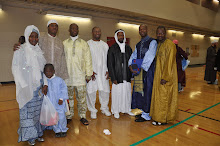
Buzz up! The state’s first Rural African Summit opens Sunday night at the Radisson Suite Hotel in St. Cloud.
Organized by the Institute for Agriculture and Trade Policy based in Minneapolis, the summit will offer a series of sessions on education, human rights, economic development, health, employment and housing.
Events Sunday begin with a 6 p.m. reception that includes speakers, performances and refreshments. On Monday, the conference will run from 8 a.m.-3:30 p.m.
The summit was organized to provide a forum for community members, leaders, officials, providers, religious leaders, educators, students and businesspeople to learn from each other about the economic and social benefits and challenges of rural life for the more than 20,000 African immigrants that live in rural areas of Minnesota.
There is no fee for either day of the conference, but registration is required by visiting
Monday, October 27, 2008


Sunday, October 26, 2008
Man arrested in break-in investigation

Times staff report • October 26, 2008
Comments(18)
Buzz up! A St. Cloud man is in the Stearns County Jail after he was arrested early today in the 700 block of Ninth Avenue North.
A 39-year-old St. Cloud woman identified Mohamed Said Mohamed, 25, as the person who had tried to crawl through her screened window and had been at the home earlier checking the door, which was locked, according to a police report on the incident.
Nothing was taken from inside the residence.
Mohamed was arrested about 3:30 a.m. about two blocks from the incident.
He faces possible first-degree burglary and damage to property charges.
Friday, October 24, 2008
Clark King speaks at Civic Center

By Kirsti Marohn • kmarohn@stcloudtimes.com • October 24, 2008
Buzz up! Had Reatha Clark King tried to give the same speech she gave in St. Cloud on Thursday in her segregated rural Georgia hometown during the first two decades of her life, it probably would have ended badly.
Someone would have reported the gathering to the authorities, the 70-year-old Clark King told the audience at the Civic Center.
“We would all be suspects then, or troublemakers, and perhaps the steering committee would have been taken to jail because they were the instigators of the trouble,” Clark King said. “We all would have been accused of breaking the law.”
The former General Mills Foundation president said she was encouraged to be speaking to the racially diverse audience as part of Create CommUNITY’s third annual “Continuing Conversations on Race.” This year’s forum focused on economic opportunities.
Clark King is senior adviser of the Council of Foundations and a board member of Lenox Group Inc. and Exxon Mobil Corp. She was president of Metropolitan State University in St. Paul for 11 years and has a doctorate in thermochemistry.
Clark King urged the community to consider how people will be affected by the housing and financial crisis, whose ripple effects aren’t yet known.
“We are having some jolts, and we’re going to have some more jolts, but we need a plan to deal with the aftermath of these jolts as soon as possible,” she said.
The economic issues are global and national, but also affect people locally, Clark King said.
“We must understand that we must prepare for changing times, and ask the question — ‘Which communities can weather the storm?’ ” she said.
The answer is those with “the right culture, standards and discipline,” she said, and cited Create CommUNITY’s anti-racism efforts as “the right initiative for the right time.”
It’s impossible for companies, universities, churches and other organizations to isolate themselves from issues in the community, Clark King said, because those organizations get their people from community, she said.
“The issues that people experience in the community, whether it’s racism or prejudice, they’re prone to bring those issues into the organization ... so economies, employees and their people are intertwined,” Clark King said.
Corporations, churches, schools and other organizations should continue diversity programs and work to eliminate racism even in tough economic times, Clark King said. She urged the audience not to accept the excuse that “we can’t make progress on eliminating racism and prejudice because we don’t have the money in our budgets.
“There are a lot of things we can do that don’t require lots of money,” Clark King said.
Literacy for Families program lets parents, children learn together

By Jane Laskey • jlaskey@stcloudtimes.com • October 24, 2008
SAUK RAPIDS — A graduation cap and gown often are the first step to good jobs, financial stability and independence. But 27 percent of Minnesota’s Class of 2007 did not graduate on time.
Almost 5,000 were listed as dropouts, according to the Minnesota Department of Education.
That’s a big problem.
High school dropouts are “much more likely than their peers who graduate to be unemployed, living in poverty, receiving public assistance, in prison, on death row, unhealthy, divorced and single parents with children who drop out from high school themselves” according to the 2006 report “The Silent Epidemic.”
While adult G.E.D. and diploma programs offer dropouts a chance to get back on track, that traditional approach often doesn’t work for adult learners with children.
That’s where the Sauk Rapids-Rice Family Literacy Program comes in. The unique program — a collaboration between Reach Up Inc., Sauk Rapids-Rice Adult Basic Education and Sauk Rapids-Rice Early Childhood Family Education — focuses on the entire family.
“It’s not just an adult education program to get a diploma. It looks at the needs of every person in that family,” Early Childhood Director Deb Campbell said. “They’re all in the same building, learning together.”
In 2008, 21 participants graduated from the program with a high school diploma.
Clearing a path
Life gets in the way for many dropouts who want to complete their degree. Providing food, shelter, clothes and diapers can consume a family’s resources. Affordable child care is hard to find. Transportation is not always available.
Katie Pattison, 29, of Sauk Rapids dropped out of high school when she became pregnant in 10th grade.
“I tried four or five times to go back — it didn’t ever last,” Pattison said.
The Family Literacy program eliminates the obstacles.
No car? No problem. Transportation is provided.
No sitter? No worries. Child care and school readiness classes are included so kids can come along with mom or dad.
No food in the fridge? Reduced or free lunches are served each day.
Best of all, the program itself is free.
For Pattison, the family component of the program made the difference. She and her two youngest children enrolled in 2007. She is scheduled to graduate in May.
“My children love it here. They have a lot of fun and learn so much,” Pattison said. “When they love to come here — they’re so excited — it makes you feel confident so you can sit back and learn.”
Katy Faith, 20, of St. Cloud had a similar experience.
“I like the fact that I can bring my kids with me to school,” Faith said. “I can go check on them if I need to.”
Faith, too, is scheduled to graduate in the spring. When she does, she will be one of more than 125 graduates of the program that started offering diplomas in 1999. Others have used the skills they acquired to test for their G.E.D.
The majority of participants are young, single mothers.
“We’ve seen a lot of parents come here as their last chance,” Campbell said. “They’re succeeding. They’re going on to employment and their children are getting a great start to school.”
A flexible approach
The program follows a standard curriculum, but tries to create flexible learning plans to meet each student’s needs. As long as they progress, students may stay as long to complete their diploma work.
“You do it at your own pace,” Elizabeth Haugen said. “Whatever level you’re on is what level they will work with you at. So you don’t get overwhelmed.”
Haugen is 28 and has a 2-year-old daughter in the program. She dropped out of Apollo High School when she was in 10th grade.
“I got into trouble and have been putting it off until now,” Haugen said. “I found this program, and it was a great opportunity for me to get my diploma — and I can be with my daughter.”
Haugen is working hard to pull her life back together. She hopes that completing her high school degree will open the door to new opportunities, including college.
“I want to try to be a police officer or counselor, something where I can help people,” Haugen said. “If I can help someone to get through what I went through, I’ll be happy.”
Hands-on
The program succeeds by focusing on each student’s unique situation and needs.
“Everyone has their own story,” Laurie Whitaker said. Whitaker is the literacy coordinator for Reach Up Inc.
Like most of the program’s staff, Whitaker wears a lot of hats. She drives families to school, serves food in the cafeteria or lends a hand in the children’s room. She also connects parents with food shelves and other resources.
Classroom instruction is designed to keep learning personal and hands-on.
For instructor Karen Musielewicz-Wiebolt, that means keeping lessons relevant.
“If you can apply it to your real life, it sticks with you. I use a standard curriculum. But if we’re learning how to get the best buy shopping, we’ll talk about diapers and formula and rice cereal,” she said.
With an increase in recent immigrants in the program, Musielewicz-Wiebolt has seen her students’ interactions evolve into history and social studies lessons.
“ESL students add a wonderful diversity to our program. We have a Somali family in class this year. I love the questions that have gone back and forth between them and our American-born students,” Musielewicz-Wiebolt said. “The next thing you know, we’re taking down the map and saying: ‘Where is Somalia? Why did you come here?’ It’s phenomenal learning that happens between cultures and it happens naturally.”
As students make a connection between their lessons and everyday life, learning becomes more than a hurdle they have to jump over. It becomes a tool that can bring them independence, happiness and success.
“You have to teach people that learning things is an important and exciting part of life.” said Sandee Jones, who coordinates the ABE program. “I tell each student I have two goals for them: one, this is the last place they will have to come to get their diploma; two, that they will learn they can learn without a teacher at their elbow.”
Next generation
Perhaps the program’s biggest accomplishment is breaking the cycle of illiteracy. In some families, generation after generation has dropped out of school.
“Many of the families that come here, their own family doesn’t value education that much,” Jones said. “They’ve had some bad experience in previous schools so they have a bad taste for education.”
But Family Literacy program graduates will not be passing on that legacy.
“They want their children to be successful in school,” Jones said. “They want to be able to help their children with homework and go to parent-teacher conferences. Many come from a background where they didn’t have that.”
Participants work on parenting skills for three and a half hours each week. They observe their children at play and work with ECFE staff to develop new ways of interacting with their children.
“We see a lot of parents changing their interactions with their kids,” Campbell said.
Preschool teachers focus on making learning fun and preparing children for success in kindergarten.
For many of the children in the program, the child care room and preschool classes are their first opportunity to interact with peers and teachers. They learn social skills and gain confidence.
“We’re showing our kids how important it is to go to school,” Pattison said.
Three times a year, the program hosts Family Fun Nights to encourage families to play together. The evening includes a meal and family-friendly games and activities.
The whole family — parents, kids, grandparents, aunts and uncles — are encouraged to attend. “Sometimes we have 120 people here,” Jones said. “It helps them get used to having fun with their kids.”
Although the program does not track participants’ progress after graduation, some graduates stay in touch.
“They are getting jobs and more and more are going on to higher education,” Jones said. “I just had a wonderful phone call from a woman that graduated a couple of years ago. She’s getting straight As at technical college. It makes you realize you are making a difference.”
Monday, October 13, 2008
District aims to rally support for tax referendum
Read Comments(139)Recommend (7)Print this page E-mail this article Share Del.icio.us
Facebook
Digg
Reddit
Newsvine
Buzz up! If it passes, the money raised by approval of the first question on the St. Cloud school district's property tax referendum would change little within the district.
It would provide about $5.9 million a year for the next six years to maintain programs and services. Class sizes would stay the same. The money would cover growing operations costs such as fuel and energy. One clear change would be that secondary students who lost the option to ride the bus to school because they live too close to school would get that opportunity back. Money also would sustain junior and senior high school activities.
If question one fails, supporters and school officials say the effects would be devastating.
"It's absolutely key. If we don't get question one, it's nasty," said Barclay Carriar, a St. Cloud financial adviser who is one of three people leading the campaign to pass the tax increase.
While supporters aren't playing favorites as they seek community support for a three-question, $10.25 million property tax increase, they are clear that if question one goes down it will change the outlook of St. Cloud schools, possibly for years.
"How many ways can I say essential? I don't know how strongly I can word it. It is a crisis in order to not have to make devastating cuts in our programs," board Chairwoman Deb Lalley said.
Board member Jerry Von Korff, who spent last week explaining the proposals to St. Cloud City Council and Stearns County County Board members, is equally as dire in his descriptions.
"We will be in the worst financial position the district has ever been in," Von Korff said.
The district, which has a $88 million budget to support 9,500 students and 1,500 employees, has made more than $20 million in reductions since 2002, according to district records.
Proposal foundation
The whole proposal hinges on that first ballot question. St. Cloud schools would be looking at more than $4.3 million in reductions if it fails. In addition, all the new or expanded programs offered in questions two and three that might attract voters with children or relatives interested in those programs, would sink with it. If question one fails, questions two and three will also go down regardless of their vote totals.
School officials are less concerned about losing the new proposals than losing millions for programs that are already in place if the vote goes down in question one.
Superintendent Steve Jordahl last month completed a proposal that shows what would be lost if question one goes down. That list includes 35 to 55 teachers. Up to two schools could close, junior high school activities would be eliminated and layoffs in administration and support services are expected.
"If it fails, there are going to be a lot of changes that are not going to be good for children," said Jordahl, who arrived in St. Cloud July 1 after three years as superintendent in Barnesville. "(Question) one is one we must have passed."
One person who said she understands the gravity of the situation is Jean Haley, a retired nurse. She was eating lunch at Whitney Senior Center while Jordahl and school volunteers handed out fliers promoting the tax increase.
"I'll support it because I always support good education in Minnesota," Haley said.
St. Cloud school district will almost certainly return to the voters in 2009 for a third straight try at getting a tax increase passed, Jordahl said. In 2007, voters rejected a plan that would have renewed a tax approved in 2003. The district made $1.5 million in reductions and used reserves to close a $4 million shortfall.
The proposals in question one are similar to what voters approved in 2003. Voters approved that tax increase in four questions.
This time, wrapped in one question is money to maintain the current class size ratios and money to maintain present levels of activities.
The district dropped bus routes and pushed the boundary to two miles for secondary students to ride the bus to school for free as part of the 2008-2009 budget reductions.
An approved question one would restore the boundary to one mile. About $500,000 will be dedicated to the district's fund balance, a reserve account that provides cash flow and a financial safety net.
Breaking it down
The most expensive part of question one is $2.7 million that will be used for what the district calls operations. It includes money for energy, supplies, safety and security and general operating expenses.
The energy is fuel oil to heat the schools and the electricity for the lights. Supplies are the classroom materials and office supplies.
The safety and security dollars would be used to add more cameras in classrooms and provide paid monitors at all entrances at schools, Jordahl said.
One proposal in question one that would be noticeable is transportation. The plan calls for adding $317,000 to the budget to restore reductions to the bus program last year.
The district eliminated six bus routes and more than 300 students were no longer eligible to ride for free. About 60 are paying one of the district's contractors to ride the bus. The rest have had to find their own way to school.
If the vote passes, any student who lives outside a mile from school would get to ride the bus. If not, the one mile boundary for elementary students and two mile boundary for secondary students will remain.
About $1.8 million is proposed to retain the present level of teachers. Without the money from the property tax increase, up to 55 teachers would laid off. The district said that would increase the student-to teacher ratio by four students.
In 2003, the voter-approved tax increase allowed the district to pay for 35 additional teachers, reducing class sizes that had grown through previous budget reductions.
When the effort to renew that money last year failed, the district used reserve dollars to keep the teachers in place. That won't be an option next year, school officials say.
The reserves are anticipated to be spent down to about $2 million at the end of year. The district plans to spend $2.2 million from reserves in 2008-2009 to help balance the budget.
In an $88 million budget, $2 million is a small reserve and the district has to borrow money and pay interest to cover its monthly bills while it waits for state dollars to arrive. School finance experts suggest having 5 percent to 8 percent in reserves.
The district needs $4.4 million to reach 5 percent. The question 1 proposal calls for adding $500,000 a year to the fund balance to restore financial stability.
Digg
Newsvine
Buzz up! If it passes, the money raised by approval of the first question on the St. Cloud school district's property tax referendum would change little within the district.
It would provide about $5.9 million a year for the next six years to maintain programs and services. Class sizes would stay the same. The money would cover growing operations costs such as fuel and energy. One clear change would be that secondary students who lost the option to ride the bus to school because they live too close to school would get that opportunity back. Money also would sustain junior and senior high school activities.
If question one fails, supporters and school officials say the effects would be devastating.
"It's absolutely key. If we don't get question one, it's nasty," said Barclay Carriar, a St. Cloud financial adviser who is one of three people leading the campaign to pass the tax increase.
While supporters aren't playing favorites as they seek community support for a three-question, $10.25 million property tax increase, they are clear that if question one goes down it will change the outlook of St. Cloud schools, possibly for years.
"How many ways can I say essential? I don't know how strongly I can word it. It is a crisis in order to not have to make devastating cuts in our programs," board Chairwoman Deb Lalley said.
Board member Jerry Von Korff, who spent last week explaining the proposals to St. Cloud City Council and Stearns County County Board members, is equally as dire in his descriptions.
"We will be in the worst financial position the district has ever been in," Von Korff said.
The district, which has a $88 million budget to support 9,500 students and 1,500 employees, has made more than $20 million in reductions since 2002, according to district records.
Proposal foundation
The whole proposal hinges on that first ballot question. St. Cloud schools would be looking at more than $4.3 million in reductions if it fails. In addition, all the new or expanded programs offered in questions two and three that might attract voters with children or relatives interested in those programs, would sink with it. If question one fails, questions two and three will also go down regardless of their vote totals.
School officials are less concerned about losing the new proposals than losing millions for programs that are already in place if the vote goes down in question one.
Superintendent Steve Jordahl last month completed a proposal that shows what would be lost if question one goes down. That list includes 35 to 55 teachers. Up to two schools could close, junior high school activities would be eliminated and layoffs in administration and support services are expected.
"If it fails, there are going to be a lot of changes that are not going to be good for children," said Jordahl, who arrived in St. Cloud July 1 after three years as superintendent in Barnesville. "(Question) one is one we must have passed."
One person who said she understands the gravity of the situation is Jean Haley, a retired nurse. She was eating lunch at Whitney Senior Center while Jordahl and school volunteers handed out fliers promoting the tax increase.
"I'll support it because I always support good education in Minnesota," Haley said.
St. Cloud school district will almost certainly return to the voters in 2009 for a third straight try at getting a tax increase passed, Jordahl said. In 2007, voters rejected a plan that would have renewed a tax approved in 2003. The district made $1.5 million in reductions and used reserves to close a $4 million shortfall.
The proposals in question one are similar to what voters approved in 2003. Voters approved that tax increase in four questions.
This time, wrapped in one question is money to maintain the current class size ratios and money to maintain present levels of activities.
The district dropped bus routes and pushed the boundary to two miles for secondary students to ride the bus to school for free as part of the 2008-2009 budget reductions.
An approved question one would restore the boundary to one mile. About $500,000 will be dedicated to the district's fund balance, a reserve account that provides cash flow and a financial safety net.
Breaking it down
The most expensive part of question one is $2.7 million that will be used for what the district calls operations. It includes money for energy, supplies, safety and security and general operating expenses.
The energy is fuel oil to heat the schools and the electricity for the lights. Supplies are the classroom materials and office supplies.
The safety and security dollars would be used to add more cameras in classrooms and provide paid monitors at all entrances at schools, Jordahl said.
One proposal in question one that would be noticeable is transportation. The plan calls for adding $317,000 to the budget to restore reductions to the bus program last year.
The district eliminated six bus routes and more than 300 students were no longer eligible to ride for free. About 60 are paying one of the district's contractors to ride the bus. The rest have had to find their own way to school.
If the vote passes, any student who lives outside a mile from school would get to ride the bus. If not, the one mile boundary for elementary students and two mile boundary for secondary students will remain.
About $1.8 million is proposed to retain the present level of teachers. Without the money from the property tax increase, up to 55 teachers would laid off. The district said that would increase the student-to teacher ratio by four students.
In 2003, the voter-approved tax increase allowed the district to pay for 35 additional teachers, reducing class sizes that had grown through previous budget reductions.
When the effort to renew that money last year failed, the district used reserve dollars to keep the teachers in place. That won't be an option next year, school officials say.
The reserves are anticipated to be spent down to about $2 million at the end of year. The district plans to spend $2.2 million from reserves in 2008-2009 to help balance the budget.
In an $88 million budget, $2 million is a small reserve and the district has to borrow money and pay interest to cover its monthly bills while it waits for state dollars to arrive. School finance experts suggest having 5 percent to 8 percent in reserves.
The district needs $4.4 million to reach 5 percent. The question 1 proposal calls for adding $500,000 a year to the fund balance to restore financial stability.
Wednesday, October 1, 2008
6 Somali men shot to death since December
6 Somali men shot to death since December
Abdishakur Adan Hassan, killed Monday as he went to the Village Market Mall in Minneapolis for a haircut, was the sixth Twin Cities Somali man slain since December.
By DAVID CHANEN, Star Tribune
Last update: September 30, 2008 - 8:45 PM
Coon Rapids woman found guilty of killing her newborn in tub in 2005
Since December, six Somali men from the Twin Cities, all under 40, have been shot to death. It's a disturbing trend that has police and local Somali leaders working together to find solutions to stop the violence.
The most recent victim was Abdishakur Adan Hassan, 21, of Minneapolis. On Monday, the eve of a major religious holiday in the Somali Muslim community, he went to get a haircut at a crowded mall in south Minneapolis. He was shot in the chest in a back parking lot of the Village Market Mall about 9 p.m.
"We are not just looking at this case, but more broadly at the violence in the Somali community to see if there are any connections or patterns," Capt. Amelia Huffman Tuesday.
It was too early to know why Hassan was killed, she said, but witnesses have come forward with information. Hassan had been kicked out the mall earlier in the day, police said, but it's unclear if that played a role in his death.
Hassan's death doesn't appear to be related to the shooting death of 20-year-old Augsburg College student Ahmednur Ali or a shooting in the Cedar-Riverside neighborhood this weekend. A 16-year-old has been arrested in Ali's death.
The increasing violence has parents scared and their children wondering who might be next, said Shukri Omar, Hassan's cousin.
"To be honest, I don't know what's going on with my people," she said. "We came to the United States because of the fighting in Somalia, to get a great education, to live a better life."
Police have been meeting with community members to enlist their help to hand out crime prevention information and identify problems before they get out of control, said Third Precinct police Inspector Lucy Gerold. There has been some lower level crime around the mall, but "it's not constantly on our radar as a source of problems," she said.
Abdishakur Adan Hassan, killed Monday as he went to the Village Market Mall in Minneapolis for a haircut, was the sixth Twin Cities Somali man slain since December.
By DAVID CHANEN, Star Tribune
Last update: September 30, 2008 - 8:45 PM
Coon Rapids woman found guilty of killing her newborn in tub in 2005
Since December, six Somali men from the Twin Cities, all under 40, have been shot to death. It's a disturbing trend that has police and local Somali leaders working together to find solutions to stop the violence.
The most recent victim was Abdishakur Adan Hassan, 21, of Minneapolis. On Monday, the eve of a major religious holiday in the Somali Muslim community, he went to get a haircut at a crowded mall in south Minneapolis. He was shot in the chest in a back parking lot of the Village Market Mall about 9 p.m.
"We are not just looking at this case, but more broadly at the violence in the Somali community to see if there are any connections or patterns," Capt. Amelia Huffman Tuesday.
It was too early to know why Hassan was killed, she said, but witnesses have come forward with information. Hassan had been kicked out the mall earlier in the day, police said, but it's unclear if that played a role in his death.
Hassan's death doesn't appear to be related to the shooting death of 20-year-old Augsburg College student Ahmednur Ali or a shooting in the Cedar-Riverside neighborhood this weekend. A 16-year-old has been arrested in Ali's death.
The increasing violence has parents scared and their children wondering who might be next, said Shukri Omar, Hassan's cousin.
"To be honest, I don't know what's going on with my people," she said. "We came to the United States because of the fighting in Somalia, to get a great education, to live a better life."
Police have been meeting with community members to enlist their help to hand out crime prevention information and identify problems before they get out of control, said Third Precinct police Inspector Lucy Gerold. There has been some lower level crime around the mall, but "it's not constantly on our radar as a source of problems," she said.
Wednesday, September 24, 2008
comment about the prayers
In your voice
Read reactions to this story
Newest first Oldest first
sharpsshooter wrote:
Replying to Rowen:
It is unfortunate that others do not have religious freedoms that Americans enjoy. My whole point is just that everyone has the freedom to practice their own religion -or no religion for that matter-in America. Let's not change that.
But, we should all make sure that our belief systems do not disrespect or infringe on other people.
We should not favor any religion over another.
I am a citizen of this country too. I should be allowed the same freedoms as my Christian, Muslim, Wiccan, Jewish, Buddist, ect... neighbor. The problem is..... only one of the above maybe two, has actual freedoms without criticizm in our country (that incidently brags about freedom of religion).
While some of the others just SUE to get their way!
9/19/2008 1:27:50 AM
While some of the others just SUE to get their way! sharpsshooter
Recommend New post Reply to this Post Report Abuse
Rowen wrote:
It is unfortunate that others do not have religious freedoms that Americans enjoy. My whole point is just that everyone has the freedom to practice their own religion -or no religion for that matter-in America. Let's not change that.
But, we should all make sure that our belief systems do not disrespect or infringe on other people.
We should not favor any religion over another.
I am a citizen of this country too. I should be allowed the same freedoms as my Christian, Muslim, Wiccan, Jewish, Buddist, ect... neighbor. The problem is..... only one of the above maybe two, has actual freedoms without criticizm in our country (that incidently brags about freedom of religion).
9/18/2008 10:20:19 PM It is unfortunate that others do not have religious freedoms that Americans enjoy. My whole point is just that everyone has the freedom to practice their own religion -or no religion for that matter-in America. Let's not change that.
But, we should all make sure that our belief systems do not disrespect or infringe on other people.
We should not favor any religion over another.
I am a citizen of this country too. I should be allowed the same freedoms as my Christian, Muslim, Wiccan, Jewish, Buddist, ect... neighbor. The problem is..... only one of the above maybe two, has actual freedoms without criticizm in our country (that incidently brags about freedom of religion). Rowen
Recommend New post Reply to this Post Report Abuse
legallybrunette wrote:
Replying to Rowen:
If a Christian family migrated to Indonesia, Pakistan, India, Iran, or Nigeria, etc... would schools or businesses in those countries put up a Christmas Tree or allow people to be absent from school/work for an unknown/uncelebrated holiday.... in order to make the Christian children (who are now the minority) at home and comforted?
I have only travelled to Nigeria (of the above countries) and I did not experience any type of religious confrontation... so I don't know.
Does anyone else know?
By the way- I do totally agree with this statement- IF public schools did not include Christian elements. which it is unfortunate that they do. Private schools are available and should be used if available and your beliefs warrant it. It wouldn't bother us if a random winter break was established. it is just the fact that Christians get their holidays in public school and the rest of the religions don't that seems/is unfair when trying to explain to kids when they ask why.
9/18/2008 10:04:12 PM If a Christian family migrated to Indonesia, Pakistan, India, Iran, or Nigeria, etc... would schools or businesses in those countries put up a Christmas Tree or allow people to be absent from school/work for an unknown/uncelebrated holiday.... in order to make the Christian children (who are now the minority) at home and comforted?
I have only travelled to Nigeria (of the above countries) and I did not experience any type of religious confrontation... so I don't know.
Does anyone else know?
legallybrunette
Recommend New post Reply to this Post Report Abuse
Rowen wrote:
Replying to LakesnLife:
If the existing situation is unsatisfactory... Home school, or get the Muslim community to start a private school.
By the way- I do totally agree with this statement- IF public schools did not include Christian elements. which it is unfortunate that they do. Private schools are available and should be used if available and your beliefs warrant it. It wouldn't bother us if a random winter break was established. it is just the fact that Christians get their holidays in public school and the rest of the religions don't that seems/is unfair when trying to explain to kids when they ask why.
9/18/2008 9:46:13 PM
By the way- I do totally agree with this statement- IF public schools did not include Christian elements. which it is unfortunate that they do. Private schools are available and should be used if available and your beliefs warrant it. It wouldn't bother us if a random winter break was established. it is just the fact that Christians get their holidays in public school and the rest of the religions don't that seems/is unfair when trying to explain to kids when they ask why. Rowen
Recommend (1) New post Reply to this Post Report Abuse
legallybrunette wrote:
HAHAHA! Nice... I like the way you think, freethinker. You remind me a college friend... he is now an agnostic neuroscientist and I'm a bloody bored barrister.
afreethinker wrote:
"I pledge allegiance..."
9/18/2008 9:39:46 PM
"I pledge allegiance..." afreethinker
Recommend New post Reply to this Post Report Abuse
legallybrunette wrote:
You may feel fine... but you don't look fine. Maybe you feel the need to "tear others down" because you're a bloody fat cow.
[QUOTEbr />
By the way, I feel fine.
Thanks for your concern.[/QUOTE]
9/18/2008 9:30:35 PM You may feel fine... but you don't look fine. Maybe you feel the need to "tear others down" because you're a bloody fat cow.
[QUOTEbr />
By the way, I feel fine.
Thanks for your concern.[/QUOTE]
legallybrunette
Recommend (1) New post Reply to this Post Report Abuse
Rowen wrote:
Replying to LakesnLife:
If the existing situation is unsatisfactory... Home school, or get the Muslim community to start a private school.
And back to my original posts. If Christianity was not catered to in our PUBLIC, tax funded schools, I would agree that Muslims would not have a right to complain. But, since we have the Christian holidays supported covertly ( winter/spring break), I can see the argument they are making. What's good for the goose is good for the gander. If people had the guts to look in their own backyard, they would quit complaining when others raise a valid point.
It is impossible to equally support all 200+ religions in the school. Therefore, we should eliminate ALL religious holidays. Maybe a floating winter break?
It would be best if we all respected other religions and made sure our own belief systems do not impose upon others rights.
9/18/2008 9:25:47 PM
And back to my original posts. If Christianity was not catered to in our PUBLIC, tax funded schools, I would agree that Muslims would not have a right to complain. But, since we have the Christian holidays supported covertly ( winter/spring break), I can see the argument they are making. What's good for the goose is good for the gander. If people had the guts to look in their own backyard, they would quit complaining when others raise a valid point.
It is impossible to equally support all 200+ religions in the school. Therefore, we should eliminate ALL religious holidays. Maybe a floating winter break?
It would be best if we all respected other religions and made sure our own belief systems do not impose upon others rights. Rowen
Recommend New post Reply to this Post Report Abuse
afreethinker wrote:
Nerdgirl, shouldn't the Pledge of Allegiance be capitalized?
I'm just sayin'...
being a teacher and all...
har har
9/18/2008 9:20:14 PM Nerdgirl, shouldn't the Pledge of Allegiance be capitalized?
I'm just sayin'...
being a teacher and all...
har har afreethinker
Recommend New post Reply to this Post Report Abuse
nerdgirl1968 wrote:
Replying to legallybrunette:
nerdgirl - you only took a portion of what I said and commented on it. You don't have to tear down everyone in the forum to make your point... you have valid points and I do understand your view points. nerdgirl, I think you've probably had a rough day... and taking it out on other people online at sctimes.com makes you feel better. I hope you have a better evening.
I am not sure where you got the idea that I was "tearing down everyone on the forum" but it is interesting that you see it that way. I wonder if you would see it the same if I hadn't made a comment on your misinformation about the pledge of allegiance.
By the way, I feel fine.
Thanks for your concern.
If the existing situation is unsatisfactory... Home school, or get the Muslim community to start a private school.
9/18/2008 8:20:29 PM If the existing situation is unsatisfactory... Home school, or get the Muslim community to start a private school. LakesnLife
Recommend New post Reply to this Post Report Abuse
legallybrunette wrote:
nerdgirl - you only took a portion of what I said and commented on it. You don't have to tear down everyone in the forum to make your point... you have valid points and I do understand your view points. nerdgirl, I think you've probably had a rough day... and taking it out on other people online at sctimes.com makes you feel better. I hope you have a better evening.
9/18/2008 8:05:44 PM nerdgirl - you only took a portion of what I said and commented on it. You don't have to tear down everyone in the forum to make your point... you have valid points and I do understand your view points. nerdgirl, I think you've probably had a rough day... and taking it out on other people online at sctimes.com makes you feel better. I hope you have a better evening. legallybrunette
Recommend New post Reply to this Post Report Abuse
cablelayer wrote:
Nerdgirl,
Doesn't it depend on what the definition of is ...is...
9/18/2008 7:52:30 PM Nerdgirl,
Doesn't it depend on what the definition of is ...is...
cablelayer
Recommend New post Reply to this Post Report Abuse
nerdgirl1968 wrote:
Replying to legallybrunette:
The other part of my mind thinks: Are we crazy? Work and School shoudn't be interrupted for a single group of people. The "under God" portion of the Pledge of Allegiance for schools was removed so people wouldn't be offended. I think we're catering too much - separaration of Church and State was instituted for a reason.
You are right, they are separate. So why does our pledge of allegiance contain the words "under God" when it didn't contain those words as originally written?
By the way, "under God" is still in the pledge so I don't know where you are getting your information.
Also, as I stated before, if a small group of students leaving your class for a few minutes is a HUGE interruption, then you clearly have bigger problems with discipline and focus than are caused by those students.
9/18/2008 7:50:48 PM
You are right, they are separate. So why does our pledge of allegiance contain the words "under God" when it didn't contain those words as originally written?
By the way, "under God" is still in the pledge so I don't know where you are getting your information.
Also, as I stated before, if a small group of students leaving your class for a few minutes is a HUGE interruption, then you clearly have bigger problems with discipline and focus than are caused by those students. nerdgirl1968
Recommend New post Reply to this Post Report Abuse
nerdgirl1968 wrote:
Replying to justmehere:
No, I'm not bragging. I'm saying that he couldn't get out of class for a legitmate appointment. Yet, when he DID lie, it was regarding the issue noted in this article, and it seems the St. Cloud schools have a different view that Willmar. If my son couldn't leave class for an appointment, ALL kids should be kept in the classroom unless on a scheduled break.
If the attendance office hadn't contacted your son's teacher yet, perhaps he should have politely asked him/her to call them instead of lie about why he was leaving class. I am sure that he would have been allowed to leave class for the appointment if the teacher knew about it.
I assume that you punished him for lying to his teacher. Because lying is wrong. And regardless of how you feel about other children leaving class for prayer, we shouldn't teach our children to do wrong.
In your voice
Read reactions to this story
Newest first Oldest first
justmehere wrote:
No, I'm not bragging. I'm saying that he couldn't get out of class for a legitmate appointment. Yet, when he DID lie, it was regarding the issue noted in this article, and it seems the St. Cloud schools have a different view that Willmar. If my son couldn't leave class for an appointment, ALL kids should be kept in the classroom unless on a scheduled break.
9/18/2008 7:12:14 PM No, I'm not bragging. I'm saying that he couldn't get out of class for a legitmate appointment. Yet, when he DID lie, it was regarding the issue noted in this article, and it seems the St. Cloud schools have a different view that Willmar. If my son couldn't leave class for an appointment, ALL kids should be kept in the classroom unless on a scheduled break. justmehere
Recommend New post Reply to this Post Report Abuse
legallybrunette wrote:
Hmm... This is such an interesting subject.
One part of my mind thinks: This is the United States of America - where people can live and be free from religious persecution, free to do as they please. And generally people are more productive if they're able to do things that will alleviate their stress (ie. check the football score at work, pray at the right time during class or work, etc...)
The other part of my mind thinks: Are we crazy? Work and School shoudn't be interrupted for a single group of people. The "under God" portion of the Pledge of Allegiance for schools was removed so people wouldn't be offended. I think we're catering too much - separaration of Church and State was instituted for a reason.
There are Catholic/Christian schools where religion is a focus? Maybe Muslims could form private schools.
Lastly, I don't like the racism and segregation issues arising from this whole ordeal. "Go back to where you came from" is a horrible remark to make.
9/18/2008 7:10:27 PM Hmm... This is such an interesting subject.
One part of my mind thinks: This is the United States of America - where people can live and be free from religious persecution, free to do as they please. And generally people are more productive if they're able to do things that will alleviate their stress (ie. check the football score at work, pray at the right time during class or work, etc...)
The other part of my mind thinks: Are we crazy? Work and School shoudn't be interrupted for a single group of people. The "under God" portion of the Pledge of Allegiance for schools was removed so people wouldn't be offended. I think we're catering too much - separaration of Church and State was instituted for a reason.
There are Catholic/Christian schools where religion is a focus? Maybe Muslims could form private schools.
Lastly, I don't like the racism and segregation issues arising from this whole ordeal. "Go back to where you came from" is a horrible remark to make. legallybrunette
Recommend New post Reply to this Post Report Abuse
cablelayer wrote:
GRAND ISLAND, Nebraska — Managers at a Nebraska meatpacking plant have told Muslim employees, most of them Somali, that shift changes made to meet their prayer demands weren't working and would be ended.
Union president Dan Hoppes said Thursday that the workers reacted well to the news, but he didn't know whether they would walk out later in protest as they did Monday.
He and managers at the JBS Swift & Co. plant are still talking about meeting employee needs and maintaining plant production.
Workers were sitting down with managers for discussions before the second shift started Thursday afternoon.
Counterprotests by non-Muslim workers began Wednesday. They said the shift changes penalized them while favoring the Muslim workers.
9/18/2008 7:08:46 PM GRAND ISLAND, Nebraska — Managers at a Nebraska meatpacking plant have told Muslim employees, most of them Somali, that shift changes made to meet their prayer demands weren't working and would be ended.
Union president Dan Hoppes said Thursday that the workers reacted well to the news, but he didn't know whether they would walk out later in protest as they did Monday.
He and managers at the JBS Swift & Co. plant are still talking about meeting employee needs and maintaining plant production.
Workers were sitting down with managers for discussions before the second shift started Thursday afternoon.
Counterprotests by non-Muslim workers began Wednesday. They said the shift changes penalized them while favoring the Muslim workers.
cablelayer
Recommend New post Reply to this Post Report Abuse
Rowen wrote:
Replying to heathshara:
Ok , I have no idea why you guys are even talking about christmas or easter this article isn't talking about that they are talking about muslim kids praying . I think that is is crap that the school's are catering to muslim's why don't they go back to where they came from.and everyone would be a little more happy !
The reason we are discussing holidays is because Ramadan is a religious holiday practiced by Muslim people. Ramadan is also mentioned in this article. Prayer times during Ramadan are conflicting with class times which is what started this issue in Wilmar. I made a comparison saying that Muslim holidays AND other religions are just as valid as the religious holidays practiced by Christian people (I.E. Christmas). Thus, all religious holidays should either be respected equally or not at all. I prefer not at all. Our schools respect Christian holidays and when another religion is mentioned, people like you spout off without even knowing who is being catered to.
9/18/2008 6:38:16 PM
The reason we are discussing holidays is because Ramadan is a religious holiday practiced by Muslim people. Ramadan is also mentioned in this article. Prayer times during Ramadan are conflicting with class times which is what started this issue in Wilmar. I made a comparison saying that Muslim holidays AND other religions are just as valid as the religious holidays practiced by Christian people (I.E. Christmas). Thus, all religious holidays should either be respected equally or not at all. I prefer not at all. Our schools respect Christian holidays and when another religion is mentioned, people like you spout off without even knowing who is being catered to. Rowen
Recommend (1) New post Reply to this Post Report Abuse
nerdgirl1968 wrote:
Whether or not Wilmar school is right or wrong, IMHO your class is pretty out of control and easily distracted if allowing a couple of children to leave for a few minutes is THAT much of a problem.
Children leave for all kinds of reasons. When they leave my class, especially if it is prearranged, I am often the only person who even notices.
Read reactions to this story
Newest first Oldest first
sharpsshooter wrote:
Replying to Rowen:
It is unfortunate that others do not have religious freedoms that Americans enjoy. My whole point is just that everyone has the freedom to practice their own religion -or no religion for that matter-in America. Let's not change that.
But, we should all make sure that our belief systems do not disrespect or infringe on other people.
We should not favor any religion over another.
I am a citizen of this country too. I should be allowed the same freedoms as my Christian, Muslim, Wiccan, Jewish, Buddist, ect... neighbor. The problem is..... only one of the above maybe two, has actual freedoms without criticizm in our country (that incidently brags about freedom of religion).
While some of the others just SUE to get their way!
9/19/2008 1:27:50 AM
It is unfortunate that others do not have religious freedoms that Americans enjoy. My whole point is just that everyone has the freedom to practice their own religion -or no religion for that matter-in America. Let's not change that.
But, we should all make sure that our belief systems do not disrespect or infringe on other people.
We should not favor any religion over another.
I am a citizen of this country too. I should be allowed the same freedoms as my Christian, Muslim, Wiccan, Jewish, Buddist, ect... neighbor. The problem is..... only one of the above maybe two, has actual freedoms without criticizm in our country (that incidently brags about freedom of religion).
While some of the others just SUE to get their way! sharpsshooter
Recommend New post Reply to this Post Report Abuse
Rowen wrote:
It is unfortunate that others do not have religious freedoms that Americans enjoy. My whole point is just that everyone has the freedom to practice their own religion -or no religion for that matter-in America. Let's not change that.
But, we should all make sure that our belief systems do not disrespect or infringe on other people.
We should not favor any religion over another.
I am a citizen of this country too. I should be allowed the same freedoms as my Christian, Muslim, Wiccan, Jewish, Buddist, ect... neighbor. The problem is..... only one of the above maybe two, has actual freedoms without criticizm in our country (that incidently brags about freedom of religion).
9/18/2008 10:20:19 PM It is unfortunate that others do not have religious freedoms that Americans enjoy. My whole point is just that everyone has the freedom to practice their own religion -or no religion for that matter-in America. Let's not change that.
But, we should all make sure that our belief systems do not disrespect or infringe on other people.
We should not favor any religion over another.
I am a citizen of this country too. I should be allowed the same freedoms as my Christian, Muslim, Wiccan, Jewish, Buddist, ect... neighbor. The problem is..... only one of the above maybe two, has actual freedoms without criticizm in our country (that incidently brags about freedom of religion). Rowen
Recommend New post Reply to this Post Report Abuse
legallybrunette wrote:
Replying to Rowen:
If a Christian family migrated to Indonesia, Pakistan, India, Iran, or Nigeria, etc... would schools or businesses in those countries put up a Christmas Tree or allow people to be absent from school/work for an unknown/uncelebrated holiday.... in order to make the Christian children (who are now the minority) at home and comforted?
I have only travelled to Nigeria (of the above countries) and I did not experience any type of religious confrontation... so I don't know.
Does anyone else know?
By the way- I do totally agree with this statement- IF public schools did not include Christian elements. which it is unfortunate that they do. Private schools are available and should be used if available and your beliefs warrant it. It wouldn't bother us if a random winter break was established. it is just the fact that Christians get their holidays in public school and the rest of the religions don't that seems/is unfair when trying to explain to kids when they ask why.
9/18/2008 10:04:12 PM If a Christian family migrated to Indonesia, Pakistan, India, Iran, or Nigeria, etc... would schools or businesses in those countries put up a Christmas Tree or allow people to be absent from school/work for an unknown/uncelebrated holiday.... in order to make the Christian children (who are now the minority) at home and comforted?
I have only travelled to Nigeria (of the above countries) and I did not experience any type of religious confrontation... so I don't know.
Does anyone else know?
By the way- I do totally agree with this statement- IF public schools did not include Christian elements. which it is unfortunate that they do. Private schools are available and should be used if available and your beliefs warrant it. It wouldn't bother us if a random winter break was established. it is just the fact that Christians get their holidays in public school and the rest of the religions don't that seems/is unfair when trying to explain to kids when they ask why.
legallybrunette
Recommend New post Reply to this Post Report Abuse
Rowen wrote:
Replying to LakesnLife:
If the existing situation is unsatisfactory... Home school, or get the Muslim community to start a private school.
By the way- I do totally agree with this statement- IF public schools did not include Christian elements. which it is unfortunate that they do. Private schools are available and should be used if available and your beliefs warrant it. It wouldn't bother us if a random winter break was established. it is just the fact that Christians get their holidays in public school and the rest of the religions don't that seems/is unfair when trying to explain to kids when they ask why.
9/18/2008 9:46:13 PM
If the existing situation is unsatisfactory... Home school, or get the Muslim community to start a private school.
By the way- I do totally agree with this statement- IF public schools did not include Christian elements. which it is unfortunate that they do. Private schools are available and should be used if available and your beliefs warrant it. It wouldn't bother us if a random winter break was established. it is just the fact that Christians get their holidays in public school and the rest of the religions don't that seems/is unfair when trying to explain to kids when they ask why. Rowen
Recommend (1) New post Reply to this Post Report Abuse
legallybrunette wrote:
HAHAHA! Nice... I like the way you think, freethinker. You remind me a college friend... he is now an agnostic neuroscientist and I'm a bloody bored barrister.
afreethinker wrote:
"I pledge allegiance..."
9/18/2008 9:39:46 PM
"I pledge allegiance..." afreethinker
Recommend New post Reply to this Post Report Abuse
legallybrunette wrote:
You may feel fine... but you don't look fine. Maybe you feel the need to "tear others down" because you're a bloody fat cow.
[QUOTEbr />
By the way, I feel fine.
Thanks for your concern.[/QUOTE]
9/18/2008 9:30:35 PM You may feel fine... but you don't look fine. Maybe you feel the need to "tear others down" because you're a bloody fat cow.
[QUOTEbr />
By the way, I feel fine.
Thanks for your concern.[/QUOTE]
legallybrunette
Recommend (1) New post Reply to this Post Report Abuse
Rowen wrote:
Replying to LakesnLife:
If the existing situation is unsatisfactory... Home school, or get the Muslim community to start a private school.
And back to my original posts. If Christianity was not catered to in our PUBLIC, tax funded schools, I would agree that Muslims would not have a right to complain. But, since we have the Christian holidays supported covertly ( winter/spring break), I can see the argument they are making. What's good for the goose is good for the gander. If people had the guts to look in their own backyard, they would quit complaining when others raise a valid point.
It is impossible to equally support all 200+ religions in the school. Therefore, we should eliminate ALL religious holidays. Maybe a floating winter break?
It would be best if we all respected other religions and made sure our own belief systems do not impose upon others rights.
9/18/2008 9:25:47 PM
If the existing situation is unsatisfactory... Home school, or get the Muslim community to start a private school.
And back to my original posts. If Christianity was not catered to in our PUBLIC, tax funded schools, I would agree that Muslims would not have a right to complain. But, since we have the Christian holidays supported covertly ( winter/spring break), I can see the argument they are making. What's good for the goose is good for the gander. If people had the guts to look in their own backyard, they would quit complaining when others raise a valid point.
It is impossible to equally support all 200+ religions in the school. Therefore, we should eliminate ALL religious holidays. Maybe a floating winter break?
It would be best if we all respected other religions and made sure our own belief systems do not impose upon others rights. Rowen
Recommend New post Reply to this Post Report Abuse
afreethinker wrote:
Nerdgirl, shouldn't the Pledge of Allegiance be capitalized?
I'm just sayin'...
being a teacher and all...
har har
9/18/2008 9:20:14 PM Nerdgirl, shouldn't the Pledge of Allegiance be capitalized?
I'm just sayin'...
being a teacher and all...
har har afreethinker
Recommend New post Reply to this Post Report Abuse
nerdgirl1968 wrote:
Replying to legallybrunette:
nerdgirl - you only took a portion of what I said and commented on it. You don't have to tear down everyone in the forum to make your point... you have valid points and I do understand your view points. nerdgirl, I think you've probably had a rough day... and taking it out on other people online at sctimes.com makes you feel better. I hope you have a better evening.
I am not sure where you got the idea that I was "tearing down everyone on the forum" but it is interesting that you see it that way. I wonder if you would see it the same if I hadn't made a comment on your misinformation about the pledge of allegiance.
By the way, I feel fine.
Thanks for your concern.
If the existing situation is unsatisfactory... Home school, or get the Muslim community to start a private school.
9/18/2008 8:20:29 PM If the existing situation is unsatisfactory... Home school, or get the Muslim community to start a private school. LakesnLife
Recommend New post Reply to this Post Report Abuse
legallybrunette wrote:
nerdgirl - you only took a portion of what I said and commented on it. You don't have to tear down everyone in the forum to make your point... you have valid points and I do understand your view points. nerdgirl, I think you've probably had a rough day... and taking it out on other people online at sctimes.com makes you feel better. I hope you have a better evening.
9/18/2008 8:05:44 PM nerdgirl - you only took a portion of what I said and commented on it. You don't have to tear down everyone in the forum to make your point... you have valid points and I do understand your view points. nerdgirl, I think you've probably had a rough day... and taking it out on other people online at sctimes.com makes you feel better. I hope you have a better evening. legallybrunette
Recommend New post Reply to this Post Report Abuse
cablelayer wrote:
Nerdgirl,
Doesn't it depend on what the definition of is ...is...
9/18/2008 7:52:30 PM Nerdgirl,
Doesn't it depend on what the definition of is ...is...
cablelayer
Recommend New post Reply to this Post Report Abuse
nerdgirl1968 wrote:
Replying to legallybrunette:
The other part of my mind thinks: Are we crazy? Work and School shoudn't be interrupted for a single group of people. The "under God" portion of the Pledge of Allegiance for schools was removed so people wouldn't be offended. I think we're catering too much - separaration of Church and State was instituted for a reason.
You are right, they are separate. So why does our pledge of allegiance contain the words "under God" when it didn't contain those words as originally written?
By the way, "under God" is still in the pledge so I don't know where you are getting your information.
Also, as I stated before, if a small group of students leaving your class for a few minutes is a HUGE interruption, then you clearly have bigger problems with discipline and focus than are caused by those students.
9/18/2008 7:50:48 PM
The other part of my mind thinks: Are we crazy? Work and School shoudn't be interrupted for a single group of people. The "under God" portion of the Pledge of Allegiance for schools was removed so people wouldn't be offended. I think we're catering too much - separaration of Church and State was instituted for a reason.
You are right, they are separate. So why does our pledge of allegiance contain the words "under God" when it didn't contain those words as originally written?
By the way, "under God" is still in the pledge so I don't know where you are getting your information.
Also, as I stated before, if a small group of students leaving your class for a few minutes is a HUGE interruption, then you clearly have bigger problems with discipline and focus than are caused by those students. nerdgirl1968
Recommend New post Reply to this Post Report Abuse
nerdgirl1968 wrote:
Replying to justmehere:
No, I'm not bragging. I'm saying that he couldn't get out of class for a legitmate appointment. Yet, when he DID lie, it was regarding the issue noted in this article, and it seems the St. Cloud schools have a different view that Willmar. If my son couldn't leave class for an appointment, ALL kids should be kept in the classroom unless on a scheduled break.
If the attendance office hadn't contacted your son's teacher yet, perhaps he should have politely asked him/her to call them instead of lie about why he was leaving class. I am sure that he would have been allowed to leave class for the appointment if the teacher knew about it.
I assume that you punished him for lying to his teacher. Because lying is wrong. And regardless of how you feel about other children leaving class for prayer, we shouldn't teach our children to do wrong.
In your voice
Read reactions to this story
Newest first Oldest first
justmehere wrote:
No, I'm not bragging. I'm saying that he couldn't get out of class for a legitmate appointment. Yet, when he DID lie, it was regarding the issue noted in this article, and it seems the St. Cloud schools have a different view that Willmar. If my son couldn't leave class for an appointment, ALL kids should be kept in the classroom unless on a scheduled break.
9/18/2008 7:12:14 PM No, I'm not bragging. I'm saying that he couldn't get out of class for a legitmate appointment. Yet, when he DID lie, it was regarding the issue noted in this article, and it seems the St. Cloud schools have a different view that Willmar. If my son couldn't leave class for an appointment, ALL kids should be kept in the classroom unless on a scheduled break. justmehere
Recommend New post Reply to this Post Report Abuse
legallybrunette wrote:
Hmm... This is such an interesting subject.
One part of my mind thinks: This is the United States of America - where people can live and be free from religious persecution, free to do as they please. And generally people are more productive if they're able to do things that will alleviate their stress (ie. check the football score at work, pray at the right time during class or work, etc...)
The other part of my mind thinks: Are we crazy? Work and School shoudn't be interrupted for a single group of people. The "under God" portion of the Pledge of Allegiance for schools was removed so people wouldn't be offended. I think we're catering too much - separaration of Church and State was instituted for a reason.
There are Catholic/Christian schools where religion is a focus? Maybe Muslims could form private schools.
Lastly, I don't like the racism and segregation issues arising from this whole ordeal. "Go back to where you came from" is a horrible remark to make.
9/18/2008 7:10:27 PM Hmm... This is such an interesting subject.
One part of my mind thinks: This is the United States of America - where people can live and be free from religious persecution, free to do as they please. And generally people are more productive if they're able to do things that will alleviate their stress (ie. check the football score at work, pray at the right time during class or work, etc...)
The other part of my mind thinks: Are we crazy? Work and School shoudn't be interrupted for a single group of people. The "under God" portion of the Pledge of Allegiance for schools was removed so people wouldn't be offended. I think we're catering too much - separaration of Church and State was instituted for a reason.
There are Catholic/Christian schools where religion is a focus? Maybe Muslims could form private schools.
Lastly, I don't like the racism and segregation issues arising from this whole ordeal. "Go back to where you came from" is a horrible remark to make. legallybrunette
Recommend New post Reply to this Post Report Abuse
cablelayer wrote:
GRAND ISLAND, Nebraska — Managers at a Nebraska meatpacking plant have told Muslim employees, most of them Somali, that shift changes made to meet their prayer demands weren't working and would be ended.
Union president Dan Hoppes said Thursday that the workers reacted well to the news, but he didn't know whether they would walk out later in protest as they did Monday.
He and managers at the JBS Swift & Co. plant are still talking about meeting employee needs and maintaining plant production.
Workers were sitting down with managers for discussions before the second shift started Thursday afternoon.
Counterprotests by non-Muslim workers began Wednesday. They said the shift changes penalized them while favoring the Muslim workers.
9/18/2008 7:08:46 PM GRAND ISLAND, Nebraska — Managers at a Nebraska meatpacking plant have told Muslim employees, most of them Somali, that shift changes made to meet their prayer demands weren't working and would be ended.
Union president Dan Hoppes said Thursday that the workers reacted well to the news, but he didn't know whether they would walk out later in protest as they did Monday.
He and managers at the JBS Swift & Co. plant are still talking about meeting employee needs and maintaining plant production.
Workers were sitting down with managers for discussions before the second shift started Thursday afternoon.
Counterprotests by non-Muslim workers began Wednesday. They said the shift changes penalized them while favoring the Muslim workers.
cablelayer
Recommend New post Reply to this Post Report Abuse
Rowen wrote:
Replying to heathshara:
Ok , I have no idea why you guys are even talking about christmas or easter this article isn't talking about that they are talking about muslim kids praying . I think that is is crap that the school's are catering to muslim's why don't they go back to where they came from.and everyone would be a little more happy !
The reason we are discussing holidays is because Ramadan is a religious holiday practiced by Muslim people. Ramadan is also mentioned in this article. Prayer times during Ramadan are conflicting with class times which is what started this issue in Wilmar. I made a comparison saying that Muslim holidays AND other religions are just as valid as the religious holidays practiced by Christian people (I.E. Christmas). Thus, all religious holidays should either be respected equally or not at all. I prefer not at all. Our schools respect Christian holidays and when another religion is mentioned, people like you spout off without even knowing who is being catered to.
9/18/2008 6:38:16 PM
Ok , I have no idea why you guys are even talking about christmas or easter this article isn't talking about that they are talking about muslim kids praying . I think that is is crap that the school's are catering to muslim's why don't they go back to where they came from.and everyone would be a little more happy !
The reason we are discussing holidays is because Ramadan is a religious holiday practiced by Muslim people. Ramadan is also mentioned in this article. Prayer times during Ramadan are conflicting with class times which is what started this issue in Wilmar. I made a comparison saying that Muslim holidays AND other religions are just as valid as the religious holidays practiced by Christian people (I.E. Christmas). Thus, all religious holidays should either be respected equally or not at all. I prefer not at all. Our schools respect Christian holidays and when another religion is mentioned, people like you spout off without even knowing who is being catered to. Rowen
Recommend (1) New post Reply to this Post Report Abuse
nerdgirl1968 wrote:
Whether or not Wilmar school is right or wrong, IMHO your class is pretty out of control and easily distracted if allowing a couple of children to leave for a few minutes is THAT much of a problem.
Children leave for all kinds of reasons. When they leave my class, especially if it is prearranged, I am often the only person who even notices.
Willmar schools won’t change policy on prayer
Willmar schools won’t change policy on prayer
September 18, 2008
Read Comments(36)Recommend (4)Print this page E-mail this article Share Del.icio.us
Facebook
Digg
Reddit
Newsvine
Buzz up! WILLMAR (AP) — Willmar public school officials are sticking with their original policy on when to allow Somali students to pray.
Some Somali parents in Willmar had complained that the public schools weren’t allowing their Muslim children to step out of class for daily prayer. Some didn’t send their children to school last week in protest.
School officials met with a Somali parent to listen to the concerns but said they’re not changing their policy.
Willmar Junior High School Principal Mark Miley said at a meeting six years ago, Somali families agreed that their children could pray during lunch time and between periods. Miley says everyone at that meeting, including parents, agreed that stepping out during class to pray would be disruptive.
Muslims observe prayer five times a day. This month, during Ramadan, the midday prayer falls during class, not lunch time.
September 18, 2008
Read Comments(36)Recommend (4)Print this page E-mail this article Share Del.icio.us
Digg
Newsvine
Buzz up! WILLMAR (AP) — Willmar public school officials are sticking with their original policy on when to allow Somali students to pray.
Some Somali parents in Willmar had complained that the public schools weren’t allowing their Muslim children to step out of class for daily prayer. Some didn’t send their children to school last week in protest.
School officials met with a Somali parent to listen to the concerns but said they’re not changing their policy.
Willmar Junior High School Principal Mark Miley said at a meeting six years ago, Somali families agreed that their children could pray during lunch time and between periods. Miley says everyone at that meeting, including parents, agreed that stepping out during class to pray would be disruptive.
Muslims observe prayer five times a day. This month, during Ramadan, the midday prayer falls during class, not lunch time.
Thursday, August 21, 2008
The new faces of the U.S.: 100 become citizens in rare local ceremony
Read Comments(58)Recommend (8)Print this page E-mail this article
Share this article: Del.icio.us Facebook Digg Reddit Newsvine What’s this?
Yiannis John Kaznessis paused for a few seconds after he was handed the certificate that declared him a new citizen of the United States.
He grasped it proudly, staring for a quiet moment at the piece of paper that bore his name, his photo and the seal of approval that allows the New Brighton man the rights of a U.S. citizen, including the right to vote and serve on a jury.
“I’m happy, very happy, of course,” Kaznessis said.
The 37-year-old man from Greece had waited 14 years to become a citizen. He was among almost 100 area residents who were naturalized as U.S. citizens during a ceremony Wednesday at St. Cloud City Hall.
Many government officials said it was the first naturalization ceremony in St. Cloud in recent memory.
Among the 34 countries represented were Cambodia, Liberia, Pakistan and Peru. About 15 Somalis took part in the ceremony as well, with aid in the naturalization process from Lutheran Social Service, said Mohamed Yusuf, the agency’s program manager for refugee employment and social service.
“The face of our country is changing rapidly,” said U.S. District Judge Ann D. Montgomery, who presided over the ceremony. “These ceremonies represent the changing face of America.”
Citizenship rises
More than 10,000 immigrants became citizens in Minnesota, North Dakota, South Dakota and western Wisconsin last year, up from 4,600 in 2000. Federal judges in the state have scheduled 55 naturalization ceremonies for this year, up from 37 last year.
The U.S. Citizenship and Immigration Services plan to have about 1,300 people participate in a naturalization ceremony Sept. 9 at the Minneapolis Convention Center.
St. Cloud immigration attorney Laura Tripiciano, who is a member of the local chapter of the Daughters of the American Revolution, helped organize the local naturalization ceremony, saying she works with many immigrants to become citizens. It was her dream to have a ceremony here, she said.
“They would have to go the Twin Cities, and it would be hard to have family members and friends come to participate,” she said.
Among the audience members were several elected government officials including Sen. Tarryl Clark, DFL-St. Cloud, and St. Cloud Mayor Dave Kleis.
Proud of the U.S.
The newly recognized U.S. citizens waved their small American flags proudly as flashes from cameras and loud cheers from their friends and family surrounded them.
Among them was Deyo Ajayi, who came from Nigeria with her husband about five years ago. Ajayi said she relocated to the country for her husband’s job.
“I want to be able to serve the country with my love and provide an opportunity to my children,” Ajayi said.
Kleis addressed the audience, saying that often American-born citizens take the country’s freedoms for granted, but he knew that the new incoming citizens would not.
“You chose to be U.S. citizens,” Kleis said. “It’s a day of pride for the community.”
The Associated Press contributed to this report.
Share this article: Del.icio.us Facebook Digg Reddit Newsvine What’s this?
Yiannis John Kaznessis paused for a few seconds after he was handed the certificate that declared him a new citizen of the United States.
He grasped it proudly, staring for a quiet moment at the piece of paper that bore his name, his photo and the seal of approval that allows the New Brighton man the rights of a U.S. citizen, including the right to vote and serve on a jury.
“I’m happy, very happy, of course,” Kaznessis said.
The 37-year-old man from Greece had waited 14 years to become a citizen. He was among almost 100 area residents who were naturalized as U.S. citizens during a ceremony Wednesday at St. Cloud City Hall.
Many government officials said it was the first naturalization ceremony in St. Cloud in recent memory.
Among the 34 countries represented were Cambodia, Liberia, Pakistan and Peru. About 15 Somalis took part in the ceremony as well, with aid in the naturalization process from Lutheran Social Service, said Mohamed Yusuf, the agency’s program manager for refugee employment and social service.
“The face of our country is changing rapidly,” said U.S. District Judge Ann D. Montgomery, who presided over the ceremony. “These ceremonies represent the changing face of America.”
Citizenship rises
More than 10,000 immigrants became citizens in Minnesota, North Dakota, South Dakota and western Wisconsin last year, up from 4,600 in 2000. Federal judges in the state have scheduled 55 naturalization ceremonies for this year, up from 37 last year.
The U.S. Citizenship and Immigration Services plan to have about 1,300 people participate in a naturalization ceremony Sept. 9 at the Minneapolis Convention Center.
St. Cloud immigration attorney Laura Tripiciano, who is a member of the local chapter of the Daughters of the American Revolution, helped organize the local naturalization ceremony, saying she works with many immigrants to become citizens. It was her dream to have a ceremony here, she said.
“They would have to go the Twin Cities, and it would be hard to have family members and friends come to participate,” she said.
Among the audience members were several elected government officials including Sen. Tarryl Clark, DFL-St. Cloud, and St. Cloud Mayor Dave Kleis.
Proud of the U.S.
The newly recognized U.S. citizens waved their small American flags proudly as flashes from cameras and loud cheers from their friends and family surrounded them.
Among them was Deyo Ajayi, who came from Nigeria with her husband about five years ago. Ajayi said she relocated to the country for her husband’s job.
“I want to be able to serve the country with my love and provide an opportunity to my children,” Ajayi said.
Kleis addressed the audience, saying that often American-born citizens take the country’s freedoms for granted, but he knew that the new incoming citizens would not.
“You chose to be U.S. citizens,” Kleis said. “It’s a day of pride for the community.”
The Associated Press contributed to this report.
Thursday, August 7, 2008
Group seeks funds to help minorities
Create CommUNITY sets focus areas
Group seeks funds to help minorities
By Charles Pulliam • cpulliam@stcloudtimes.com • August 7, 2008
Read Comments(152)Recommend (1)Print this page E-mail this article
Share this article: Del.icio.us Facebook Digg Reddit Newsvine What’s this?
A new business plan is in motion for St. Cloud-based Create CommUNITY, a five-year-old organization founded to respond to increasing diversity in Central Minnesota.
Create CommUNITY has set three focus areas for the next three years with the help of ClearPath LLC of St. Cloud.
But to meet its goals, it needs money — $2.1 million.
“In order to continue what we do, that’s the amount of money we need,” Create CommUNITY coordinator Hedy Tripp said. “We are hoping a number of businesses will fund us ... even if it is small, it all helps.”
The sum was computed after months of meetings, discussions and ongoing conversations by the Create CommUNITY steering committee, she said.
For the next three years, the organization will focus on housing and health care access for people of color and educational improvement.
The plan is aimed at strengthening the community by dismantling racism.
“Those were the three focus areas that everything basically falls in, not saying other areas aren’t as important, but we have limited resources and want to do as much as we can,” Tripp said.
The organization used $110,000 in grants to community projects to work on closing racial gaps in the past year.
A recent $40,000 grant to the Minnesota International Health Volunteers launched a Community Health Worker Program and allowed the hiring of a Somali staff person to work directly with the Somali community.
“If we have this money, this is what we do,” Tripp said, adding that patient satisfaction for Somalis has improved with the addition of the new staffer.
Recent figures
Minorities make up about 12 percent of St. Cloud’s population, but 97 percent of area homes are owned by white people, according to a community analysis by Upfront Consulting in St. Cloud. Racial discrimination may play a role: The St. Cloud Human Rights Office confirmed 37 cases of housing discrimination in 2006.
The Upfront analysis also found that minorities are underserved in the health care system.
The research revealed that basic health care for people of color in the area is hindered by the lack of insurance.
Less than 6 percent of white Minnesotans are uninsured, compared with 34 percent of Hispanics, 21 percent of American Indians, 13 percent of African-Americans and 10 percent of Asian-Americans, according to Create CommUNITY’s research.
In the classroom, students of color are not only less likely to graduate from high school and pursue higher education, but they are falling further behind in math and reading achievement.
On the 2005-06 Minnesota Comprehensive Achievement tests, 49 percent of black eighth-graders met the state’s standards for reading, compared with 67 percent for white students.
In math, the number for black students who met the standards dipped to 20 percent, compared with 58 percent for white students.
White students also held a 93 percent graduation rate from high school, while 63 percent of black students graduated.
Funding breakdown
If the goal of raising $2.1 million is met, Create CommUNITY’s blueprint for using the funds includes allotting $719,000 to build awareness and support professional training, community education and increased marketing for Create CommUNITY and other initiatives.
To combat housing discrimination, Create CommUNITY plans to use $301,000.
A partnership with Tri-County Action Programs is arranged to create seminars directed toward communities of color, which includes rental meetings in native languages when appropriate.
Other goals include the development and administration of a third-party housing discrimination test, which would be conducted randomly until signs of discrimination are eliminated.
Create CommUNITY wants to appropriate $468,000 to expand the local Community Health Worker Program and $116,000 to support projects that would help improve academic performance for minority students.
The $2.1 million figure also includes operation costs to coordinate efforts and measure results, estimated at $298,000 over the next three years, while $225,000 in grants is needed to continue to boost the three target areas.
“Our journey isn’t going to be easy, but we have to open our minds to our differences,” Tripp said. “This is our plan, and this is what we want to do.”
In your voice
Read reactions to this story
Group seeks funds to help minorities
By Charles Pulliam • cpulliam@stcloudtimes.com • August 7, 2008
Read Comments(152)Recommend (1)Print this page E-mail this article
Share this article: Del.icio.us Facebook Digg Reddit Newsvine What’s this?
A new business plan is in motion for St. Cloud-based Create CommUNITY, a five-year-old organization founded to respond to increasing diversity in Central Minnesota.
Create CommUNITY has set three focus areas for the next three years with the help of ClearPath LLC of St. Cloud.
But to meet its goals, it needs money — $2.1 million.
“In order to continue what we do, that’s the amount of money we need,” Create CommUNITY coordinator Hedy Tripp said. “We are hoping a number of businesses will fund us ... even if it is small, it all helps.”
The sum was computed after months of meetings, discussions and ongoing conversations by the Create CommUNITY steering committee, she said.
For the next three years, the organization will focus on housing and health care access for people of color and educational improvement.
The plan is aimed at strengthening the community by dismantling racism.
“Those were the three focus areas that everything basically falls in, not saying other areas aren’t as important, but we have limited resources and want to do as much as we can,” Tripp said.
The organization used $110,000 in grants to community projects to work on closing racial gaps in the past year.
A recent $40,000 grant to the Minnesota International Health Volunteers launched a Community Health Worker Program and allowed the hiring of a Somali staff person to work directly with the Somali community.
“If we have this money, this is what we do,” Tripp said, adding that patient satisfaction for Somalis has improved with the addition of the new staffer.
Recent figures
Minorities make up about 12 percent of St. Cloud’s population, but 97 percent of area homes are owned by white people, according to a community analysis by Upfront Consulting in St. Cloud. Racial discrimination may play a role: The St. Cloud Human Rights Office confirmed 37 cases of housing discrimination in 2006.
The Upfront analysis also found that minorities are underserved in the health care system.
The research revealed that basic health care for people of color in the area is hindered by the lack of insurance.
Less than 6 percent of white Minnesotans are uninsured, compared with 34 percent of Hispanics, 21 percent of American Indians, 13 percent of African-Americans and 10 percent of Asian-Americans, according to Create CommUNITY’s research.
In the classroom, students of color are not only less likely to graduate from high school and pursue higher education, but they are falling further behind in math and reading achievement.
On the 2005-06 Minnesota Comprehensive Achievement tests, 49 percent of black eighth-graders met the state’s standards for reading, compared with 67 percent for white students.
In math, the number for black students who met the standards dipped to 20 percent, compared with 58 percent for white students.
White students also held a 93 percent graduation rate from high school, while 63 percent of black students graduated.
Funding breakdown
If the goal of raising $2.1 million is met, Create CommUNITY’s blueprint for using the funds includes allotting $719,000 to build awareness and support professional training, community education and increased marketing for Create CommUNITY and other initiatives.
To combat housing discrimination, Create CommUNITY plans to use $301,000.
A partnership with Tri-County Action Programs is arranged to create seminars directed toward communities of color, which includes rental meetings in native languages when appropriate.
Other goals include the development and administration of a third-party housing discrimination test, which would be conducted randomly until signs of discrimination are eliminated.
Create CommUNITY wants to appropriate $468,000 to expand the local Community Health Worker Program and $116,000 to support projects that would help improve academic performance for minority students.
The $2.1 million figure also includes operation costs to coordinate efforts and measure results, estimated at $298,000 over the next three years, while $225,000 in grants is needed to continue to boost the three target areas.
“Our journey isn’t going to be easy, but we have to open our minds to our differences,” Tripp said. “This is our plan, and this is what we want to do.”
In your voice
Read reactions to this story
Tuesday, July 29, 2008
Somalis now Iowa meatpackers
By Henry C. Jackson, The Associated Press
Article Last Updated: 07/28/2008 10:51:38 PM PDT
POSTVILLE, Iowa - Scores of Somali immigrants are taking jobs at the nation's largest kosher meatpacking plant, replacing Hispanic workers arrested in a huge immigration raid and forcing a remote Iowa town to make another cultural shift.
Before the May 12 raid at Agriprocessors, hundreds of Mexican and Guatemalan immigrants maintained a vibrant community in Postville, a largely white community of 2,200 people in northeast Iowa.
Now the stoops and haunts once occupied by Hispanics are being filled by about 150 Somali men.
Aydurus Farah, a 21-year-old who emigrated from Somalia in 2004, set out for work in meatpacking plants to make money for his family back home in Somalia.
He planned to begin work at Agriprocessors this week, drawn from Minneapolis to Postville by the promised wages.
"They said over there they pay, like, 13 dollars an hour; very good money," Farah said as he stood outside Sabor Latino, a popular Mexican restaurant.
He said he also appreciates the city's small-town charms.
"I did not like Minneapolis - too many people, too many cars," he said. "I like small towns. I am small-town guy, so this is nice place. Maybe I can raise family here."
The influx of Somalis has been met with some surprise in a community still bewildered by the Agriprocessors raid, the largest action of its kind in the United States. Federal agents arrested 389 people, mostly Guatemalans and Mexicans who had
--------------------------------------------------------------------------------
Advertisement
--------------------------------------------------------------------------------
established roots and become part of the community.
The new immigrants have "raised some eyebrows, which is pretty normal when you get somebody different in town," Postville Mayor Robert Penrod said.
"That said, as far as I know they haven't caused a whole lot of problems. They've been keeping to themselves," he said.
It's not the first cultural change in Postville. The slaughterhouse attracted eastern Europeans in the 1990s, including emigrants from Bosnia, Poland, Russia and former Soviet Republics. Hispanics became the majority in the past decade.
Article Last Updated: 07/28/2008 10:51:38 PM PDT
POSTVILLE, Iowa - Scores of Somali immigrants are taking jobs at the nation's largest kosher meatpacking plant, replacing Hispanic workers arrested in a huge immigration raid and forcing a remote Iowa town to make another cultural shift.
Before the May 12 raid at Agriprocessors, hundreds of Mexican and Guatemalan immigrants maintained a vibrant community in Postville, a largely white community of 2,200 people in northeast Iowa.
Now the stoops and haunts once occupied by Hispanics are being filled by about 150 Somali men.
Aydurus Farah, a 21-year-old who emigrated from Somalia in 2004, set out for work in meatpacking plants to make money for his family back home in Somalia.
He planned to begin work at Agriprocessors this week, drawn from Minneapolis to Postville by the promised wages.
"They said over there they pay, like, 13 dollars an hour; very good money," Farah said as he stood outside Sabor Latino, a popular Mexican restaurant.
He said he also appreciates the city's small-town charms.
"I did not like Minneapolis - too many people, too many cars," he said. "I like small towns. I am small-town guy, so this is nice place. Maybe I can raise family here."
The influx of Somalis has been met with some surprise in a community still bewildered by the Agriprocessors raid, the largest action of its kind in the United States. Federal agents arrested 389 people, mostly Guatemalans and Mexicans who had
--------------------------------------------------------------------------------
Advertisement
--------------------------------------------------------------------------------
established roots and become part of the community.
The new immigrants have "raised some eyebrows, which is pretty normal when you get somebody different in town," Postville Mayor Robert Penrod said.
"That said, as far as I know they haven't caused a whole lot of problems. They've been keeping to themselves," he said.
It's not the first cultural change in Postville. The slaughterhouse attracted eastern Europeans in the 1990s, including emigrants from Bosnia, Poland, Russia and former Soviet Republics. Hispanics became the majority in the past decade.
After raid, Iowa town deals with Somali immigrants By HENRY C. JACKSON, Associated Press Writer
POSTVILLE, Iowa - Scores of Somali immigrants are taking jobs at the nation's largest kosher meatpacking plant, replacing Hispanic workers arrested in a huge immigration raid and forcing a remote Iowa town to make another cultural shift.
ADVERTISEMENT
Before the May 12 raid at Agriprocessors, hundreds of Mexican and Guatemalan immigrants maintained a vibrant community in Postville, a largely white community of 2,200 people in northeast Iowa.
Now the stoops and haunts once occupied by Hispanics are being filled by about 150 Somali men.
Aydurus Farah, a 21-year-old who immigrated from Somalia in 2004, set out for work in meatpacking plants to make money for his family back home in Somalia.
He planned to begin work at Agriprocessors this week, drawn from Minneapolis to Postville by the promised wages.
"They said over there they pay like 13 dollars an hour, very good money," Farah said as he stood outside Sabor Latino, a popular Mexican restaurant.
He said he also appreciates the city's small-town charms.
"I did not like Minneapolis — too many people, too many cars," he said. "I like small towns. I am small town guy, so this is nice place. Maybe I can raise family here."
The influx of Somalis has been met with some surprise in a community still bewildered by the Agriprocessors raid, the largest raid of its kind in the United States. Federal agents arrested 389 people, mostly Guatemalans and Mexicans who had established roots and become part of the community.
The new immigrants have "raised some eyebrows, which is pretty normal when you get somebody different in town," Postville Mayor Robert Penrod said.
"That said, as far as I know they haven't caused a whole lot of problems. They've been keeping to themselves," he said.
It's not the first cultural change in Postville. The slaughterhouse attracted eastern Europeans in the 1990s, including immigrants from Bosnia, Poland, Russia and former Soviet Republics. Hispanics became the majority in the last decade.
The result is that a town that barely covers two square miles is home to people from 24 nationalities speaking 17 languages.
Farah and others said the Somali community in Minneapolis and elsewhere is abuzz with talk of well-paying meatpacking jobs at Agriprocessors.
That runs counter to stories told by workers at the plant who described pay before the raid as $10 an hour or lower with no extra for overtime. Some also claimed the plant hired underage employees and forced its workers to endure unsafe conditions.
Juda Engelmayer, a spokesman for Agriprocessors, said the company wouldn't comment on pay or staffing issues.
Regardless of previous claims, Hassam Jilmale said he left work at a Tyson plant in Nebraska because he heard he could make more money with better conditions at Agriprocessors.
The 26-year-old said he was starting at the plant on Tuesday.
"We make much more money here," he said. "At the other place, they did not like Somalis. They were no good. So far this is good. It's nice here."
Farah lives with three others in a cramped apartment on Postville's main street — located just above a Latino bakery and Sabor Latino, and down the street from a Hispanic clothing store and a Guatemalan restaurant.
Many of the Somalis who have come to Postville are legal immigrants with roots in Minneapolis, which has one of the nation's largest concentrations of Somali immigrants.
Hassan Mohamud, a Somali native who works as a legal advocate at The Legal Aid Society in Minneapolis, said the young men leave because low-skilled factory jobs are scarce in the Twin Cities and they need to provide for their families.
"It is almost always financial reasons," he said. "Here there are less jobs and the workers cannot cover their financial needs. So they leave so that they can give back ... and they can get a job that doesn't require skills and languages."
No new businesses or mosques have opened in Postville to support the new community, but residents said they are leery about adjusting to another foreign culture even as the outcry over the May raid lingers.
The raid made Postville an unlikely flashpoint in the immigration debate. On Sunday, about 1,000 people, including many Postville residents, marched through the city's streets to protest the immigration raid and Agriprocessors' treatment of employees.
Dave Hartley watched from the street as people marched through the town and past the meatpacking plant. The town's situation is regrettable, he said, and it has thrown many of the residents off balance.
The Mexican and Guatemalan communities "had good and bad ones, but they policed their own," he said.
The new Somali residents seem fine, but he fears there is only so much upheaval the town can take.
"We're just always adjusting and it's scary, it's hard," he said. "We get all these new people and we don't know who they are."
ADVERTISEMENT
Before the May 12 raid at Agriprocessors, hundreds of Mexican and Guatemalan immigrants maintained a vibrant community in Postville, a largely white community of 2,200 people in northeast Iowa.
Now the stoops and haunts once occupied by Hispanics are being filled by about 150 Somali men.
Aydurus Farah, a 21-year-old who immigrated from Somalia in 2004, set out for work in meatpacking plants to make money for his family back home in Somalia.
He planned to begin work at Agriprocessors this week, drawn from Minneapolis to Postville by the promised wages.
"They said over there they pay like 13 dollars an hour, very good money," Farah said as he stood outside Sabor Latino, a popular Mexican restaurant.
He said he also appreciates the city's small-town charms.
"I did not like Minneapolis — too many people, too many cars," he said. "I like small towns. I am small town guy, so this is nice place. Maybe I can raise family here."
The influx of Somalis has been met with some surprise in a community still bewildered by the Agriprocessors raid, the largest raid of its kind in the United States. Federal agents arrested 389 people, mostly Guatemalans and Mexicans who had established roots and become part of the community.
The new immigrants have "raised some eyebrows, which is pretty normal when you get somebody different in town," Postville Mayor Robert Penrod said.
"That said, as far as I know they haven't caused a whole lot of problems. They've been keeping to themselves," he said.
It's not the first cultural change in Postville. The slaughterhouse attracted eastern Europeans in the 1990s, including immigrants from Bosnia, Poland, Russia and former Soviet Republics. Hispanics became the majority in the last decade.
The result is that a town that barely covers two square miles is home to people from 24 nationalities speaking 17 languages.
Farah and others said the Somali community in Minneapolis and elsewhere is abuzz with talk of well-paying meatpacking jobs at Agriprocessors.
That runs counter to stories told by workers at the plant who described pay before the raid as $10 an hour or lower with no extra for overtime. Some also claimed the plant hired underage employees and forced its workers to endure unsafe conditions.
Juda Engelmayer, a spokesman for Agriprocessors, said the company wouldn't comment on pay or staffing issues.
Regardless of previous claims, Hassam Jilmale said he left work at a Tyson plant in Nebraska because he heard he could make more money with better conditions at Agriprocessors.
The 26-year-old said he was starting at the plant on Tuesday.
"We make much more money here," he said. "At the other place, they did not like Somalis. They were no good. So far this is good. It's nice here."
Farah lives with three others in a cramped apartment on Postville's main street — located just above a Latino bakery and Sabor Latino, and down the street from a Hispanic clothing store and a Guatemalan restaurant.
Many of the Somalis who have come to Postville are legal immigrants with roots in Minneapolis, which has one of the nation's largest concentrations of Somali immigrants.
Hassan Mohamud, a Somali native who works as a legal advocate at The Legal Aid Society in Minneapolis, said the young men leave because low-skilled factory jobs are scarce in the Twin Cities and they need to provide for their families.
"It is almost always financial reasons," he said. "Here there are less jobs and the workers cannot cover their financial needs. So they leave so that they can give back ... and they can get a job that doesn't require skills and languages."
No new businesses or mosques have opened in Postville to support the new community, but residents said they are leery about adjusting to another foreign culture even as the outcry over the May raid lingers.
The raid made Postville an unlikely flashpoint in the immigration debate. On Sunday, about 1,000 people, including many Postville residents, marched through the city's streets to protest the immigration raid and Agriprocessors' treatment of employees.
Dave Hartley watched from the street as people marched through the town and past the meatpacking plant. The town's situation is regrettable, he said, and it has thrown many of the residents off balance.
The Mexican and Guatemalan communities "had good and bad ones, but they policed their own," he said.
The new Somali residents seem fine, but he fears there is only so much upheaval the town can take.
"We're just always adjusting and it's scary, it's hard," he said. "We get all these new people and we don't know who they are."
Subscribe to:
Posts (Atom)