Forum focuses on posting of cartoons in St. Cloud
By Mark Sommerhauser • msommerhauser@stcloudtimes.com • January 27, 2010
Comments(50)Recommend(4)Print
Anywhere else is a different story, Lam told city leaders and a crowd of hundreds at City Hall on Tuesday night.
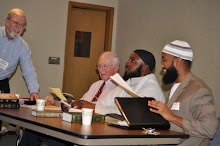
Lam was speaking about last month's posting of anti-Muslim cartoons in St. Cloud, at a forum hosted by the Council on American-Islamic Relations—Minnesota Chapter.
Many speakers questioned local authorities' response to the incident, and asked why the man who has admitted to posting the cartoons doesn't face criminal charges. Others criticized city leaders for not doing enough to combat long-standing discrimination against Muslims and people of color.
Lam told city leaders she's been to plenty of "kumbaya meetings" about discrimination. This time, Lam wanted to know what will happen next.
"I've been here for four years, and I'm scared of this city," Lam said. "What are you going to do to show that you are going to protect all citizens of St. Cloud?"
City leaders responded with little beyond what was announced Friday, when city attorneys cited a Waite Park man who's admitted to posting the cartoons. Sidney Allen Elyea is charged with two counts of violating an ordinance against posting materials on fixtures — civil charges that carry maximum fines of $250 each.
That wasn't enough for many at Tuesday's forum, who suggested the man could be charged with disorderly conduct or other, more serious offenses. City Attorney Jan Petersen told the crowd that his office considered pressing criminal charges against Elyea but decided it wouldn't hold up in court.
City leaders also urged residents to report instances of discrimination or harassment. St. Cloud Police Chief Dennis Ballantine said that entails a "two-way street" of cooperation between city leaders and community members.
"You've got to work with us," Ballantine said. "You can't sit back and wait for us to find all the solutions."
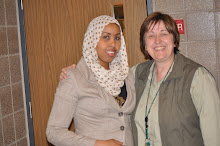
For Lam — who moved here from Rochester to attend St. Cloud State University — the cartoon incident sparked her own ugly memories of facing discrimination in St. Cloud. Lam was born in Sudan and is Christian, but says she's been heckled in public for being a Muslim. The issue is especially meaningful to Lam because she says her family fled Sudan to escape religious persecution.
Others told similar stories, like Fathiya Mohamed. She said many Somalis graduate from local universities but flee St. Cloud, believing there are no opportunities for them here.
Mohamed, a Somali who lives in St. Cloud, said Tuesday's forum was a start toward reversing that problem.
"It was a great learning opportunity for everyone," Mohamed said.
Wednesday, January 27, 2010


Wednesday, January 20, 2010
Speak Out Against Hate event is today
Speak Out Against Hate event is today
Times staff report • January 20, 2010
Comments(70)Recommend(2)Print this page E-mail this article Share
The protest will be at 2-5 p.m. at Ritsche Auditorium. The Somali Student Association is putting on the event. University President Earl H. Potter III will speak during the event.
The cartoons were found in at least two locations in the city last month.
Times staff report • January 20, 2010
Comments(70)Recommend(2)Print this page E-mail this article Share
The protest will be at 2-5 p.m. at Ritsche Auditorium. The Somali Student Association is putting on the event. University President Earl H. Potter III will speak during the event.
The cartoons were found in at least two locations in the city last month.
Saturday, January 2, 2010
Stolen books result in SCSU safety alert
Stolen books result in SCSU safety alert
Times staff report • January 2, 2010
Comments(2)RecommendPrint this page E-mail this article Share
Del.icio.us Facebook Digg Reddit Newsvine Buzz up!
Twitter St. Cloud State University issued a safety alert Thursday after offices at Centennial Hall were broken into before Christmas and textbooks were stolen.
Trim molding was removed from windows of office doors in four offices and the glass removed, which resulted in the installation of tamper-resistant screws on Dec. 24, according to Miles J. Heckendorn III, St. Cloud State University public safety director.
On Wednesday, it was reported another office in Centennial Hall had been entered in the same way with the door sustaining damage and a textbook stolen; on Thursday, it was reported someone had attempted to enter an office in Headley Hall the same way, according to the safety alert
St. Cloud Police Department is investigating and St. Cloud State has increased Public Safety patrols while the exterior doors to the halls are being secured earlier each day over the break.
Anyone with information about the burglaries should call police at 251-1200 or SCSU Public Safety at 308-3333.
Times staff report • January 2, 2010
Comments(2)RecommendPrint this page E-mail this article Share
Del.icio.us Facebook Digg Reddit Newsvine Buzz up!
Twitter St. Cloud State University issued a safety alert Thursday after offices at Centennial Hall were broken into before Christmas and textbooks were stolen.
Trim molding was removed from windows of office doors in four offices and the glass removed, which resulted in the installation of tamper-resistant screws on Dec. 24, according to Miles J. Heckendorn III, St. Cloud State University public safety director.
On Wednesday, it was reported another office in Centennial Hall had been entered in the same way with the door sustaining damage and a textbook stolen; on Thursday, it was reported someone had attempted to enter an office in Headley Hall the same way, according to the safety alert
St. Cloud Police Department is investigating and St. Cloud State has increased Public Safety patrols while the exterior doors to the halls are being secured earlier each day over the break.
Anyone with information about the burglaries should call police at 251-1200 or SCSU Public Safety at 308-3333.
Friday, January 1, 2010
137 journalists killed in 2009 in one of deadliest years on record
137 journalists killed in 2009 in one of deadliest years on record
Thursday, December 31, 2009
Brussels - A total of 137 journalists were killed in 2009, one of the most lethal years for media workers on record, the International Federation of Journalists (IFJ) said Thursday.
The Brussels-based organization said that 113 of the journalists had fallen victim to targeted killings, overshadowing the decrease to 109 killed in 2008.
IFJ President Jim Boumelha said that the Philippines, Mexico, and Somalia led the list of most deadly countries for journalists in 2009.
'The devastating massacre of 31 journalists and media staff in the Philippines in November and fresh violence against colleagues in Mexico and Somalia have made this a year of terrible bloodshed for media,' Boumelha said in a statement.
The most shocking killings of 2009 occurred in the Philippines where 38 journalists and media staff were killed. 31 media casualties were counted on November 23 in a massacre in the Maguindanao province.
Iraq, which had been the most dangerous country for most of the past decade, had five killings in 2009, down from 16 the previous year.
Russia in 2009 saw six journalists killed, making it one of the five most deadly countries.
The IJF represents over 600,000 journalists in 125 countries around the world.
Thursday, December 31, 2009
Brussels - A total of 137 journalists were killed in 2009, one of the most lethal years for media workers on record, the International Federation of Journalists (IFJ) said Thursday.
The Brussels-based organization said that 113 of the journalists had fallen victim to targeted killings, overshadowing the decrease to 109 killed in 2008.
IFJ President Jim Boumelha said that the Philippines, Mexico, and Somalia led the list of most deadly countries for journalists in 2009.
'The devastating massacre of 31 journalists and media staff in the Philippines in November and fresh violence against colleagues in Mexico and Somalia have made this a year of terrible bloodshed for media,' Boumelha said in a statement.
The most shocking killings of 2009 occurred in the Philippines where 38 journalists and media staff were killed. 31 media casualties were counted on November 23 in a massacre in the Maguindanao province.
Iraq, which had been the most dangerous country for most of the past decade, had five killings in 2009, down from 16 the previous year.
Russia in 2009 saw six journalists killed, making it one of the five most deadly countries.
The IJF represents over 600,000 journalists in 125 countries around the world.
Friday, December 25, 2009
Striking cabdrivers protested yesterday near City Hall, later marching down Broadway to the Hall of Justice and Horton Plaza.
By Leslie Berestein,
UNION-TRIBUNE STAFF WRITER
Friday, December 25, 2009
Nelvin C. Cepeda / Union-Tribune
Striking cabdrivers protested yesterday near City Hall, later marching down Broadway to the Hall of Justice and Horton Plaza.
Striking cabdrivers protested yesterday near City Hall, later marching down Broadway to the Hall of Justice and Horton Plaza.
A few days after about 300 San Diego taxi drivers went on strike to protest the amount of money they pay to lease cabs, organizers gathered the drivers in a City Heights meeting hall to rally them. The impassioned speeches were in Somali.
In San Diego, Somali immigrants are nearly synonymous with the taxicab industry. Since Somalis began settling here in large numbers as refugees in the early 1990s, fleeing a civil war at home, they have come to dominate the business as drivers. While there is no official figure, it is estimated by groups who work with African immigrants and by drivers themselves that at least three-fourths of San Diego cabbies are East African, the vast majority from Somalia. Others are from Ethiopia and Eritrea, and a few are from other African countries.
“It is the easiest thing to do when you come from another country, and you know how to drive,” said Hakeem Kalif, 40, who arrived from Somalia in 1992 and began driving a taxi four years later. “You only need a Thomas Guide.”
The cabbies follow in a long-established tradition, the immigrant social hiring network, an informal system of referrals and recruiting that has existed for as long as immigrants have been landing on these shores.
Just as social networks help determine where new arrivals to the United States settle, they also help determine the jobs they get, with established immigrants helping arriving family members and friends find work.
The end result is one ethnic group heavily represented in a particular industry: for example, Mexican immigrants in construction, Iraqi Chaldean immigrants operating liquor and convenience stores, Korean immigrants operating small grocery stores, Vietnamese immigrants in the nail-salon industry.
“A brings in B, B brings in C, and C brings in D until finally, you’ve got A through Z,” said Ivan Light, a professor emeritus of sociology at UCLA and co-author of “Ethnic Economies,” a book that examines ethnic-dominated industries. “You don’t own the business, but you control access to it, and it becomes a valuable economic resource for the community in the sense that you get to certain point, and you control access to the jobs.”
The same can happen in a corporate environment, Light said, recalling a tour of a Los Angeles bank several years ago during which the manager pointed out to him that on one floor, most of the workers were Cuban. The immigrant employees had such a strong social network that they themselves took care of finding applicants when there was a vacancy.
“As soon as one Cuban left, they recruited another,” Light said. “The bank was happy with it because the Cubans were good workers, and the Cubans were happy with it because they could find jobs.”
Driving a taxi has become a common occupation for Somali immigrants and other East Africans, not only in San Diego but also in Minneapolis-St. Paul and Washington, D.C. In San Diego, with an East African population that includes an estimated 15,000 or more Somalis, it is not unusual to see a Muslim cabbie pull over to observe a call to prayer by taking a moment to pull a small prayer rug onto the sidewalk and kneel toward Mecca.
Most of the local Somali cabbies say they were referred to the job by word-of-mouth. Ahmed Syaed, a driver and strike organizer who sits on the board of a Somali taxi drivers association, said the cabbies — who typically work 12-hour shifts, sharing a car with another driver — enjoy the flexibility the job gives them to find a few hours here and there for college or trade classes, or to study English. Many also have families.
“It is important for us to have such a flexible job,” Syaed said last weekend during a meeting at the East African Community and Cultural Center in City Heights. “Many of us are students here.”
Bob Montgomery, director of the International Rescue Committee in San Diego, said Somali immigrants entered the taxi industry soon after refugees began arriving in San Diego, following in the footsteps of earlier Ethiopian immigrants, who had also taken to driving cabs. The freedom of driving a cab works for immigrants from these largely agricultural economies, where the climate determines the workday, he said.
“Especially with East Africans, the 9-to-5 work schedule is something new to them — not to all of them, but to a lot of them,” said Montgomery, whose office helped settle the bulk of Somali refugees in the area. Immigrants from South Asia, the West Indies and Africa make up the bulk of the nation’s taxi drivers, said Bruce Schaller, deputy commissioner for planning and sustainability with the New York Department of Transportation. Five years ago, while working as a private consultant, Schaller wrote a report on the growing number of immigrants in the taxi industry.
Until the 1970s, it was much more common to see native-born U.S. citizens behind the wheel of a cab, he said. Things began to change as crime became a growing concern, Schaller said, making driving a taxi a riskier occupation than many U.S.-born workers wanted. A changing job market also meant new opportunities for younger drivers, such as temporary office work.
According to Schaller’s research, which was based on U.S. Census data, only 8 percent of the nation’s taxi and limousine drivers in 1970 were immigrants. By 2000, that had risen to 38 percent, one of the highest proportions of immigrant workers of any occupation in the country.
Some immigrant drivers see their job as a steppingstone as they study or learn English, Schaller said. Some have stayed in the industry but have gone on to buy their own taxis or even a fleet; in San Diego, for example, immigrant cabbies typically lease from immigrant cab owners, among them Russian, Middle Eastern and other African immigrants, including former drivers. There are about 1,000 taxis in San Diego.
The striking cabbies are at odds with owners affiliated with Yellow Cab over lease rates that they say are too high in comparison to their recession-battered earnings. But when the money is good, it’s not a bad job to have, Schaller said.
“Some will be driving a cab for a long time to come,” he said. “But they are very, very proud of their sons and daughters who are going to Harvard or MIT.”
Leslie Berestein: (619) 542-4579 ; leslie.berestein@uniontrib.com
UNION-TRIBUNE STAFF WRITER
Friday, December 25, 2009
Nelvin C. Cepeda / Union-Tribune
Striking cabdrivers protested yesterday near City Hall, later marching down Broadway to the Hall of Justice and Horton Plaza.
Striking cabdrivers protested yesterday near City Hall, later marching down Broadway to the Hall of Justice and Horton Plaza.
A few days after about 300 San Diego taxi drivers went on strike to protest the amount of money they pay to lease cabs, organizers gathered the drivers in a City Heights meeting hall to rally them. The impassioned speeches were in Somali.
In San Diego, Somali immigrants are nearly synonymous with the taxicab industry. Since Somalis began settling here in large numbers as refugees in the early 1990s, fleeing a civil war at home, they have come to dominate the business as drivers. While there is no official figure, it is estimated by groups who work with African immigrants and by drivers themselves that at least three-fourths of San Diego cabbies are East African, the vast majority from Somalia. Others are from Ethiopia and Eritrea, and a few are from other African countries.
“It is the easiest thing to do when you come from another country, and you know how to drive,” said Hakeem Kalif, 40, who arrived from Somalia in 1992 and began driving a taxi four years later. “You only need a Thomas Guide.”
The cabbies follow in a long-established tradition, the immigrant social hiring network, an informal system of referrals and recruiting that has existed for as long as immigrants have been landing on these shores.
Just as social networks help determine where new arrivals to the United States settle, they also help determine the jobs they get, with established immigrants helping arriving family members and friends find work.
The end result is one ethnic group heavily represented in a particular industry: for example, Mexican immigrants in construction, Iraqi Chaldean immigrants operating liquor and convenience stores, Korean immigrants operating small grocery stores, Vietnamese immigrants in the nail-salon industry.
“A brings in B, B brings in C, and C brings in D until finally, you’ve got A through Z,” said Ivan Light, a professor emeritus of sociology at UCLA and co-author of “Ethnic Economies,” a book that examines ethnic-dominated industries. “You don’t own the business, but you control access to it, and it becomes a valuable economic resource for the community in the sense that you get to certain point, and you control access to the jobs.”
The same can happen in a corporate environment, Light said, recalling a tour of a Los Angeles bank several years ago during which the manager pointed out to him that on one floor, most of the workers were Cuban. The immigrant employees had such a strong social network that they themselves took care of finding applicants when there was a vacancy.
“As soon as one Cuban left, they recruited another,” Light said. “The bank was happy with it because the Cubans were good workers, and the Cubans were happy with it because they could find jobs.”
Driving a taxi has become a common occupation for Somali immigrants and other East Africans, not only in San Diego but also in Minneapolis-St. Paul and Washington, D.C. In San Diego, with an East African population that includes an estimated 15,000 or more Somalis, it is not unusual to see a Muslim cabbie pull over to observe a call to prayer by taking a moment to pull a small prayer rug onto the sidewalk and kneel toward Mecca.
Most of the local Somali cabbies say they were referred to the job by word-of-mouth. Ahmed Syaed, a driver and strike organizer who sits on the board of a Somali taxi drivers association, said the cabbies — who typically work 12-hour shifts, sharing a car with another driver — enjoy the flexibility the job gives them to find a few hours here and there for college or trade classes, or to study English. Many also have families.
“It is important for us to have such a flexible job,” Syaed said last weekend during a meeting at the East African Community and Cultural Center in City Heights. “Many of us are students here.”
Bob Montgomery, director of the International Rescue Committee in San Diego, said Somali immigrants entered the taxi industry soon after refugees began arriving in San Diego, following in the footsteps of earlier Ethiopian immigrants, who had also taken to driving cabs. The freedom of driving a cab works for immigrants from these largely agricultural economies, where the climate determines the workday, he said.
“Especially with East Africans, the 9-to-5 work schedule is something new to them — not to all of them, but to a lot of them,” said Montgomery, whose office helped settle the bulk of Somali refugees in the area. Immigrants from South Asia, the West Indies and Africa make up the bulk of the nation’s taxi drivers, said Bruce Schaller, deputy commissioner for planning and sustainability with the New York Department of Transportation. Five years ago, while working as a private consultant, Schaller wrote a report on the growing number of immigrants in the taxi industry.
Until the 1970s, it was much more common to see native-born U.S. citizens behind the wheel of a cab, he said. Things began to change as crime became a growing concern, Schaller said, making driving a taxi a riskier occupation than many U.S.-born workers wanted. A changing job market also meant new opportunities for younger drivers, such as temporary office work.
According to Schaller’s research, which was based on U.S. Census data, only 8 percent of the nation’s taxi and limousine drivers in 1970 were immigrants. By 2000, that had risen to 38 percent, one of the highest proportions of immigrant workers of any occupation in the country.
Some immigrant drivers see their job as a steppingstone as they study or learn English, Schaller said. Some have stayed in the industry but have gone on to buy their own taxis or even a fleet; in San Diego, for example, immigrant cabbies typically lease from immigrant cab owners, among them Russian, Middle Eastern and other African immigrants, including former drivers. There are about 1,000 taxis in San Diego.
The striking cabbies are at odds with owners affiliated with Yellow Cab over lease rates that they say are too high in comparison to their recession-battered earnings. But when the money is good, it’s not a bad job to have, Schaller said.
“Some will be driving a cab for a long time to come,” he said. “But they are very, very proud of their sons and daughters who are going to Harvard or MIT.”
Leslie Berestein: (619) 542-4579 ; leslie.berestein@uniontrib.com
Tuesday, December 22, 2009
St. Cloud passes 2010 budget
St. Cloud passes 2010 budget
By Kari Petrie • kpetrie@stcloudtimes.com • December 22, 2009
Comments(1)Recommend(2)Print this page E-mail this article Share
Del.icio.us Facebook Digg Reddit Newsvine Buzz up!
Twitter Next Page1| 2Previous PageAttempts to fully fund a St. Cloud Human Rights Office failed Monday night and the council passed the city budget as initially proposed.
The council passed a $76.5 million 2010 budget, which is a nearly 10 percent cut in spending compared with 2009. They also approved a $23 million property tax levy.
The budget passed with a 6-1 vote, with council member Sonja Berg voting against the budget. Berg had proposed an amendment to the budget that would fully fund the Human Rights Office.
The office was reorganized after its director left and a city hiring freeze prevented officials from hiring a new one. A coordinator working in the City Attorney’s Office now oversees human rights work.
For 45 minutes the council discussed funding the human rights office and listened to testimony supporting the office. The budget discussion was not a public hearing, but Council President Bob Johnson allowed several members of the audience to speak.
Kevin LaNave is a former chairman for the St. Cloud Human Rights Commission. He said funding a human rights office is critical to the city’s safety and livability, evoking a often-cited descriptor of St. Cloud.
He rejected the idea that the city should wait until a regional office can be funded, as city officials have said in the past.
“If full funding of a regional human rights office is an urgent priority ... then so is full funding of the city’s human rights office,” LaNave said.
St. Cloud Area Somali Salvation Organization Executive Director Mohamoud Mohamed said the city is taking a step backward by not funding the office.
Not funding the office is hurting some of the trust between government officials and minority communities, he said.
“It is killing our relationship with you,” he said.
Berg offered an amendment to include fully funding the human rights office and hiring a new director. Fellow council members did not vote for the approval, citing concerns over where that money would be found.
Council member Carolyn Garven offered an amendment to allocate an additional $30,000 to the human rights office. The 2010 budget included $20,000 to pay for the coordinator and $13,400 in nonpayroll funds. That money is included in the City Attorney’s Office budget
Garven also said she would like a stronger human rights commission with representation from the communities and groups that lobbied the city to reform the office Monday.
“I want to put a huge amount of authority in the commission on how to do this,” she said. “I don’t want a director anymore, I really want all of you.”
Johnson suggested that city administration take some money from several different areas of the budget to piece together the $30,000. He used the example of the money used to pay a consultant to run the council’s annual retreat.
“I believe you could parse out a couple thousand here and there to put together (the funds),” Johnson said.
But Mayor Dave Kleis reminded the council that there is still a possibility of cuts to the 2010 budget. He said “the likelihood is high” that the city will face additional reductions in Local Government Aid. The city also is still in negotiations with some of its labor unions.
The 2010 budget that passed Monday includes no wage increases.
If unions don’t accept a contract with no wage increases, Kleis said further cuts will have to be made to the budget.
While those council members who spoke said they support a human rights office, some said they were concerned about finding the resources to fund it.
Council member Dave Masters said he would need to know where all the money was coming from before he could support an amendment adding $30,000 to the budget for human rights work.
Council member George Hontos said he would like to see a plan of action before supporting additional funding. Hontos, a long supporter of a regional human rights office, also bristled at the fact St. Cloud has received so much criticism over the issue.
“We are the only (city) willing to put any money in a human rights office and we are getting most criticism,” he said.
In the end council members approved the budget that was initially put before them, one that keeps in place a hiring freeze and has no wage increases.
“This budget is very well done given the circumstances we face economically,” Johnson said.
By Kari Petrie • kpetrie@stcloudtimes.com • December 22, 2009
Comments(1)Recommend(2)Print this page E-mail this article Share
Del.icio.us Facebook Digg Reddit Newsvine Buzz up!
Twitter Next Page1| 2Previous PageAttempts to fully fund a St. Cloud Human Rights Office failed Monday night and the council passed the city budget as initially proposed.
The council passed a $76.5 million 2010 budget, which is a nearly 10 percent cut in spending compared with 2009. They also approved a $23 million property tax levy.
The budget passed with a 6-1 vote, with council member Sonja Berg voting against the budget. Berg had proposed an amendment to the budget that would fully fund the Human Rights Office.
The office was reorganized after its director left and a city hiring freeze prevented officials from hiring a new one. A coordinator working in the City Attorney’s Office now oversees human rights work.
For 45 minutes the council discussed funding the human rights office and listened to testimony supporting the office. The budget discussion was not a public hearing, but Council President Bob Johnson allowed several members of the audience to speak.
Kevin LaNave is a former chairman for the St. Cloud Human Rights Commission. He said funding a human rights office is critical to the city’s safety and livability, evoking a often-cited descriptor of St. Cloud.
He rejected the idea that the city should wait until a regional office can be funded, as city officials have said in the past.
“If full funding of a regional human rights office is an urgent priority ... then so is full funding of the city’s human rights office,” LaNave said.
St. Cloud Area Somali Salvation Organization Executive Director Mohamoud Mohamed said the city is taking a step backward by not funding the office.
Not funding the office is hurting some of the trust between government officials and minority communities, he said.
“It is killing our relationship with you,” he said.
Berg offered an amendment to include fully funding the human rights office and hiring a new director. Fellow council members did not vote for the approval, citing concerns over where that money would be found.
Council member Carolyn Garven offered an amendment to allocate an additional $30,000 to the human rights office. The 2010 budget included $20,000 to pay for the coordinator and $13,400 in nonpayroll funds. That money is included in the City Attorney’s Office budget
Garven also said she would like a stronger human rights commission with representation from the communities and groups that lobbied the city to reform the office Monday.
“I want to put a huge amount of authority in the commission on how to do this,” she said. “I don’t want a director anymore, I really want all of you.”
Johnson suggested that city administration take some money from several different areas of the budget to piece together the $30,000. He used the example of the money used to pay a consultant to run the council’s annual retreat.
“I believe you could parse out a couple thousand here and there to put together (the funds),” Johnson said.
But Mayor Dave Kleis reminded the council that there is still a possibility of cuts to the 2010 budget. He said “the likelihood is high” that the city will face additional reductions in Local Government Aid. The city also is still in negotiations with some of its labor unions.
The 2010 budget that passed Monday includes no wage increases.
If unions don’t accept a contract with no wage increases, Kleis said further cuts will have to be made to the budget.
While those council members who spoke said they support a human rights office, some said they were concerned about finding the resources to fund it.
Council member Dave Masters said he would need to know where all the money was coming from before he could support an amendment adding $30,000 to the budget for human rights work.
Council member George Hontos said he would like to see a plan of action before supporting additional funding. Hontos, a long supporter of a regional human rights office, also bristled at the fact St. Cloud has received so much criticism over the issue.
“We are the only (city) willing to put any money in a human rights office and we are getting most criticism,” he said.
In the end council members approved the budget that was initially put before them, one that keeps in place a hiring freeze and has no wage increases.
“This budget is very well done given the circumstances we face economically,” Johnson said.
Thursday, December 17, 2009
Letter: St. Cloud must unite to oppose hate posters
Letter: St. Cloud must unite to oppose hate posters
By Darlene Thyen • Paynesville • December 17, 2009
Comments(33)Recommend(4)
Print this page E-mail this article Share Del.icio.us Facebook Digg Reddit Newsvine
Buzz up!Twitter What is St. Cloud and the surrounding area, about 95 percent Christian?
Then I think we should see thousands of letters to the editor bashing the people who hung pornographic pictures of Muslim spiritual leaders at two places in St. Cloud.
Every priest, minister, lay person, Sunday School teacher and person who identifies with any religion should strongly condemn these pornographic caricatures.
This is hate material, and I hope that the perpetrator(s) are brought to justice. Can you imagine the rage if someone dared to hang up pictures of priests or ministers diddling little boys or girls?
Condemn this for the outrage it is, Christians, or you aren't worth your weight in salt!
By Darlene Thyen • Paynesville • December 17, 2009
Comments(33)Recommend(4)
Print this page E-mail this article Share Del.icio.us Facebook Digg Reddit Newsvine
Buzz up!Twitter What is St. Cloud and the surrounding area, about 95 percent Christian?
Then I think we should see thousands of letters to the editor bashing the people who hung pornographic pictures of Muslim spiritual leaders at two places in St. Cloud.
Every priest, minister, lay person, Sunday School teacher and person who identifies with any religion should strongly condemn these pornographic caricatures.
This is hate material, and I hope that the perpetrator(s) are brought to justice. Can you imagine the rage if someone dared to hang up pictures of priests or ministers diddling little boys or girls?
Condemn this for the outrage it is, Christians, or you aren't worth your weight in salt!
Bodette column: We need to stand up to hate
Bodette column: We need to stand up to hate
By John Bodette • Times executive editor • December 13, 2009
Print this page E-mail this article Share Del.icio.us Facebook Digg Reddit Newsvine
Buzz up!Twitter Next Page1| 2Previous PageGood morning, St. Cloud area.
Last Sunday I wrote about the uplifting experiences ringing the bell for The Salvation Army Red Kettle drive. This Sunday, at a time when people are thinking about peace on Earth and good will toward all, we have to speak out and condemn an awful incident in our community.
Someone spewed hate toward members of our community.
Someone posted vile, anti-Islamic drawings in two locations last week in our city. The carefully chosen locations aimed the offensive drawings directly at Muslim people. One East Side location was near a Somali restaurant, market and store — three local businesses where many customers are Muslim. The second location was in the 300 block of Fifth Avenue South, near the Islamic Center.
The drawings presented the Times news staff with a dilemma because they were so pornographic and vile that you couldn’t show them to readers. To describe them in detail would be just as shocking.
These drawings were about as offensive as you can get. Take the most sacred and loved people or deities in your life and then imagine seeing them defiled in the most vulgar ways.
Yes, the drawings were that bad.
The sick mind behind them had an obsession with bodily functions and bizarre sexual positions, all using sacred images.
We would have made the same decision not to run the images or detailed descriptions if any religious group were attacked — Christian, Jewish, Buddhist, Hindu or others.
We often run into this barrier when covering crime stories in which the details are so horrific you can’t use them without shocking and offending readers and further hurting victims.
After viewing the images in the drawings I can only tell you the community should be outraged.
Too many times people dismiss an incident like this because it is just a mark or a comment. In this case, it was so much more offensive, threatening and sickening.
Some may say it is free speech. I say it is like yelling fire as a prank in a crowded theater. It isn’t protected speech.
My larger call is for the community to answer this threatening action with support and positive actions
(2 of 2)
The business community, led by the Chamber of Commerce, needs to make it clear that these threats apparently against these businesses aren’t tolerated in St. Cloud. Religious leaders need to speak out in services and condemn this action. And regular citizens need to show support to our Muslim neighbors, telling them that this kind of action has no place in the community.
These drawings were meant to strike fear in people of the Muslim faith and tell them they aren’t welcome here. A silent community will not erase those fears.
Take positive actions to show St. Cloud is a welcoming community and hate has no place here. Show that religious freedom is valued and respected in St. Cloud.
Finally, anyone who knows anything about this crime needs to contact St. Cloud police at 251-1200 or Crime Stoppers at 255-1301. Whoever did this crime needs to be held accountable.
Do you have a question about the Times? You can ask St. Cloud Times Executive Editor John Bodette, P.O. Box 768, St. Cloud MN 56302-0768; or call him at 255-8760; or e-mail him at jbodette@stcloudtimes.com.
By John Bodette • Times executive editor • December 13, 2009
Print this page E-mail this article Share Del.icio.us Facebook Digg Reddit Newsvine
Buzz up!Twitter Next Page1| 2Previous PageGood morning, St. Cloud area.
Last Sunday I wrote about the uplifting experiences ringing the bell for The Salvation Army Red Kettle drive. This Sunday, at a time when people are thinking about peace on Earth and good will toward all, we have to speak out and condemn an awful incident in our community.
Someone spewed hate toward members of our community.
Someone posted vile, anti-Islamic drawings in two locations last week in our city. The carefully chosen locations aimed the offensive drawings directly at Muslim people. One East Side location was near a Somali restaurant, market and store — three local businesses where many customers are Muslim. The second location was in the 300 block of Fifth Avenue South, near the Islamic Center.
The drawings presented the Times news staff with a dilemma because they were so pornographic and vile that you couldn’t show them to readers. To describe them in detail would be just as shocking.
These drawings were about as offensive as you can get. Take the most sacred and loved people or deities in your life and then imagine seeing them defiled in the most vulgar ways.
Yes, the drawings were that bad.
The sick mind behind them had an obsession with bodily functions and bizarre sexual positions, all using sacred images.
We would have made the same decision not to run the images or detailed descriptions if any religious group were attacked — Christian, Jewish, Buddhist, Hindu or others.
We often run into this barrier when covering crime stories in which the details are so horrific you can’t use them without shocking and offending readers and further hurting victims.
After viewing the images in the drawings I can only tell you the community should be outraged.
Too many times people dismiss an incident like this because it is just a mark or a comment. In this case, it was so much more offensive, threatening and sickening.
Some may say it is free speech. I say it is like yelling fire as a prank in a crowded theater. It isn’t protected speech.
My larger call is for the community to answer this threatening action with support and positive actions
(2 of 2)
The business community, led by the Chamber of Commerce, needs to make it clear that these threats apparently against these businesses aren’t tolerated in St. Cloud. Religious leaders need to speak out in services and condemn this action. And regular citizens need to show support to our Muslim neighbors, telling them that this kind of action has no place in the community.
These drawings were meant to strike fear in people of the Muslim faith and tell them they aren’t welcome here. A silent community will not erase those fears.
Take positive actions to show St. Cloud is a welcoming community and hate has no place here. Show that religious freedom is valued and respected in St. Cloud.
Finally, anyone who knows anything about this crime needs to contact St. Cloud police at 251-1200 or Crime Stoppers at 255-1301. Whoever did this crime needs to be held accountable.
Do you have a question about the Times? You can ask St. Cloud Times Executive Editor John Bodette, P.O. Box 768, St. Cloud MN 56302-0768; or call him at 255-8760; or e-mail him at jbodette@stcloudtimes.com.
Monday, December 14, 2009
FBI: Meeting with young Somalis a success
FBI: Meeting with young Somalis a success
The Associated Press • December 14, 2009
Comments(13)RecommendPrint this page E-mail this article Share
Del.icio.us Facebook Digg Reddit Newsvine Buzz up!
Twitter MINNEAPOLIS — An FBI spokesman is calling the bureau’s meeting with young Somalis in Minneapolis a “big success.”
Ralph Boelter, special agent in charge of the FBI’s Minneapolis office, met with a group of young Somalis on Saturday at the Brian Coyle Center.
Before the meeting, Boelter told the Star Tribune that he intended to listen to the Somalis and to explain “how we operate and what we are all about.”
FBI spokesman E.K. Wilson says the young Somalis did a skit and some poetry to demonstrate their cultural traditions.
The FBI is investigating the disappearance of about 20 young Somalis who left Minnesota. The agency believes the missing Somalis may be fighting with terrorists in their homeland.
Between 50 and 60 people attended Saturday’s meeting, which was closed to news media.
The Associated Press • December 14, 2009
Comments(13)RecommendPrint this page E-mail this article Share
Del.icio.us Facebook Digg Reddit Newsvine Buzz up!
Twitter MINNEAPOLIS — An FBI spokesman is calling the bureau’s meeting with young Somalis in Minneapolis a “big success.”
Ralph Boelter, special agent in charge of the FBI’s Minneapolis office, met with a group of young Somalis on Saturday at the Brian Coyle Center.
Before the meeting, Boelter told the Star Tribune that he intended to listen to the Somalis and to explain “how we operate and what we are all about.”
FBI spokesman E.K. Wilson says the young Somalis did a skit and some poetry to demonstrate their cultural traditions.
The FBI is investigating the disappearance of about 20 young Somalis who left Minnesota. The agency believes the missing Somalis may be fighting with terrorists in their homeland.
Between 50 and 60 people attended Saturday’s meeting, which was closed to news media.
Police say they know who posted anti-Islamic cartoons
Police say they know who posted anti-Islamic cartoons
By Kari Petrie • kpetrie@stcloudtimes.com • December 12, 2009
Comments(205)Recommend(3)Print this page E-mail this article Share
Del.icio.us Facebook Digg Reddit Newsvine
Buzz up!Twitter St. Cloud police said Friday evening that they have identified the person responsible for posting obscene anti-Islamic cartoons at two locations this week.
While police believe they know who posted the obscene material, no one has been arrested or cited as they wind up their investigation, according to Sgt. Marty Sayre. The suspect's name has therefore not been released.
The police reports will be forwarded to prosecutors for review and possible charges.
Help from witnesses and the public were credited with moving the investigation forward.
Graphic, sexually explicit cartoons were posted on utility poles in the 10 block of Second Avenue Northeast and the 300 block of Fifth Avenue South. They were found Tuesday.
Sayre said prosecutors have told investigators that they will pursue charges in the case. State law prohibits the distribution of obscene material, which is defined as work that the average person would find offensive and serves no literary, artistic, political or scientific purpose.
The incident can be reported as a bias offense. Being reported as such does not mean it will lead to an enhanced sentence, but can be reported for statistical purposes.
St. Cloud Police Department reported nine bias offenses in 2008, according to the FBI Hate Crime Statistics report.
At least two advocacy groups have come forward to condemn the cartoons. The state chapter of the Council on American Islamic Relations spoke out against the cartoons Thursday and asked other religious and political leaders to do the same.
"Our state's political and religious leaders need to speak out strongly against anti-Muslim hate, just as they would speak out against any other form of intolerance," said CAIR-MN Communications Director Jessica Zikri on Thursday.
On Friday the executive director of Jewish Community Relations Council of Minnesota and the Dakotas issued a statement condemning the cartoons. Steve Hunegs called the acts heinous and urged anyone with information to come forward.
"It is tragic that extremists cling to racist, xenophobic, anti-Islamic, and other bigoted ideas," Hunegs said in a statement. "The Muslim community is an integral part of the diverse and democratic society in Minnesota and we stand in solidarity with them."
Anyone with information about the incident can contact police at 251-1200 or Crime Stoppers at 255-1301.
Create CommUNITY offered a $1,000 reward to anyone who gives information that leads to the arrest of the person responsible.
By Kari Petrie • kpetrie@stcloudtimes.com • December 12, 2009
Comments(205)Recommend(3)Print this page E-mail this article Share
Del.icio.us Facebook Digg Reddit Newsvine
Buzz up!Twitter St. Cloud police said Friday evening that they have identified the person responsible for posting obscene anti-Islamic cartoons at two locations this week.
While police believe they know who posted the obscene material, no one has been arrested or cited as they wind up their investigation, according to Sgt. Marty Sayre. The suspect's name has therefore not been released.
The police reports will be forwarded to prosecutors for review and possible charges.
Help from witnesses and the public were credited with moving the investigation forward.
Graphic, sexually explicit cartoons were posted on utility poles in the 10 block of Second Avenue Northeast and the 300 block of Fifth Avenue South. They were found Tuesday.
Sayre said prosecutors have told investigators that they will pursue charges in the case. State law prohibits the distribution of obscene material, which is defined as work that the average person would find offensive and serves no literary, artistic, political or scientific purpose.
The incident can be reported as a bias offense. Being reported as such does not mean it will lead to an enhanced sentence, but can be reported for statistical purposes.
St. Cloud Police Department reported nine bias offenses in 2008, according to the FBI Hate Crime Statistics report.
At least two advocacy groups have come forward to condemn the cartoons. The state chapter of the Council on American Islamic Relations spoke out against the cartoons Thursday and asked other religious and political leaders to do the same.
"Our state's political and religious leaders need to speak out strongly against anti-Muslim hate, just as they would speak out against any other form of intolerance," said CAIR-MN Communications Director Jessica Zikri on Thursday.
On Friday the executive director of Jewish Community Relations Council of Minnesota and the Dakotas issued a statement condemning the cartoons. Steve Hunegs called the acts heinous and urged anyone with information to come forward.
"It is tragic that extremists cling to racist, xenophobic, anti-Islamic, and other bigoted ideas," Hunegs said in a statement. "The Muslim community is an integral part of the diverse and democratic society in Minnesota and we stand in solidarity with them."
Anyone with information about the incident can contact police at 251-1200 or Crime Stoppers at 255-1301.
Create CommUNITY offered a $1,000 reward to anyone who gives information that leads to the arrest of the person responsible.
Civil rights group asks leaders to condemn anti-Muslim fliers
Civil rights group asks leaders to condemn anti-Muslim fliers
By Dave Aeikens • daeikens@stcloudtimes.com • December 11, 2009
Comments(57)Recommend(3)Print this page E-mail this article Share
Del.icio.us Facebook Digg Reddit Newsvine Buzz up!
Twitter The state chapter of the country’s largest Muslim civil rights group on Thursday asked religious and political leaders to condemn anti-Muslim fliers that were posted on utility poles in St. Cloud.
The request came from The Council on American Islamic Relations.
“We believe there is a direct correlation between anti-Muslim rhetoric and bias incidents targeting American Muslims,” said CAIR-MN Communications Director Jessica Zikri. “Our state’s political and religious leaders need to speak out strongly against anti-Muslim hate, just as they would speak out against any other form of intolerance.”
The fliers were found in northeast St. Cloud and include graphic, sexually explicit cartoons. The posters included hand-drawn and digitally altered photos that are derogatory about Muslims. They included depictions of the prophet Mohammed and a swastika, among other images.
Five pages were posted in front of Mandeeq Shop, a Somali-owned dry goods store on East St. Germain Street.
Police are investigating the case.
CAIR-MN is working with St. Cloud Muslim leaders to offer training on community safety and religious freedom. In June, CAIR-MN offered a “Know Your Rights” workshop at a convention organized by the Islamic Center of St. Cloud.
By Dave Aeikens • daeikens@stcloudtimes.com • December 11, 2009
Comments(57)Recommend(3)Print this page E-mail this article Share
Del.icio.us Facebook Digg Reddit Newsvine Buzz up!
Twitter The state chapter of the country’s largest Muslim civil rights group on Thursday asked religious and political leaders to condemn anti-Muslim fliers that were posted on utility poles in St. Cloud.
The request came from The Council on American Islamic Relations.
“We believe there is a direct correlation between anti-Muslim rhetoric and bias incidents targeting American Muslims,” said CAIR-MN Communications Director Jessica Zikri. “Our state’s political and religious leaders need to speak out strongly against anti-Muslim hate, just as they would speak out against any other form of intolerance.”
The fliers were found in northeast St. Cloud and include graphic, sexually explicit cartoons. The posters included hand-drawn and digitally altered photos that are derogatory about Muslims. They included depictions of the prophet Mohammed and a swastika, among other images.
Five pages were posted in front of Mandeeq Shop, a Somali-owned dry goods store on East St. Germain Street.
Police are investigating the case.
CAIR-MN is working with St. Cloud Muslim leaders to offer training on community safety and religious freedom. In June, CAIR-MN offered a “Know Your Rights” workshop at a convention organized by the Islamic Center of St. Cloud.
Thursday, December 10, 2009
Cartoons target Muslim population

Cartoons target Muslim population
By Kari Petrie • kpetrie@stcloudtimes.com • December 10, 2009
Comments(356)Recommend(6)
Print this page E-mail this article Share Del.icio.us Facebook Digg Reddit Newsvine Buzz up!
Twitter Editor's note: A portion of this story has been updated to reflect more details about how authorities determine whether a hate crime may have occurred.
St. Cloud police are investigating anti-Islamic cartoons found Tuesday in at least two locations in the city.
The graphic, sexually explicit cartoons were posted on utility poles in the 10 block of Second Avenue Northeast and the 300 block of Fifth Avenue South, Sgt. Marty Sayre said.
The posters included hand-drawn and digitally-altered photos that are derogatory toward Muslims. They included depictions of the prophet Mohammed and a swastika, among other images.
Five pages of the images were posted on a pole in front of Mandeeq Shop, 123 East St. Germain St.
Shop manager Deko Farah called the images “awful” and said someone who doesn’t believe in God must have posted them.
Farah said she used to feel safe in the East Side neighborhood, but now the store closes earlier because of safety concerns.
“Right now we’re not feeling safe,” she said.
St. Cloud Area Somali Salvation Organization Executive Director Mohamoud Mohamed said it appears the images were downloaded from the Internet. Some of them were written in multiple languages.
“It’s an insult to our religion,” he said.
Someone spent a lot of time downloading the images and putting them together, Mohamed said. Then that person spent time walking through Tuesday’s snow and cold to post them.
“It’s very scary,” he said.
Mohamed said the community needs to come together and say it will not tolerate such behavior from “a very few bad apples.”
“It’s unacceptable,” he said.
Sayre said police are investigating who posted the cartoons and are talking to local businesses and residents about whether they saw anything suspicious.
Sayre said the city attorney’s office will review the incident to determine whether a crime was committed. If a crime occurred, it can be investigated as a hate crime, he said.
Anyone with information or who found similar images elsewhere can contact police at 251-1200 or Crime Stoppers at 255-1301
Subscribe to:
Posts (Atom)